Cicada
Cicadidae
Living individuals or members of this group exist today. This does not mean they are safe from extinction.
Cicadas include annual and periodical species. This account describes Magicicada septendecim, a North American cicada with a long underground juvenile stage.
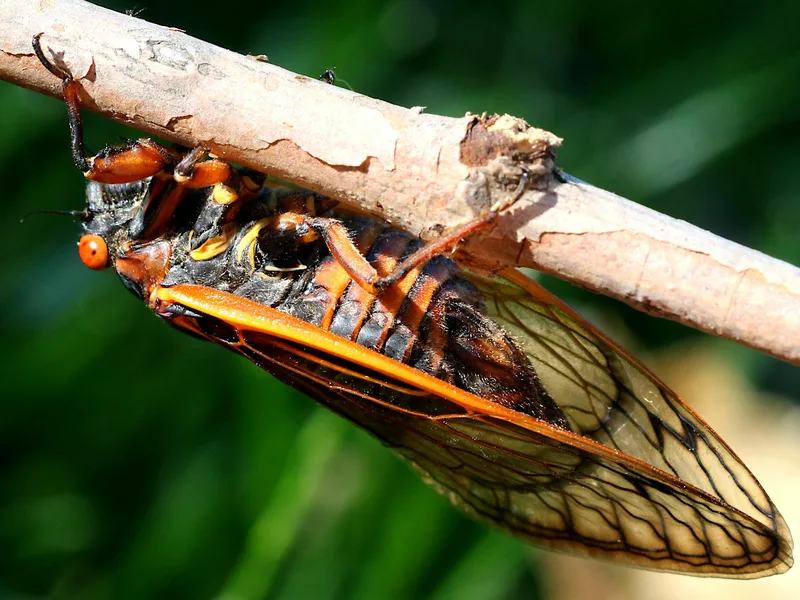
Female Magicicada septendecim photographed from below, showing the orange abdominal markings.
At a glance
- Location
- This periodical cicada inhabits wooded parts of the eastern and central United States.
- Habitat
- Temperate forest, Towns and cities
- Diet
- Herbivore
- Food
- Juveniles draw fluid from roots, while adults can also feed from trees.
Classification
- Common name
- Cicada
- Browse group
- Insects
- Scientific name or taxon
- Cicadidae
- Taxon rank
- family
- Order
- Hemiptera
- Family
- Cicadidae
- Source classification
- Insecta
Taxonomy checked against GBIF. For breeds and hybrids, this describes the listed parent taxon.
Three things to know
- Juveniles live underground.
- Adults have reddish eyes.
- Broods normally follow a 17-year cycle.
Habitat and range
This periodical cicada inhabits wooded parts of the eastern and central United States. Deciduous trees provide roots for underground juveniles and twigs in which females place eggs.
Appearance and adaptations
Adults have dark bodies, reddish eyes and transparent wings traced with orange veins. Young cicadas develop underground and shed their final juvenile skin after reaching the surface.
Diet and behaviour
Juveniles draw fluid from roots, while adults can also feed from trees. Synchronized broods normally emerge on a 17-year cycle, with males gathering to produce mating choruses.
Sources
- Animal Diversity Web: Magicicada septendecim
- A–Z Animals: Cicada · Directory entry
Explore insects
Browse all insects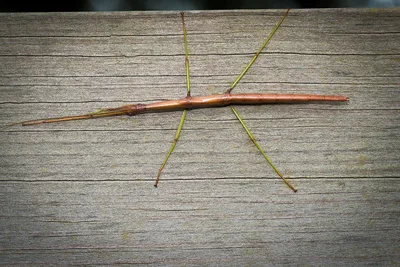
Insects
Stick Insect
Phasmatodea
Stick insects disguise themselves among vegetation.
Living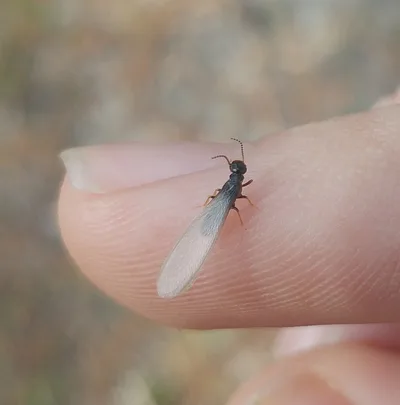
Insects
Termite
Isoptera
Termites are social insects with several specialised colony roles.
Living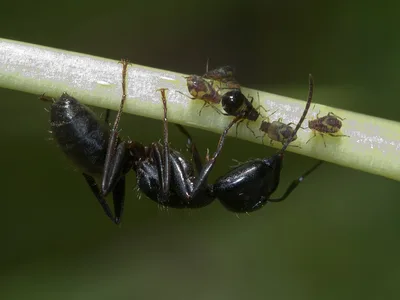
Insects
Ant
Formicidae
Ants have many different colony structures and diets.
Living
Insects
Bumblebee
Bombus
Bumblebees are social bees that gather nectar and pollen.
Living