Sea Snake
Hydrophiinae
Living individuals or members of this group exist today. This does not mean they are safe from extinction.
Sea snakes include many marine reptiles. This account describes the yellow-bellied sea snake (Hydrophis platurus), a surface-dwelling species of warm Pacific and Indian Ocean waters.
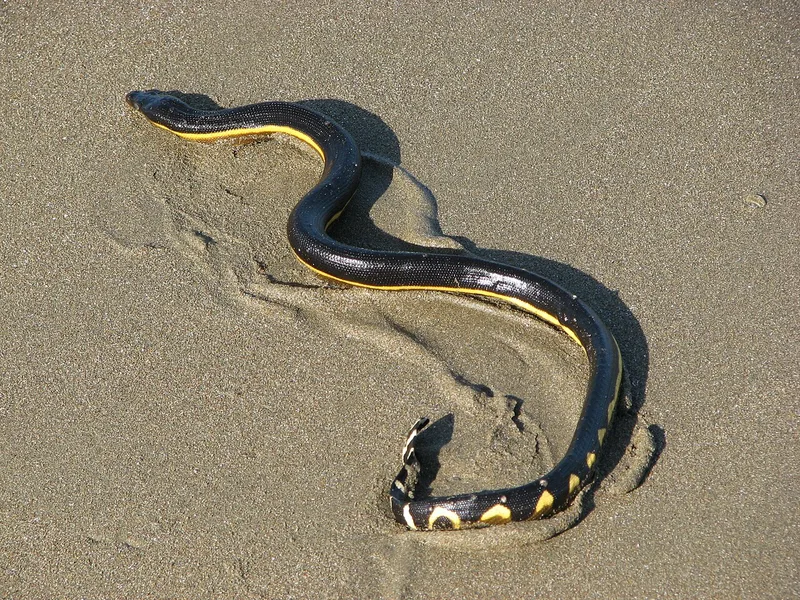
Yellow-bellied sea snake photographed on a beach in Costa Rica; its normal habitat is the open sea.
At a glance
- Habitat
- Open ocean
- Diet
- Piscivore
- Food
- Fish.
Classification
- Common name
- Sea Snake
- Browse group
- Reptiles
- Scientific name or taxon
- Hydrophiinae
- Source classification
- Reptilia
Three things to know
- It can complete its life entirely at sea.
- Its tail is flattened into a paddle.
- Knotting movements help loosen shedding skin.
Habitat and range
Yellow-bellied sea snakes live in tropical parts of the Pacific and Indian oceans. They are especially associated with open water, where currents can concentrate them along surface slicks.
Appearance and adaptations
A dark back sharply contrasts with a yellow underside. The flattened, paddle-like tail is marked with dark spots or bars and helps propel the animal through water.
Diet and behaviour
Fish are taken near the surface. The species can complete its life at sea and gives birth to live young. Coiling and knotting movements help loosen old skin and remove attached organisms without needing a rough seabed.
Sources
- Australian Museum: Yellow-bellied sea snake
- A–Z Animals: Sea Snake · Directory entry
Explore reptiles
Browse all reptiles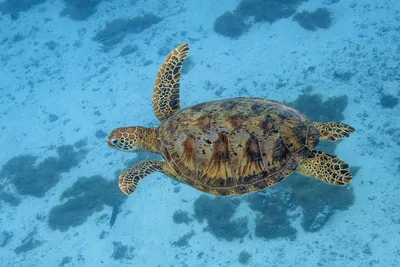 LC
Reptiles
Green sea turtle
Chelonia mydas
The green sea turtle grazes on seagrass in warm coastal waters.
Living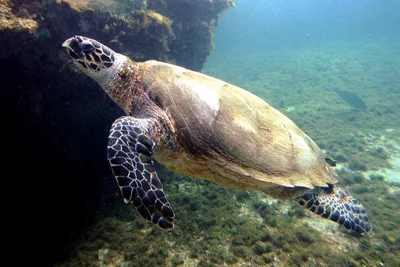
Reptiles
Hawksbill sea turtle
Eretmochelys imbricata
The hawksbill sea turtle has a narrow, pointed beak and overlapping shell scales.
Living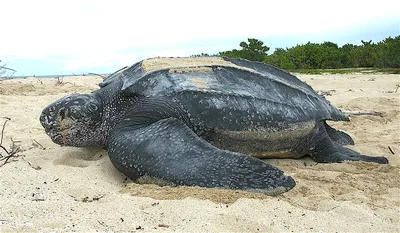
Reptiles
Leatherback Sea Turtle
Dermochelys coriacea
The leatherback is the largest living sea turtle.
Living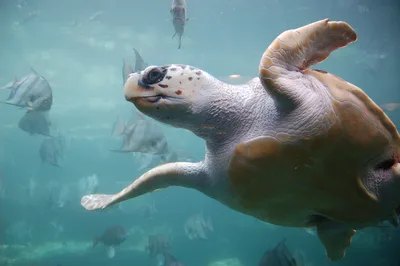
Reptiles
Loggerhead sea turtle
Caretta caretta
The loggerhead sea turtle uses powerful jaws to crush hard-shelled prey.
Living