Leatherback Sea Turtle
Dermochelys coriacea
Living individuals or members of this group exist today. This does not mean they are safe from extinction.
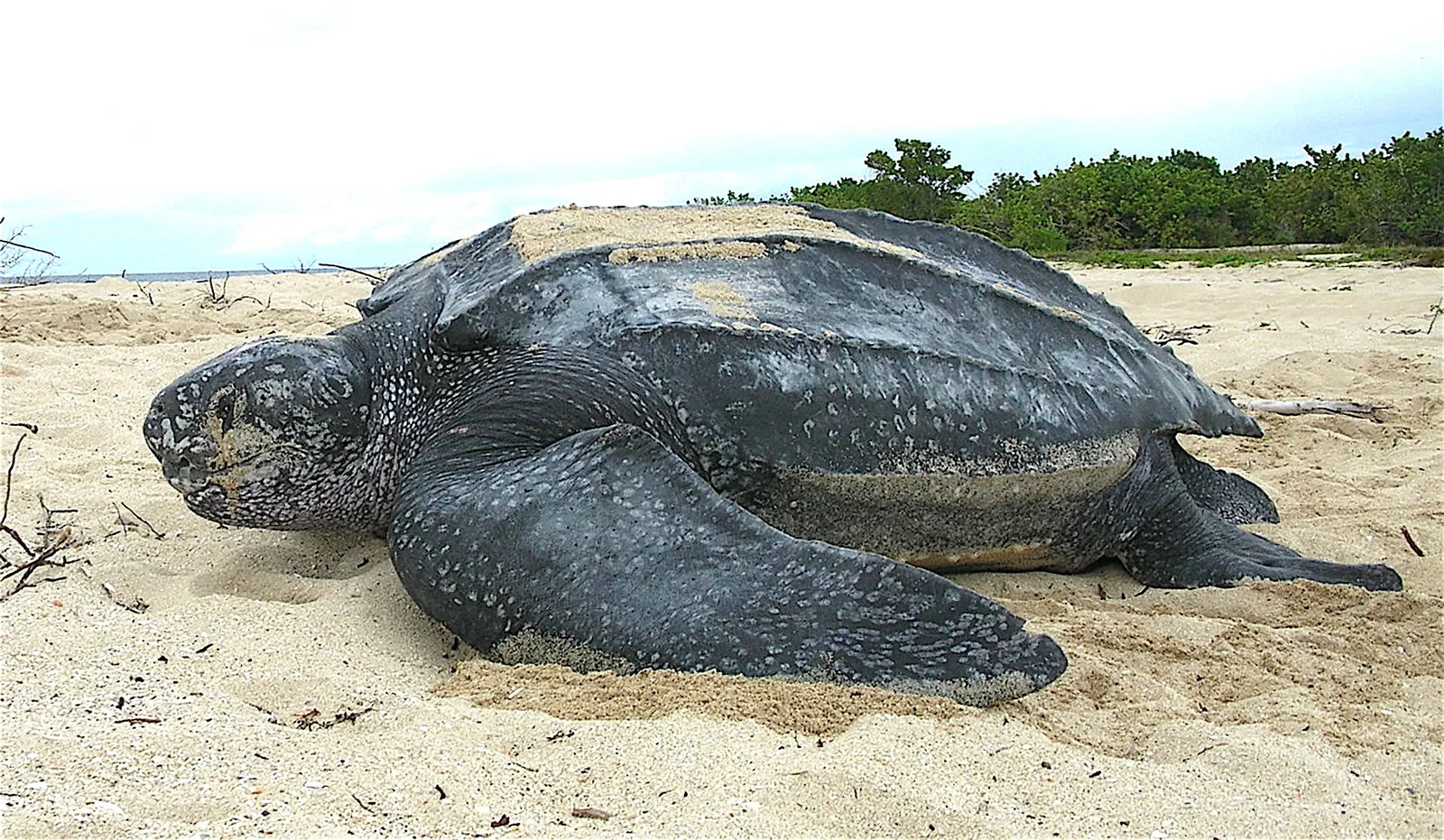
The leatherback is the largest living sea turtle. A flexible, ridged covering replaces the hard plated shell familiar in most other turtles, and long migrations connect feeding waters with nesting beaches.
At a glance
- Habitat
- Open ocean, Coast
- Diet
- Carnivore
- Food
- Jellyfish and other gelatinous marine animals.
Classification
- Common name
- Leatherback Sea Turtle
- Browse group
- Reptiles
- Scientific name or taxon
- Dermochelys coriacea
- Taxon rank
- species
- Family
- Dermochelyidae
- Genus
- Dermochelys
- Source classification
- Reptilia
Taxonomy checked against GBIF. For breeds and hybrids, this describes the listed parent taxon.
Three things to know
- Its shell covering is leathery rather than hard-plated.
- Jellyfish are a principal food.
- Females come ashore to lay eggs.
Habitat and range
Leatherbacks range widely through tropical and temperate seas, sometimes entering cold waters to feed. Females return to tropical sandy beaches to lay eggs; most of their lives are spent offshore.
Appearance and adaptations
The dark body has a leathery surface with lengthwise ridges. Large front flippers power swimming, and the streamlined shape suits extensive travel and deep dives.
Diet and behaviour
Jellyfish and other gelatinous animals provide most food. Individuals may travel great distances between breeding and feeding areas and are usually solitary at sea. Only nesting females regularly come ashore.
Sources
Explore reptiles
Browse all reptiles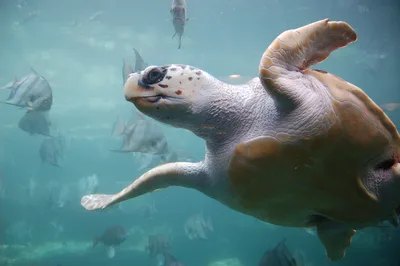
Reptiles
Loggerhead sea turtle
Caretta caretta
The loggerhead sea turtle uses powerful jaws to crush hard-shelled prey.
Living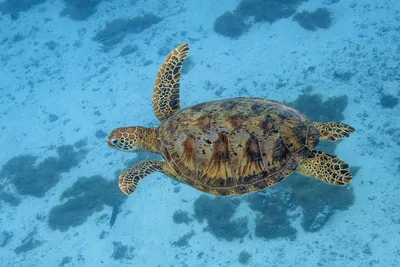 LC
Reptiles
Green sea turtle
Chelonia mydas
The green sea turtle grazes on seagrass in warm coastal waters.
Living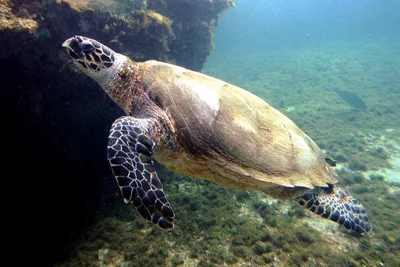
Reptiles
Hawksbill sea turtle
Eretmochelys imbricata
The hawksbill sea turtle has a narrow, pointed beak and overlapping shell scales.
Living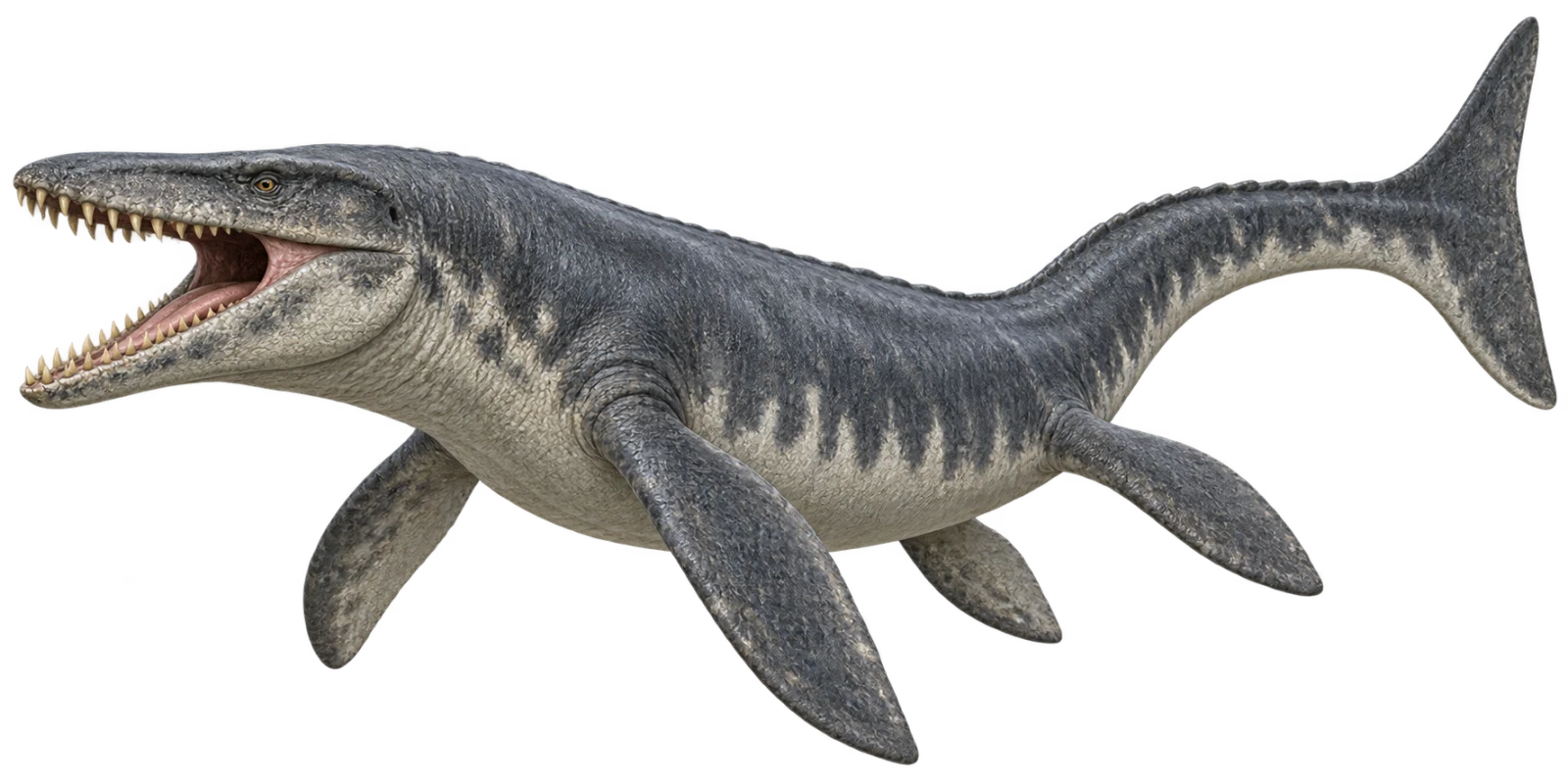
Reptiles
Mosasaurus
Mosasaurus
Mosasaurus was a large marine reptile of the Late Cretaceous.
ExtinctAI reconstruction