Millipede
Diplopoda
Living individuals or members of this group exist today. This does not mean they are safe from extinction.
Millipedes are important recyclers of leaf litter. This account follows Narceus americanus as treated in the cited source, which notes uncertainty within this North American species group.
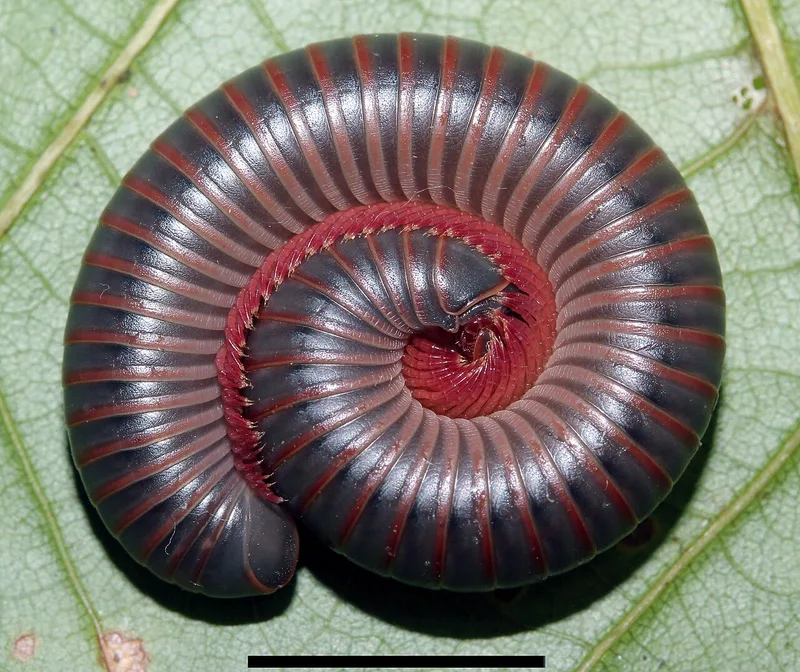
Narceus americanus, the representative described in this account.
At a glance
- Location
- These millipedes occupy humid forest-floor habitats in eastern North America.
- Habitat
- Temperate forest
- Diet
- Detritivore
- Food
- Decaying leaves and wood supply most food.
Classification
- Common name
- Millipede
- Browse group
- Millipedes
- Scientific name or taxon
- Diplopoda
- Taxon rank
- class
- Source classification
- Diplopoda
Taxonomy checked against GBIF. For breeds and hybrids, this describes the listed parent taxon.
Three things to know
- Most trunk rings carry two leg pairs.
- It eats decaying plant material.
- It needs humid shelter.
Habitat and range
These millipedes occupy humid forest-floor habitats in eastern North America. Fallen leaves, logs and stones provide shelter; moisture is essential because they lose water readily.
Appearance and adaptations
The long, rounded body has many rings. Most trunk rings carry two pairs of legs, whose coordinated movements form waves along the animal's sides.
Diet and behaviour
Decaying leaves and wood supply most food. Activity is usually greatest at night, and sheltered damp sites are used for molting. These habits differ from the predatory feeding of centipedes.
Sources
- Animal Diversity Web: Narceus americanus
- A–Z Animals: Millipede · Directory entry
Explore millipedes
Browse all millipedes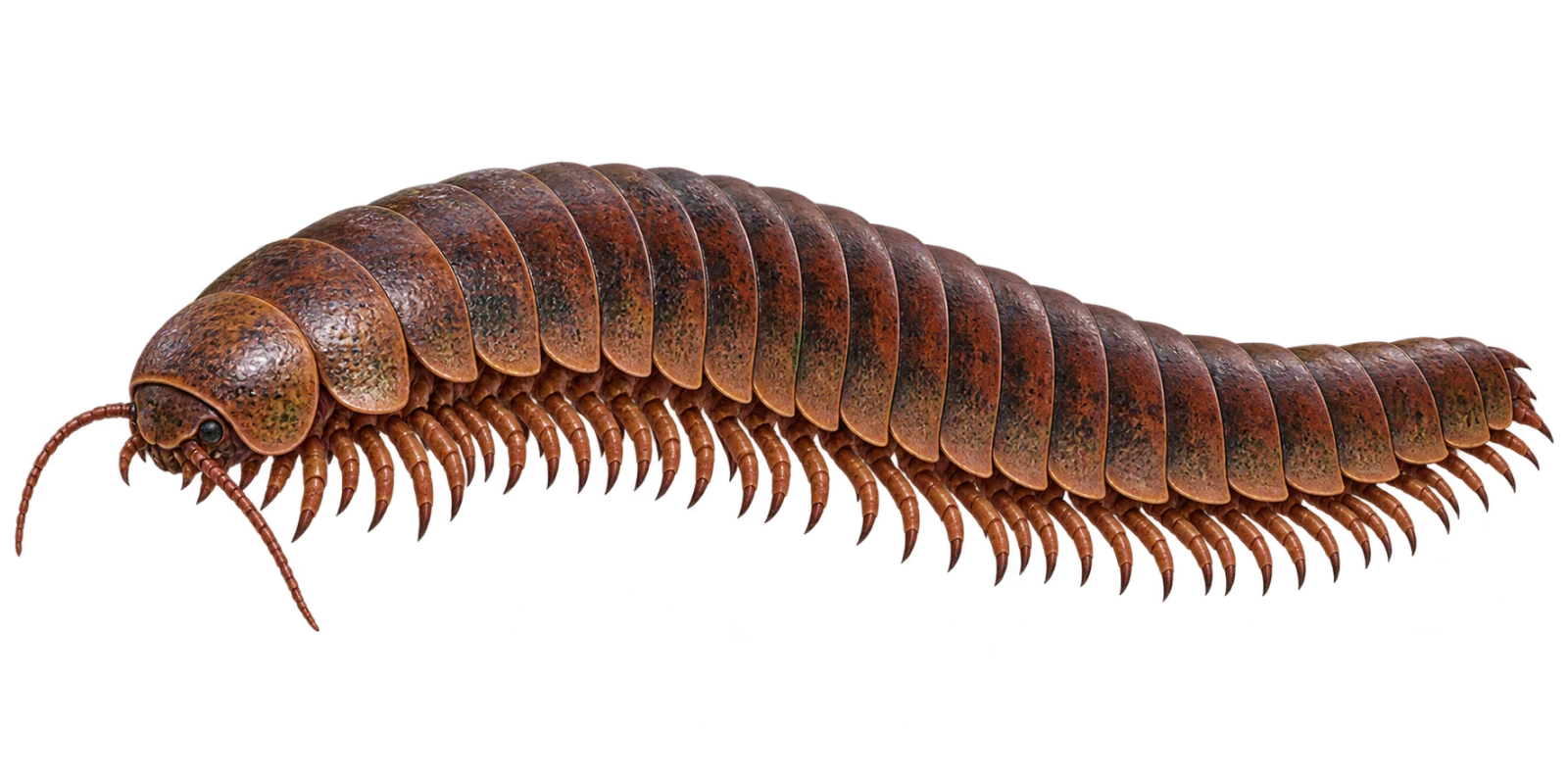
Millipedes
Arthropleura
Arthropleura
Classification and source reference
ExtinctAI reconstruction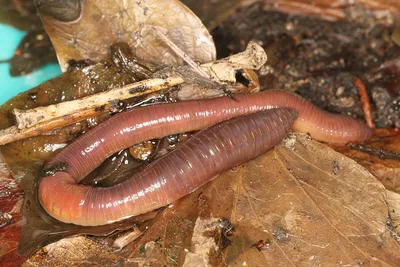
Worms
Earthworm
Haplotaxida
Earthworms have different burrowing habits.
Living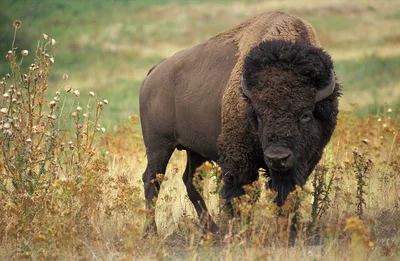 NT
Mammals
American bison
Bison bison
The American bison is the heaviest land animal in North America and the national mammal of the United States.
Living LC
Mammals
American black bear
Ursus americanus
The American black bear is the smallest and most widespread bear in North America, at home in forest from Alaska to Mexico.
Living