Mantis shrimp
Stomatopoda
Living individuals or members of this group exist today. This does not mean they are safe from extinction.
Mantis shrimps are predatory crustaceans. This account describes the peacock mantis shrimp (Odontodactylus scyllarus), a colourful Indo-Pacific species with powerful striking limbs.
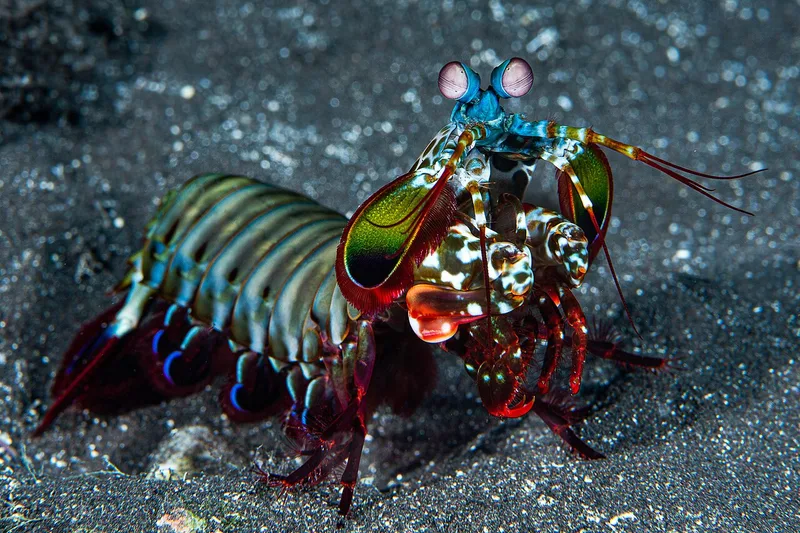
Odontodactylus scyllarus, the representative described in this account.
At a glance
- Location
- Peacock mantis shrimps occupy tropical Indo-Pacific seabeds, often near coral reefs.
- Habitat
- Coral reef
- Diet
- Carnivore
- Food
- Crabs, snails and other hard-shelled animals provide food.
Classification
- Common name
- Mantis shrimp
- Browse group
- Crustaceans
- Scientific name or taxon
- Stomatopoda
- Taxon rank
- order
- Order
- Stomatopoda
- Source classification
- Malacostraca
Taxonomy checked against GBIF. For breeds and hybrids, this describes the listed parent taxon.
Three things to know
- Its front limbs smash shells.
- It shelters in burrows.
- Its compound eyes move independently.
Habitat and range
Peacock mantis shrimps occupy tropical Indo-Pacific seabeds, often near coral reefs. Sand and rubble around reef bases provide places to construct protective burrows.
Appearance and adaptations
Bright colours cover the body, with independently moving compound eyes above the head. Club-shaped front appendages form the powerful striking apparatus of this smashing species.
Diet and behaviour
Crabs, snails and other hard-shelled animals provide food. Rapid blows break open prey, while a burrow provides shelter between hunting trips. This species differs from mantis shrimps that spear soft-bodied prey.
Sources
- Animal Diversity Web: Odontodactylus scyllarus
- GBIF: Mantis shrimp · Directory entry
Explore crustaceans
Browse all crustaceans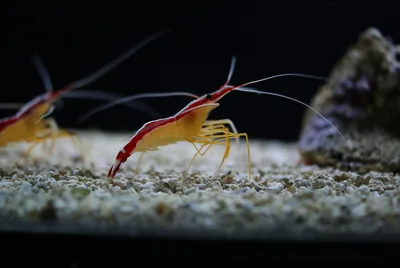
Crustaceans
Shrimp
Shrimps have diverse roles on reefs.
Living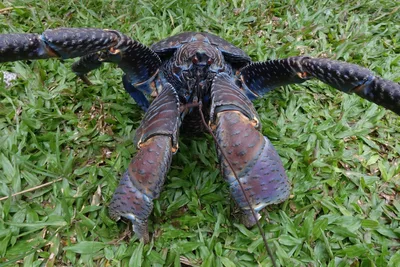 VU
Crustaceans
Coconut crab
Birgus latro
The coconut crab is the largest land-living arthropod.
Living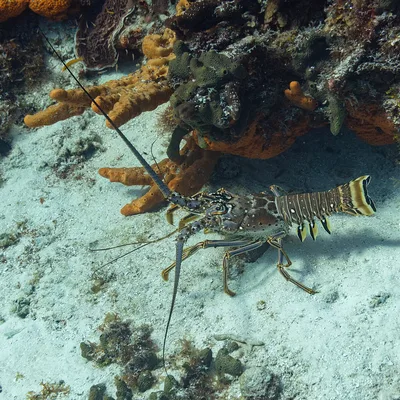
Crustaceans
Spiny lobster
Palinuridae
Spiny lobsters differ from large-clawed lobsters.
Living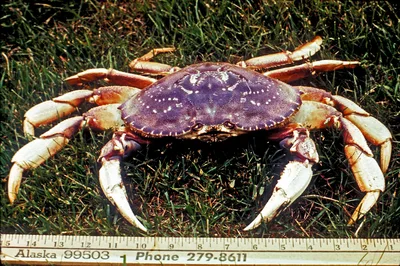
Crustaceans
Dungeness Crab
Metacarcinus magister
The Dungeness crab inhabits the Pacific coast of North America.
Living