Shrimp
Living individuals or members of this group exist today. This does not mean they are safe from extinction.
Shrimps have diverse roles on reefs. This account describes the Pacific cleaner shrimp (Lysmata amboinensis), which removes material from visiting fishes.
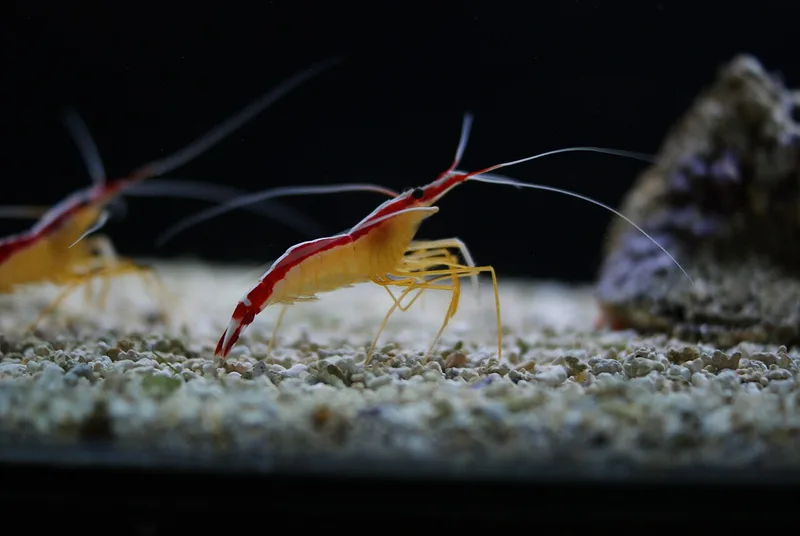
Lysmata amboinensis, the representative described in this account.
At a glance
- Location
- Pacific cleaner shrimps inhabit Indo-Pacific and Red Sea reefs.
- Habitat
- Coral reef
- Diet
- Omnivore
- Food
- Parasites and dead tissue removed from fishes provide an important part of the diet.
Classification
- Common name
- Shrimp
- Browse group
- Crustaceans
- Scientific name or taxon
- Not specified in the source index
- Source classification
- Malacostraca
Three things to know
- Long antennae are conspicuously white.
- It establishes cleaning stations.
- Fish parasites and dead tissue provide food.
Habitat and range
Pacific cleaner shrimps inhabit Indo-Pacific and Red Sea reefs. Crevices, caves and rocky ledges provide places to shelter and establish cleaning stations.
Appearance and adaptations
A pale body carries red longitudinal bands separated by a white stripe. Long white antennae stand out against the reef and help advertise the cleaning station.
Diet and behaviour
Parasites and dead tissue removed from fishes provide an important part of the diet. Fishes visit the station and allow the shrimp to work over their surfaces.
Sources
- Aquarium of the Pacific: Pacific cleaner shrimp
- A–Z Animals: Shrimp · Directory entry
Explore crustaceans
Browse all crustaceans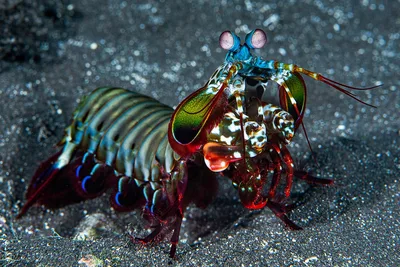
Crustaceans
Mantis shrimp
Stomatopoda
Mantis shrimps are predatory crustaceans.
Living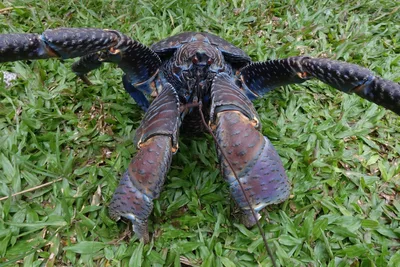 VU
Crustaceans
Coconut crab
Birgus latro
The coconut crab is the largest land-living arthropod.
Living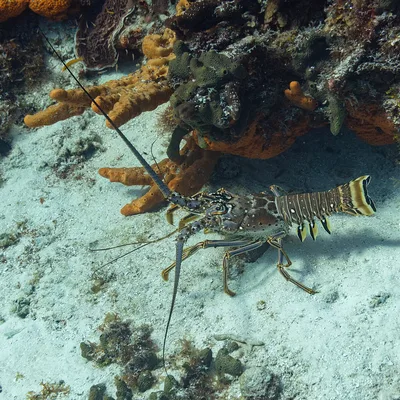
Crustaceans
Spiny lobster
Palinuridae
Spiny lobsters differ from large-clawed lobsters.
Living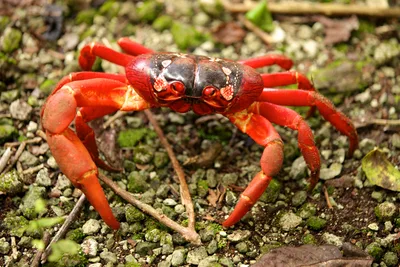
Crustaceans
Christmas Island Red Crab
Gecarcoidea natalis
The Christmas Island red crab is a land crab that spends most of its life on the forest floor.
Living