Krill
Euphausiacea
Living individuals or members of this group exist today. This does not mean they are safe from extinction.
Krill are small marine crustaceans. This account follows Antarctic krill (Euphausia superba), a swarming Southern Ocean species that transfers plankton energy through the food web.
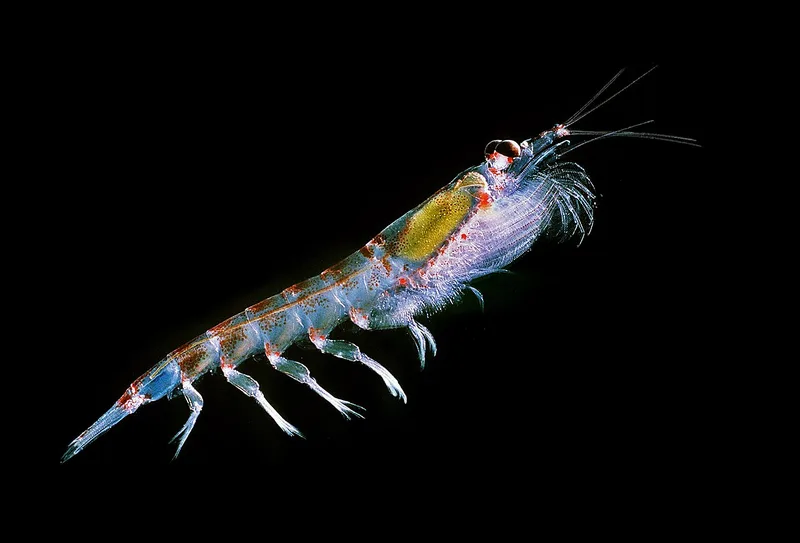
Euphausia superba, the representative described in this account.
Krill666.jpg : Uwe Kils I am willing to give the image in 1700 resolution to Wikipedia Uwe Kils · CC BY-SA
At a glance
- Location
- Antarctic krill inhabit waters surrounding Antarctica, from shelf regions towards the polar front.
- Habitat
- Open ocean, Polar ice
- Diet
- Filter feeder
- Food
- Specialised limbs form a feeding basket that gathers phytoplankton and other particles.
Classification
- Common name
- Krill
- Browse group
- Crustaceans
- Scientific name or taxon
- Euphausiacea
- Taxon rank
- order
- Order
- Euphausiacea
- Source classification
- Malacostraca
Taxonomy checked against GBIF. For breeds and hybrids, this describes the listed parent taxon.
Three things to know
- It forms large swarms.
- Feeding limbs form a basket.
- Ice algae provide winter food.
Habitat and range
Antarctic krill inhabit waters surrounding Antarctica, from shelf regions towards the polar front. Sea ice influences the availability of food during winter.
Appearance and adaptations
The translucent, shrimp-like body has swimming limbs, antennae and stalked eyes. Small light-producing organs occur at several points on the body.
Diet and behaviour
Specialised limbs form a feeding basket that gathers phytoplankton and other particles. Ice-associated algae are important in winter. Krill may also consume small animals or organic remains when available.
Sources
- Animal Diversity Web: Euphausia superba
- A–Z Animals: Krill · Directory entry
Explore crustaceans
Browse all crustaceans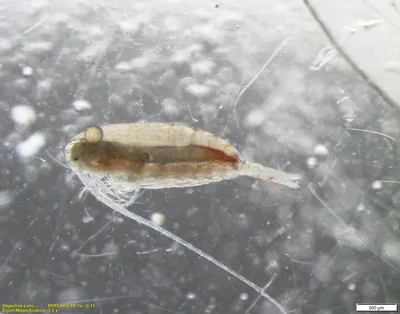
Crustaceans
Copepod
Copepoda
Copepods are small crustaceans with major roles in ocean food webs.
Living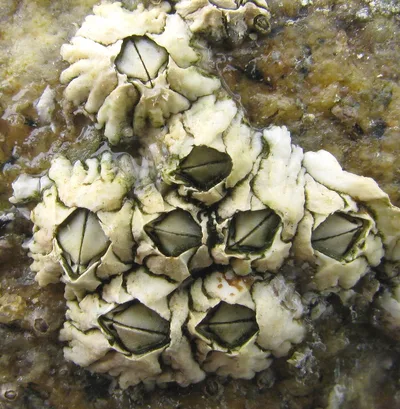
Crustaceans
Barnacle
Cirripedia
Barnacles are crustaceans whose adults are fixed in place.
Living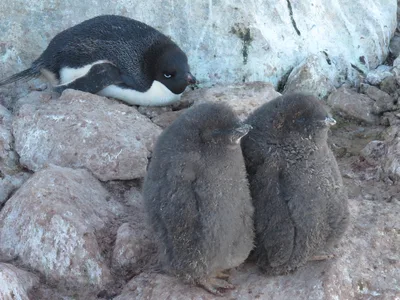 LC
Birds
Adélie penguin
Pygoscelis adeliae
The Adelie penguin is the most widespread penguin of the Antarctic coast.
Living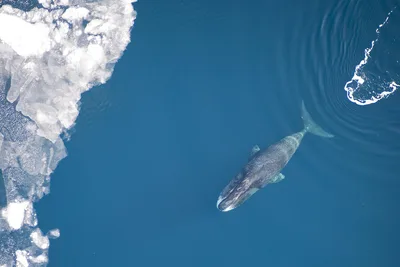 LC
Mammals
Bowhead whale
Balaena mysticetus
The bowhead whale is a heavy Arctic baleen whale that breaks sea ice with its huge arched head.
Living