Copepod
Copepoda
Living individuals or members of this group exist today. This does not mean they are safe from extinction.
Copepods are small crustaceans with major roles in ocean food webs. This account follows Calanus finmarchicus, a North Atlantic species that stores energy for seasonal dormancy.
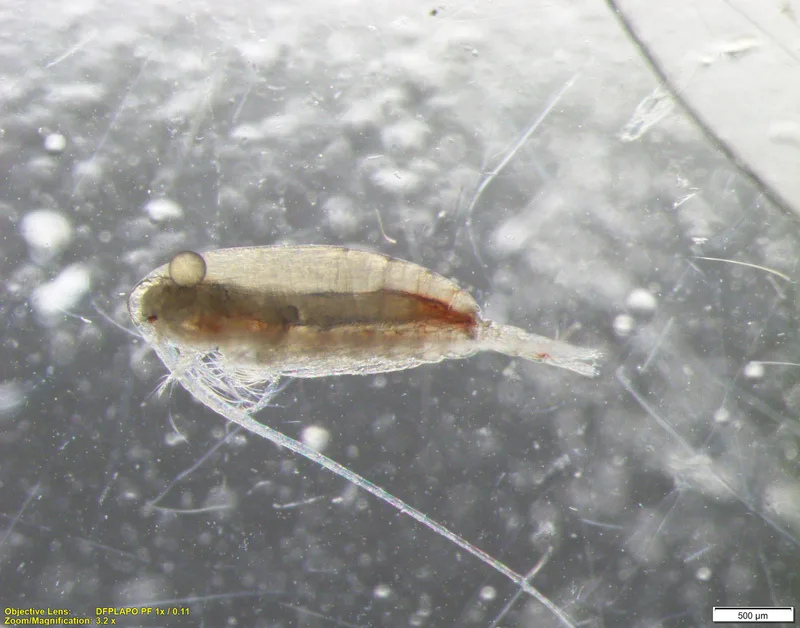
Magnified photograph of Calanus finmarchicus, the representative described here.
At a glance
- Location
- Calanus finmarchicus inhabits Atlantic-influenced northern seas.
- Habitat
- Open ocean
Classification
- Common name
- Copepod
- Browse group
- Crustaceans
- Scientific name or taxon
- Copepoda
- Taxon rank
- class
- Source classification
- Copepoda
Taxonomy checked against GBIF. For breeds and hybrids, this describes the listed parent taxon.
Three things to know
- It is a small crustacean.
- Stored fats support seasonal dormancy.
- It is important prey in northern seas.
Habitat and range
Calanus finmarchicus inhabits Atlantic-influenced northern seas. The cited research examines animals from shallow and deep water in the Fram Strait rather than claiming a single depth for the whole population.
Appearance and adaptations
The small translucent body has prominent appendages and an internal lipid store. Accumulated fats are an important feature of the later juvenile stages studied in seasonal research.
Diet and behaviour
During productive periods these copepods build energy reserves. Many descend and enter a low-activity dormant state. Their abundance also makes them important prey for fishes, seabirds and marine mammals.
Sources
Explore crustaceans
Browse all crustaceans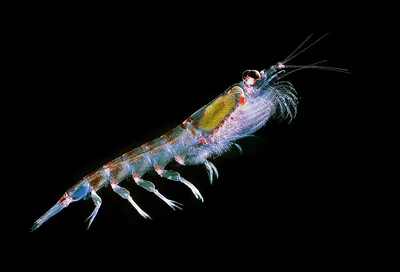
Crustaceans
Krill
Euphausiacea
Krill are small marine crustaceans.
Living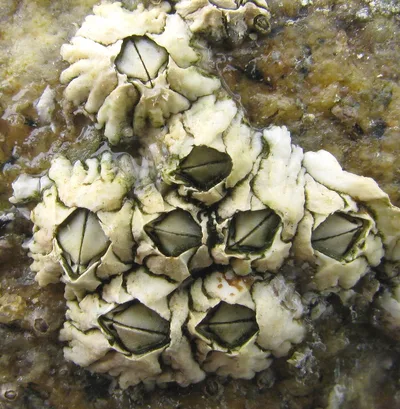
Crustaceans
Barnacle
Cirripedia
Barnacles are crustaceans whose adults are fixed in place.
Living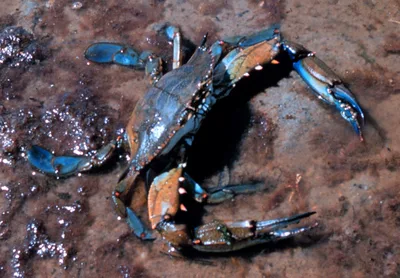
Crustaceans
Crab
Brachyura
True crabs include many forms.
Living
Crustaceans
Dungeness Crab
Metacarcinus magister
The Dungeness crab inhabits the Pacific coast of North America.
Living