Crab
Brachyura
Living individuals or members of this group exist today. This does not mean they are safe from extinction.
True crabs include many forms. This account follows the Atlantic blue crab (Callinectes sapidus), a swimming crab that inhabits estuaries and coastal waters.
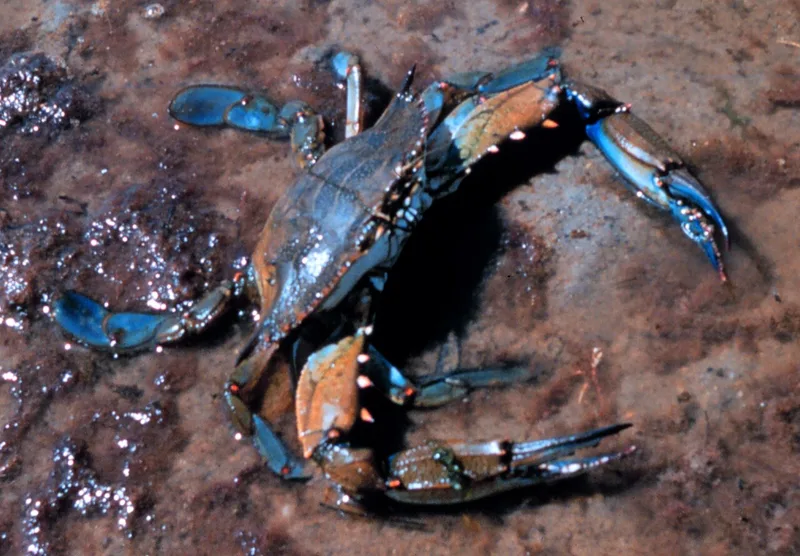
Atlantic blue crab (Callinectes sapidus), photographed for NOAA in Narragansett Bay, Rhode Island.
At a glance
- Location
- Atlantic blue crabs occupy western Atlantic coastal habitats, especially estuaries where freshwater meets the sea.
- Habitat
- Coast, Wetlands
- Diet
- Omnivore
- Food
- Molluscs, other animals and plant material all enter the diet.
Classification
- Common name
- Crab
- Browse group
- Crustaceans
- Scientific name or taxon
- Brachyura
- Source classification
- Malacostraca
Three things to know
- Its rear legs form swimming paddles.
- It sheds its shell to grow.
- It eats both animal and plant foods.
Habitat and range
Atlantic blue crabs occupy western Atlantic coastal habitats, especially estuaries where freshwater meets the sea. Salinity and season influence where different life stages occur.
Appearance and adaptations
The broad shell extends into points at the sides. The final pair of legs is flattened into paddles, and the claws and other front appendages often show blue coloration.
Diet and behaviour
Molluscs, other animals and plant material all enter the diet. Blue crabs can also scavenge. Growth requires shedding the old shell, followed by a vulnerable period while the new covering hardens.
Sources
- Animal Diversity Web: Callinectes sapidus
- A–Z Animals: Crab · Directory entry
Explore crustaceans
Browse all crustaceans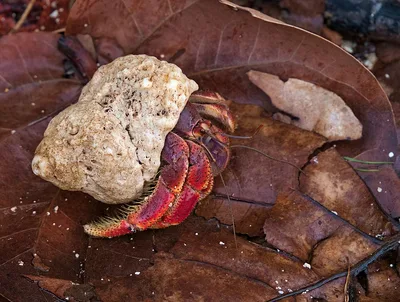
Crustaceans
Hermit Crab
Anomura (hermit-crab lineages; chiefly Paguroidea and Coenobitoidea)
Hermit crabs use empty shells for protection.
Living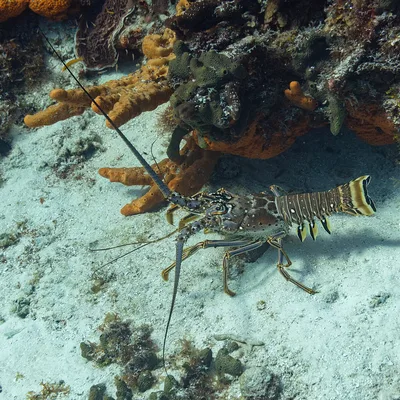
Crustaceans
Spiny lobster
Palinuridae
Spiny lobsters differ from large-clawed lobsters.
Living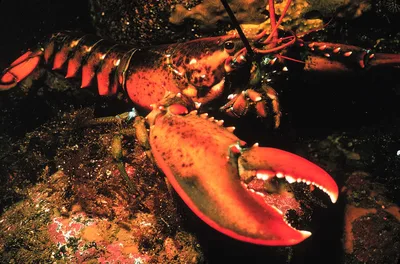
Crustaceans
Lobster
Nephropidae
Clawed lobsters are bottom-dwelling crustaceans.
Living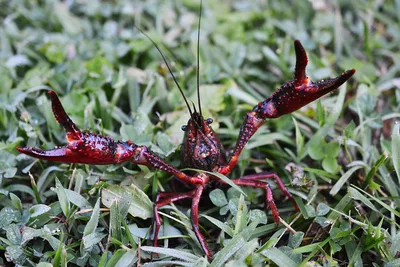
Crustaceans
Crayfish
Decapoda
Crayfish are freshwater crustaceans.
Living