Jellyfish
Living individuals or members of this group exist today. This does not mean they are safe from extinction.
Jellyfish include many drifting cnidarians. This account follows Atlantic sea nettles as treated under Chrysaora quinquecirrha in the cited historical source.
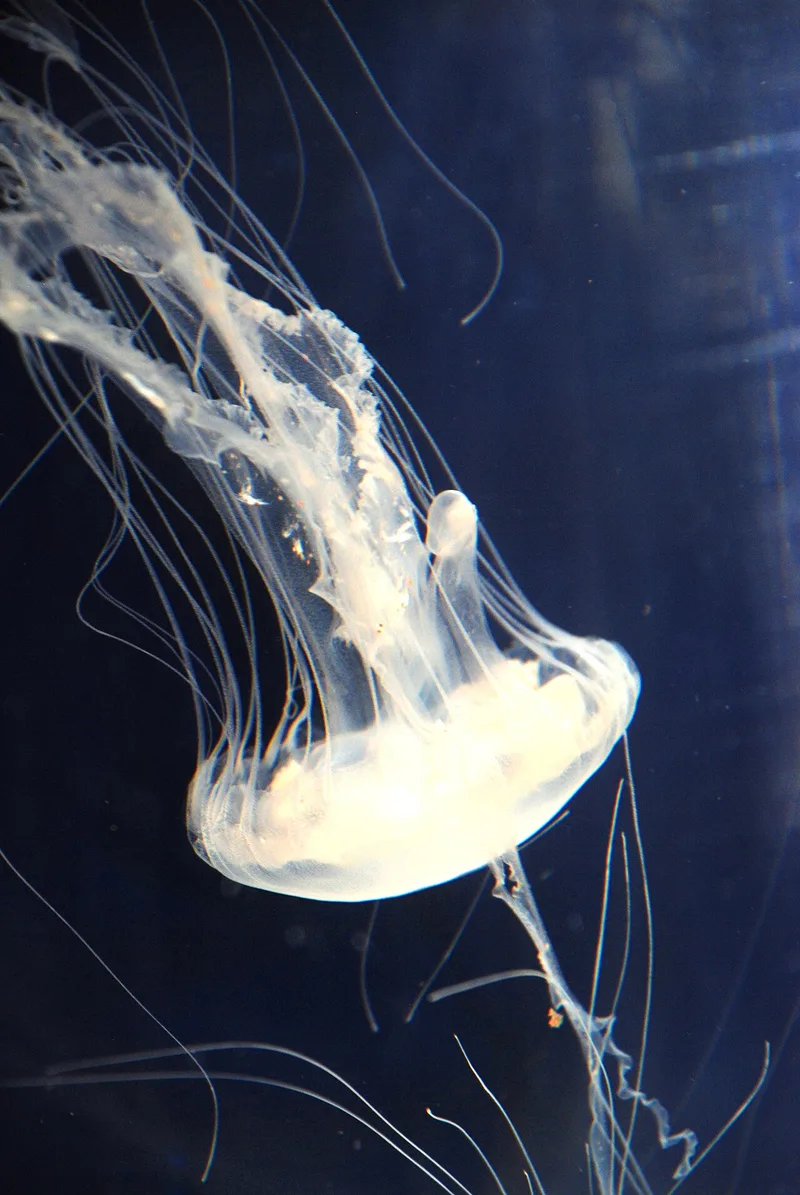
Chrysaora quinquecirrha, the representative described in this account.
At a glance
- Location
- The source describes western Atlantic coastal sea nettles, including estuarine populations.
- Habitat
- Coast
- Diet
- Carnivore
- Food
- Small crustaceans, comb jellies and other animal plankton provide food.
Classification
- Common name
- Jellyfish
- Browse group
- Jellyfish and hydrozoans
- Scientific name or taxon
- Not specified in the source index
Three things to know
- Tentacles carry stinging cells.
- It eats small marine animals.
- Its life cycle includes a polyp stage.
Habitat and range
The source describes western Atlantic coastal sea nettles, including estuarine populations. Its older, broader species treatment is not presented as a modern worldwide distribution for one species.
Appearance and adaptations
A pulsing bell carries trailing tentacles and folded oral arms. Stinging cells on the tentacles capture prey, while much of the transparent body consists of water.
Diet and behaviour
Small crustaceans, comb jellies and other animal plankton provide food. The life cycle includes an attached polyp stage and a free-swimming medusa, connecting seabed attachment with movement through the water.
Sources
- Animal Diversity Web: Chrysaora quinquecirrha
- A–Z Animals: Jellyfish · Directory entry
Explore jellyfish and hydrozoans
Browse all jellyfish and hydrozoans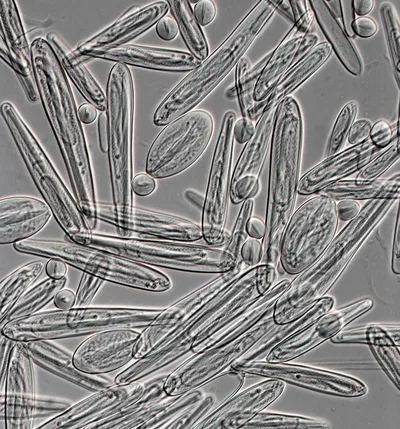
Jellyfish and hydrozoans
Box Jellyfish
Cubozoa
Box jellyfishes are named for their angular bells.
Living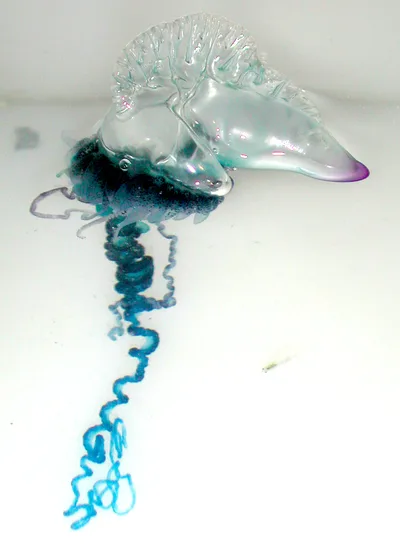
Jellyfish and hydrozoans
Man of War Jellyfish
Physalia physalis
The Portuguese man-of-war is a floating hydrozoan colony rather than a single jellyfish.
Living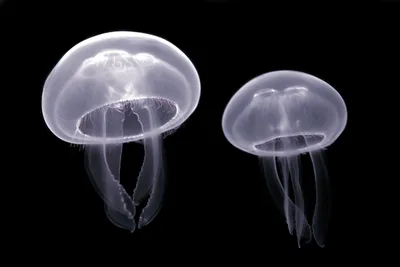
Jellyfish and hydrozoans
Moon Jellyfish
Aurelia aurita
The moon jellyfish has a translucent bell with four conspicuous horseshoe-shaped reproductive structures.
Living NT
Fish
Atlantic salmon
Salmo salar
The Atlantic salmon hatches in a river, grows up at sea, and returns to the same river to spawn.
Living