Moon Jellyfish
Aurelia aurita
Living individuals or members of this group exist today. This does not mean they are safe from extinction.
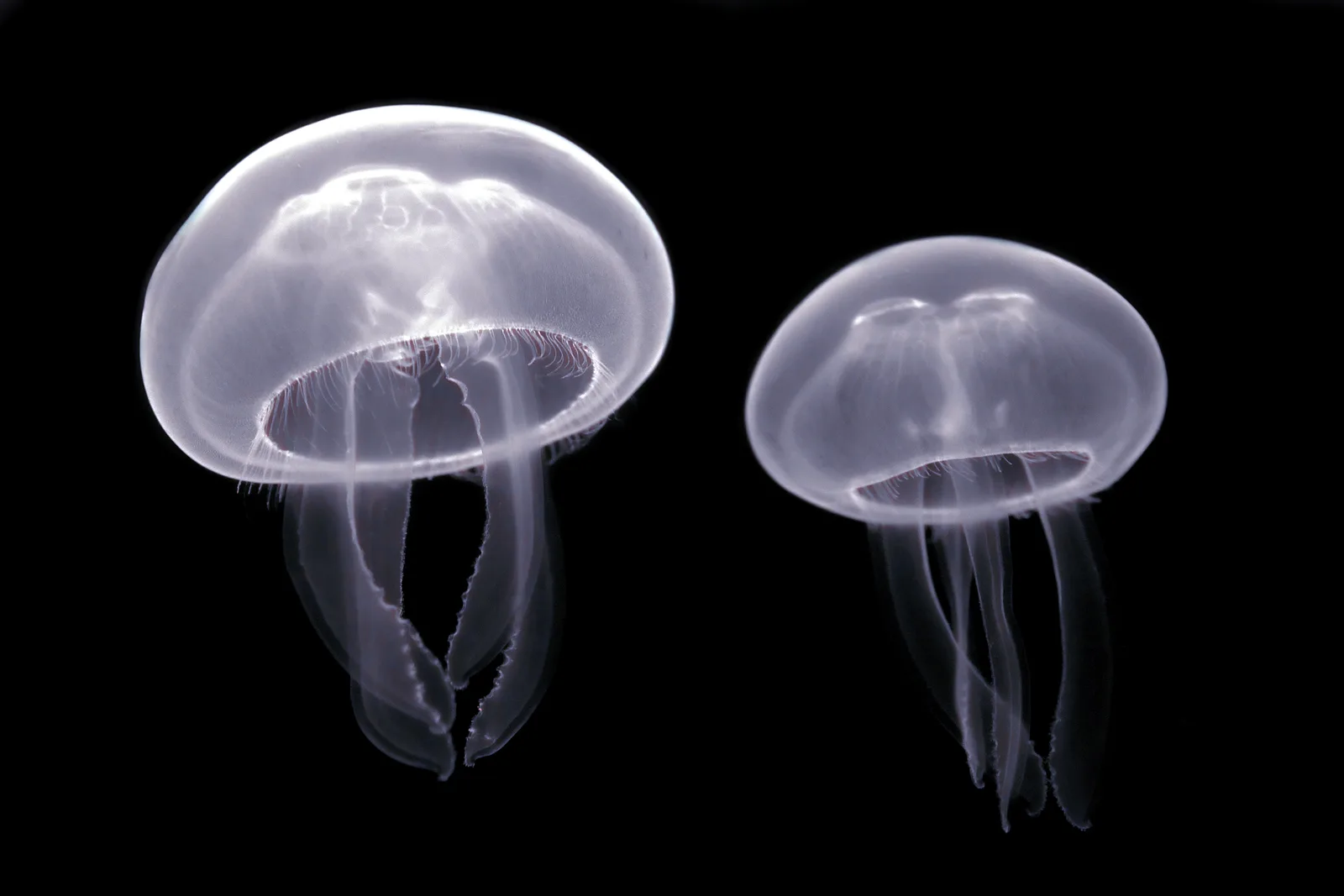
The moon jellyfish has a translucent bell with four conspicuous horseshoe-shaped reproductive structures. Its life cycle alternates between attached polyps and swimming jellyfish.
At a glance
- Location
- Coastal marine and brackish waters.
- Habitat
- Coast
- Diet
- Carnivore
- Food
- Plankton, small invertebrates and fish eggs.
Classification
- Common name
- Moon Jellyfish
- Browse group
- Jellyfish and hydrozoans
- Scientific name or taxon
- Aurelia aurita
- Taxon rank
- species
- Order
- Semaeostomeae
- Family
- Ulmaridae
- Genus
- Aurelia
- Source classification
- Scyphozoa
Taxonomy checked against GBIF. For breeds and hybrids, this describes the listed parent taxon.
Measurements
Size and speed
- Span
- 10 to 35 cm bell diameter
Typical adult ranges. Source: Animal Diversity Web.
Three things to know
- Four horseshoe-shaped structures are visible through the bell.
- Attached polyps form part of its life cycle.
- Small planktonic animals are among its prey.
Habitat and range
Coastal marine and brackish waters.
Appearance and adaptations
Fine tentacles fringe a transparent bell. Four longer oral arms help transfer captured food toward the digestive system.
Diet and behaviour
Small prey becomes trapped around the bell and tentacles before being moved inward. Bell contractions provide movement, while currents also carry the animal.
Sources
- Animal Diversity Web: Aurelia aurita
- A–Z Animals: Moon Jellyfish · Directory entry
Explore jellyfish and hydrozoans
Browse all jellyfish and hydrozoans
Jellyfish and hydrozoans
Box Jellyfish
Cubozoa
Box jellyfishes are named for their angular bells.
Living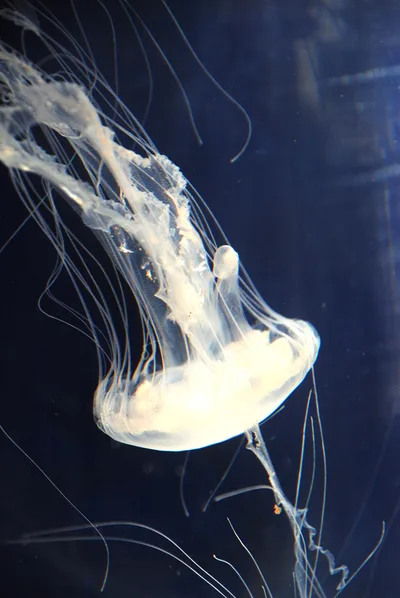
Jellyfish and hydrozoans
Jellyfish
Jellyfish include many drifting cnidarians.
Living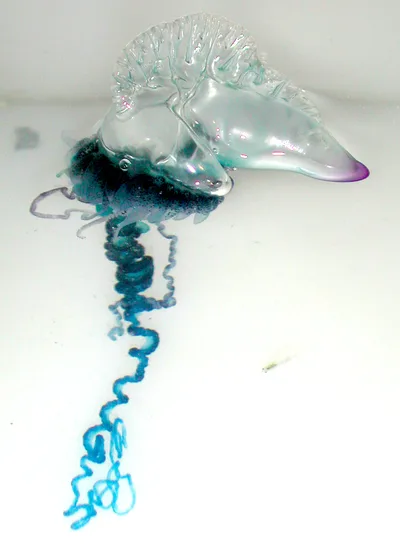
Jellyfish and hydrozoans
Man of War Jellyfish
Physalia physalis
The Portuguese man-of-war is a floating hydrozoan colony rather than a single jellyfish.
LivingJellyfish and hydrozoans
Freshwater Jellyfish
Craspedacusta sowerbii
Classification and source reference
Living