Japanese giant salamander
Andrias japonicus
Living individuals or members of this group exist today. This does not mean they are safe from extinction.
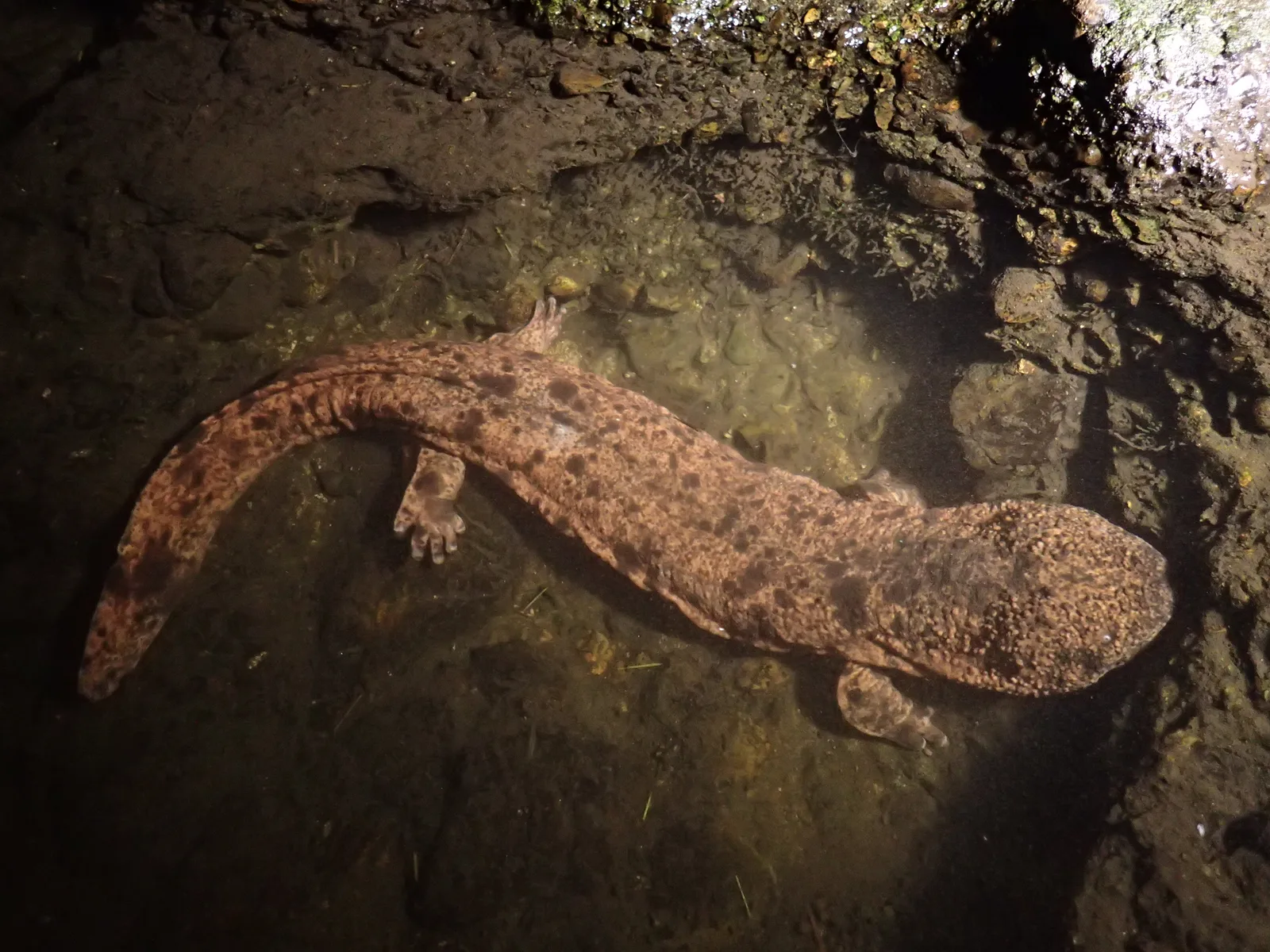
The Japanese giant salamander spends its life in cool flowing streams. Wrinkled skin helps it absorb oxygen from the surrounding water.
At a glance
- Location
- Cool mountain streams in western Honshu and parts of Kyushu, Japan.
- Habitat
- Rivers and lakes, Mountains
- Diet
- Carnivore
- Food
- Fish and other available aquatic animals.
Classification
- Common name
- Japanese giant salamander
- Browse group
- Amphibians
- Scientific name or taxon
- Andrias japonicus
- Taxon rank
- species
- Order
- Caudata
- Family
- Cryptobranchidae
- Genus
- Andrias
- Source classification
- Amphibia
Taxonomy checked against GBIF. For breeds and hybrids, this describes the listed parent taxon.
Three things to know
- It absorbs oxygen through its skin.
- It is usually active at night.
- Its natural range is in Japan.
Habitat and range
Cool mountain streams in western Honshu and parts of Kyushu, Japan.
Appearance and adaptations
A broad, flattened head carries small eyes. Folds increase the skin surface available for gas exchange, and the tail is broad.
Diet and behaviour
It shelters beneath rocks during daylight and becomes active at night. Rapid mouth movements create suction that draws in passing prey.
Sources
- Animal Diversity Web: Andrias japonicus
- GBIF: Japanese giant salamander · Directory entry
Explore amphibians
Browse all amphibians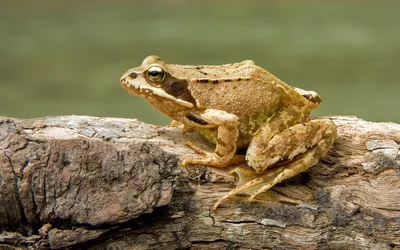
Amphibians
Common Frog
Rana temporaria
The common frog is a widespread European amphibian that also occurs in northwestern Asia.
Living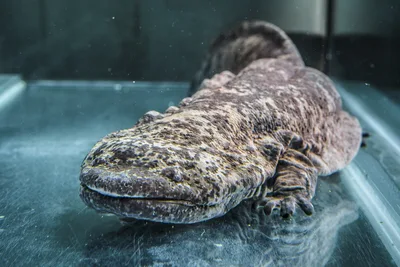
Amphibians
Giant Salamander
Andrias davidianus
Chinese giant salamanders are large aquatic amphibians with broad heads and flattened bodies.
Living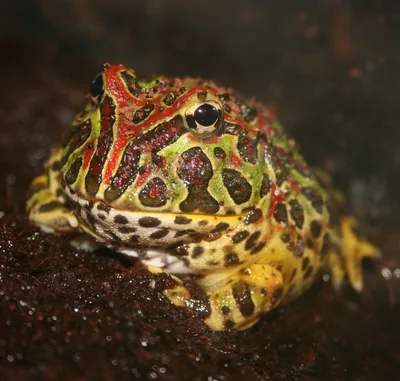
Amphibians
Argentine Horned Frog
Ceratophrys ornata
The Argentine horned frog is a broad-bodied ambush hunter with a very large mouth.
Living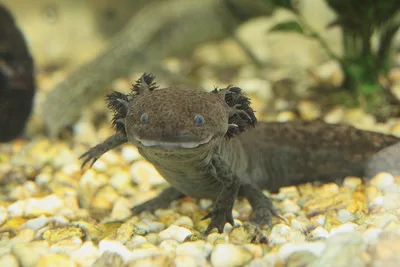 CR
Amphibians
Axolotl
Ambystoma mexicanum
The axolotl is a salamander that never grows up.
Living