Giant Salamander
Andrias davidianus
Living individuals or members of this group exist today. This does not mean they are safe from extinction.
Chinese giant salamanders are large aquatic amphibians with broad heads and flattened bodies. This account retains Andrias davidianus while recognising that older accounts combined several distinct Chinese lineages.
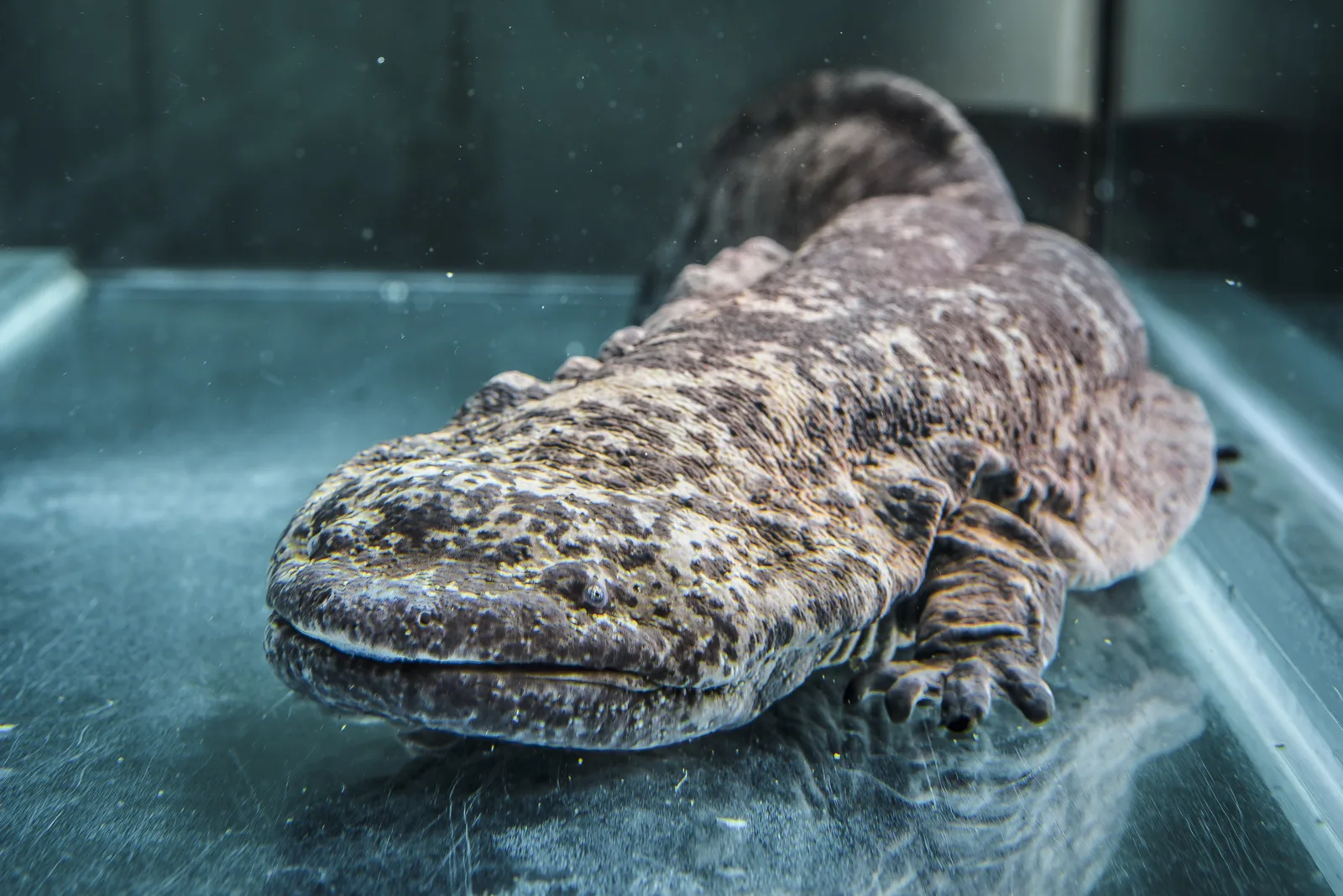
Captive Chinese giant salamander photographed as Andrias davidianus; its exact lineage is unverified.
At a glance
- Habitat
- Rivers and lakes
- Diet
- Carnivore
- Food
- Fish, crustaceans and other aquatic animals.
Classification
- Common name
- Giant Salamander
- Browse group
- Amphibians
- Scientific name or taxon
- Andrias davidianus
- Taxon rank
- species
- Order
- Caudata
- Family
- Cryptobranchidae
- Genus
- Andrias
- Source classification
- Amphibia
Taxonomy checked against GBIF. For breeds and hybrids, this describes the listed parent taxon.
Three things to know
- It remains aquatic as an adult.
- Males guard the developing eggs.
- Chinese giant salamanders include multiple distinct species.
Habitat and range
These salamanders live in Chinese freshwater systems, sheltering in submerged cavities and along stream banks. The historical Chinese giant-salamander range includes several species and extensive human translocations, so it cannot all be assigned to Andrias davidianus.
Appearance and adaptations
A broad, flattened head, small eyes and a muscular tail suit life underwater. Mottled skin and a low body profile help a resting salamander blend with the stream bottom.
Diet and behaviour
They ambush aquatic animals, including fish, crabs and other amphibians, drawing prey in with suction. Activity is mainly nocturnal. Breeding males guard eggs in sheltered underwater sites.
Sources
Explore amphibians
Browse all amphibians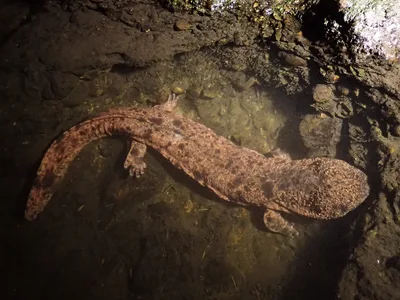
Amphibians
Japanese giant salamander
Andrias japonicus
The Japanese giant salamander spends its life in cool flowing streams.
Living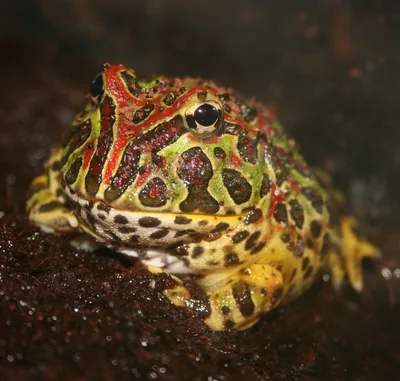
Amphibians
Argentine Horned Frog
Ceratophrys ornata
The Argentine horned frog is a broad-bodied ambush hunter with a very large mouth.
Living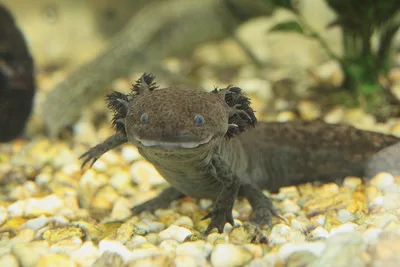 CR
Amphibians
Axolotl
Ambystoma mexicanum
The axolotl is a salamander that never grows up.
Living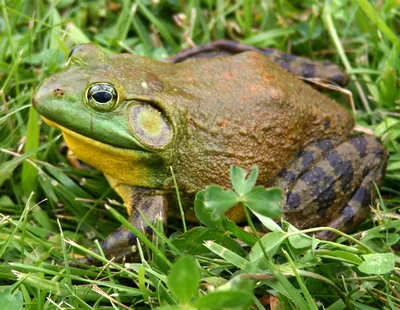
Amphibians
Bullfrog
Lithobates catesbeianus
The American bullfrog is a large frog that waits near water for passing prey.
Living