Ibis
Threskiornithidae
Living individuals or members of this group exist today. This does not mean they are safe from extinction.
Ibises are wading birds with curved bills. This account describes the scarlet ibis (Eudocimus ruber), whose brilliant adult plumage stands out above tropical mudflats and mangroves.
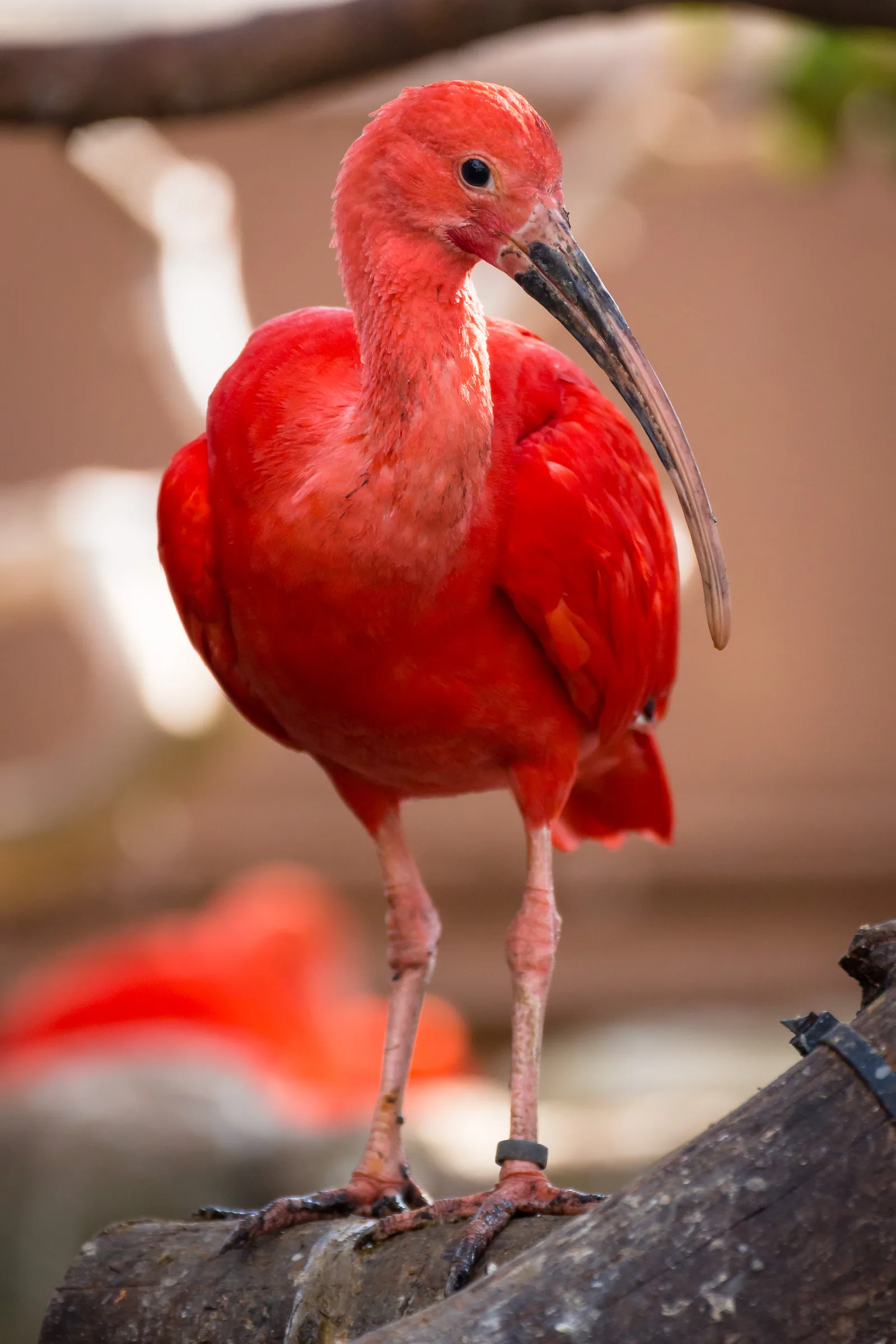
Representative species: Eudocimus ruber.
At a glance
- Habitat
- Wetlands, Coast
- Diet
- Carnivore
- Food
- Crustaceans and other small aquatic animals.
Classification
- Common name
- Ibis
- Browse group
- Birds
- Scientific name or taxon
- Threskiornithidae
- Taxon rank
- family
- Order
- Pelecaniformes
- Family
- Threskiornithidae
- Source classification
- Aves
Taxonomy checked against GBIF. For breeds and hybrids, this describes the listed parent taxon.
Three things to know
- Young birds are much duller than adults.
- Its curved bill probes mud for food.
- It commonly feeds and nests in groups.
Habitat and range
Scarlet ibises occupy northern South America, including coastal and interior wetlands. Mudflats, shallow bays and mangrove islands provide feeding areas and nesting sites.
Appearance and adaptations
Adults are vivid red with dark outer wing tips. A long downward-curving bill probes soft substrates. Young birds begin much duller and develop their adult colours gradually.
Diet and behaviour
Crustaceans and other aquatic invertebrates dominate the diet, with small vertebrates also eaten. Birds probe mud or pick prey from exposed surfaces. They travel and nest communally, moving between feeding areas and roosts.
Sources
- Animal Diversity Web: Eudocimus ruber
- A–Z Animals: Ibis · Directory entry
Explore birds
Browse all birds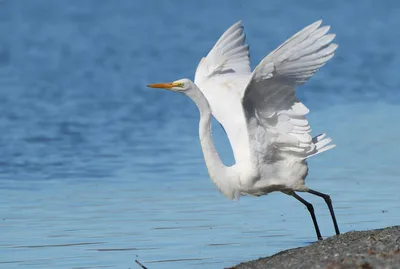 LC
Birds
Great egret
Ardea alba
The great egret is a tall white heron that hunts fish in shallow water on six continents.
Living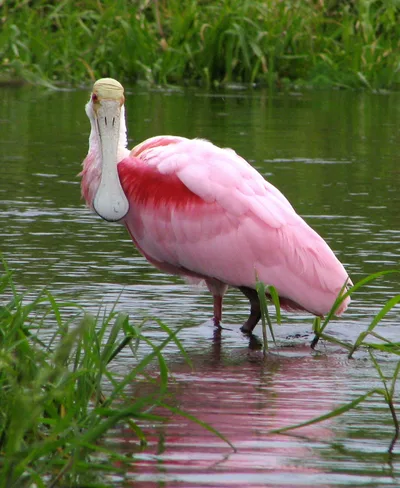
Birds
Roseate Spoonbill
Platalea ajaja
The roseate spoonbill is a pink wading bird with an unusually flattened bill.
Living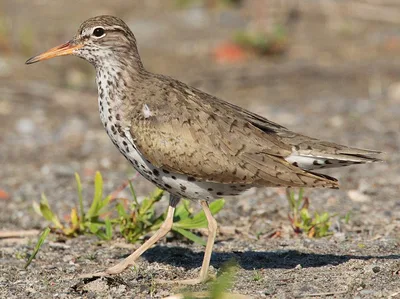
Birds
Sandpiper
Scolopacidae
Sandpipers are diverse shorebirds.
Living
Birds
Duck
Anatidae
Ducks are waterbirds with many different feeding habits.
Living