Horsefly
Tabanidae
Living individuals or members of this group exist today. This does not mean they are safe from extinction.
Horseflies include many species. This account follows the black horsefly (Tabanus atratus), whose large dark adults occur in North America.
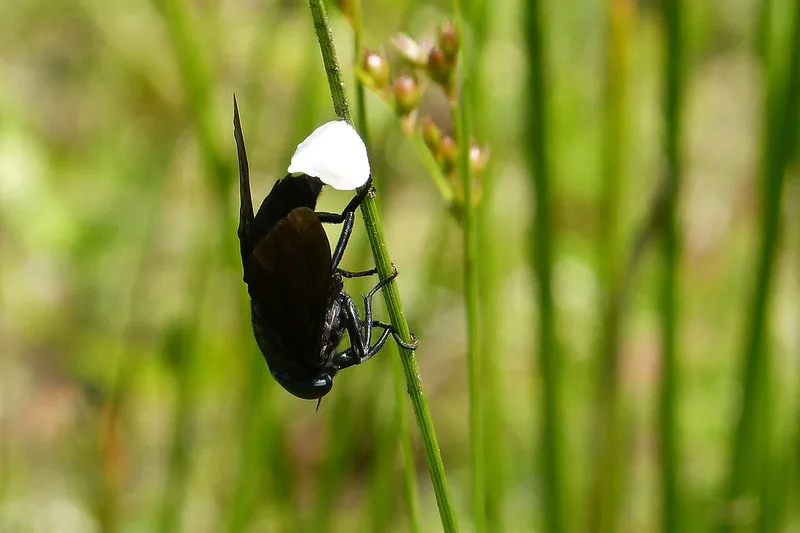
Tabanus atratus, the representative described in this account.
At a glance
- Location
- Black horseflies use varied habitats, including woodland and open country.
- Habitat
- Grassland, Temperate forest, Wetlands
- Diet
- Omnivore
- Food
- Females take mammal blood to support egg production.
Classification
- Common name
- Horsefly
- Browse group
- Insects
- Scientific name or taxon
- Tabanidae
- Taxon rank
- family
- Order
- Diptera
- Family
- Tabanidae
- Source classification
- Insecta
Taxonomy checked against GBIF. For breeds and hybrids, this describes the listed parent taxon.
Three things to know
- Females take blood meals.
- Males feed on plant liquids.
- Adults are active during daylight.
Habitat and range
Black horseflies use varied habitats, including woodland and open country. Moist areas support egg laying and development, while adult females seek mammals for blood meals.
Appearance and adaptations
The body and wings are predominantly dark. Large compound eyes occupy much of the head; females have separated eyes, whereas the male eyes meet above.
Diet and behaviour
Females take mammal blood to support egg production. Males instead feed on nectar and other plant juices. These daytime-active flies therefore have different feeding roles according to sex.
Sources
- Animal Diversity Web: Tabanus atratus
- A–Z Animals: Horsefly · Directory entry
Explore insects
Browse all insects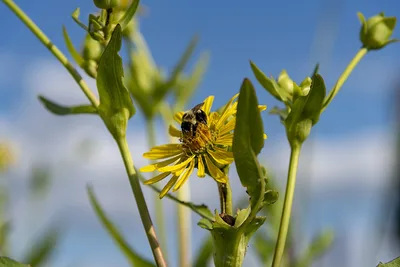
Insects
Bumblebee
Bombus
Bumblebees are social bees that gather nectar and pollen.
Living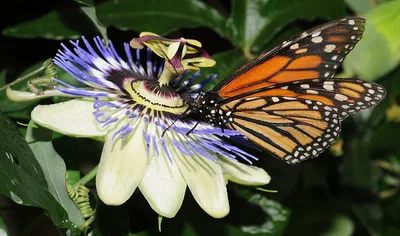
Insects
Butterfly
Lepidoptera
Butterflies have diverse life histories.
Living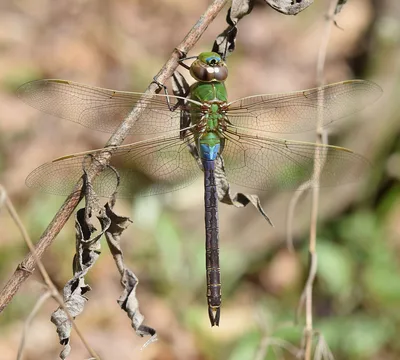
Insects
Dragonfly
Odonata
Dragonflies hunt both underwater and in the air.
Living
Insects
Firefly
Lampyridae
Fireflies are light-producing beetles.
Living