Hornet
Vespa
Living individuals or members of this group exist today. This does not mean they are safe from extinction.
Hornets are large social wasps. This account describes the European hornet (Vespa crabro), a Eurasian species also established in eastern North America.
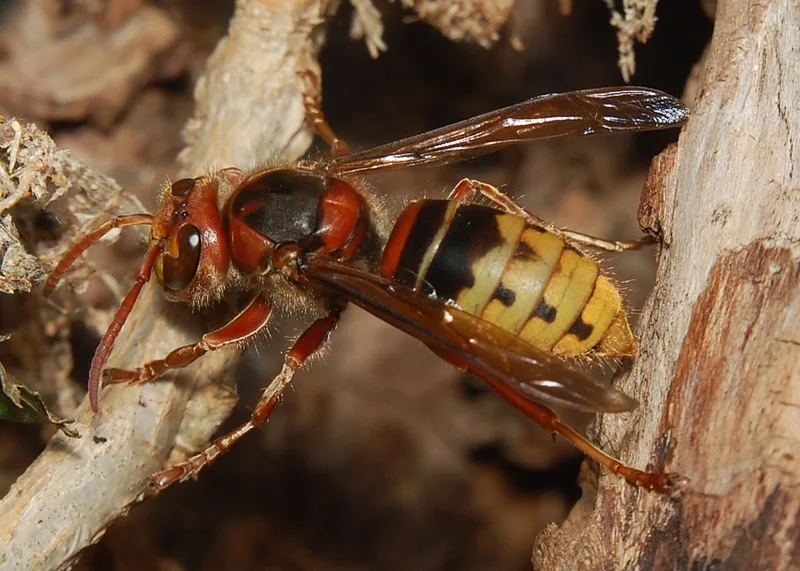
European hornet (Vespa crabro) beside the entrance to its nest in a hollow tree.
At a glance
- Location
- European hornets nest in cavities such as hollow trees and sheltered building spaces.
- Habitat
- Temperate forest, Towns and cities
- Diet
- Omnivore
- Food
- Workers hunt insects, and sugary foods such as fruit and plant sap also enter the diet.
Classification
- Common name
- Hornet
- Browse group
- Insects
- Scientific name or taxon
- Vespa
- Source classification
- Insecta
Three things to know
- It is a social wasp.
- Hollow cavities can contain nests.
- Its diet includes insects and sugary foods.
Habitat and range
European hornets nest in cavities such as hollow trees and sheltered building spaces. Woodland and nearby settled areas provide nesting sites and feeding opportunities.
Appearance and adaptations
A large body combines reddish-brown areas with yellow markings. Queens are larger than workers, while all share the narrow waist characteristic of wasps.
Diet and behaviour
Workers hunt insects, and sugary foods such as fruit and plant sap also enter the diet. Colonies develop around a queen and workers, with new reproductive individuals produced later in the season.
Sources
- Penn State Extension: European hornet
- A–Z Animals: Hornet · Directory entry
Explore insects
Browse all insects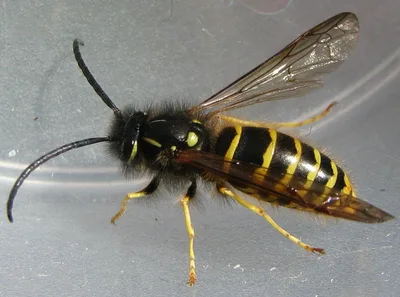
Insects
Wasp
Hymenoptera
Wasps include solitary and social hunters.
Living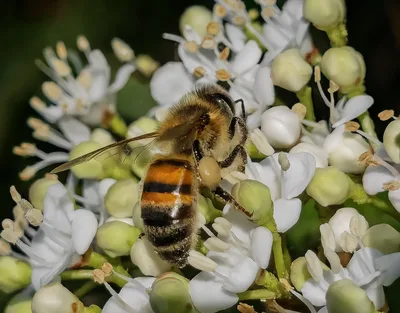 DD
Insects
Western honey bee
Apis mellifera
The western honey bee lives in colonies of tens of thousands and turns nectar into honey.
Living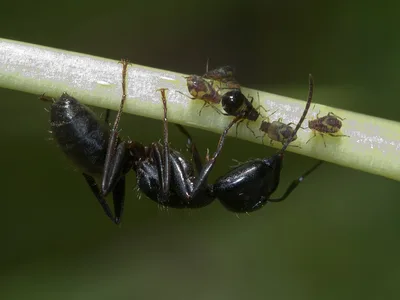
Insects
Ant
Formicidae
Ants have many different colony structures and diets.
Living
Insects
Cockroach
Blattodea
Cockroaches occupy many environments.
Living