Herring
Clupeidae
Living individuals or members of this group exist today. This does not mean they are safe from extinction.
Herrings are schooling fishes that connect plankton with larger marine predators. This account follows Atlantic herring, a silvery North Atlantic species that gathers in large groups to feed and spawn.
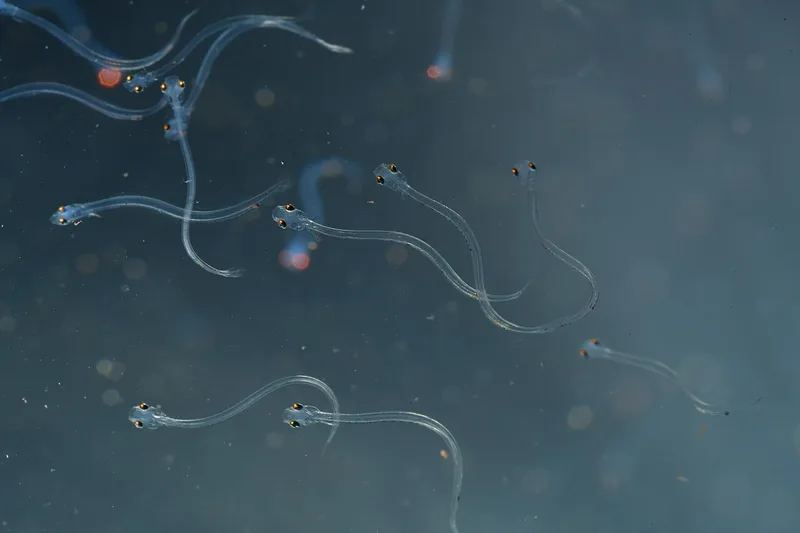
Atlantic herring (Clupea harengus) larvae photographed during an Ifremer research project.
At a glance
- Location
- Clupea harengus is the representative described here. It uses North Atlantic coastal and offshore waters. Seasonal movements bring different populations to their feeding and spawning grounds.
- Habitat
- Coast, Open ocean
- Diet
- Carnivore
- Food
- Planktonic animals provide much of the food, including copepods and other small crustaceans.
Classification
- Common name
- Herring
- Browse group
- Fish
- Scientific name or taxon
- Clupeidae
- Taxon rank
- family
- Order
- Clupeiformes
- Family
- Clupeidae
- Source classification
- Actinopterygii
Taxonomy checked against GBIF. For breeds and hybrids, this describes the listed parent taxon.
Three things to know
- Adults form large schools.
- Its tail is deeply forked.
- Its food changes as it grows.
Habitat and range
Clupea harengus is the representative described here. It uses North Atlantic coastal and offshore waters. Seasonal movements bring different populations to their feeding and spawning grounds.
Appearance and adaptations
Adults have bluish or greenish backs, silvery flanks and deeply forked tails. The body is compressed from side to side. The lead photograph shows larvae, whose form differs from that of adults.
Diet and behaviour
Planktonic animals provide much of the food, including copepods and other small crustaceans. Food changes as larvae develop. Large schools gather before spawning, linking feeding movements with reproductive migrations.
Sources
- Animal Diversity Web: Clupea harengus
- A–Z Animals: Herring · Directory entry
Explore fish
Browse all fish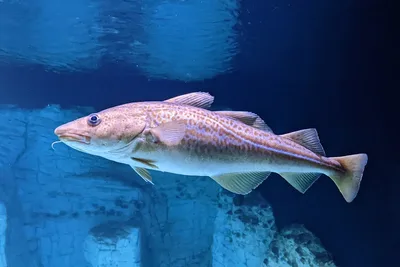
Fish
Atlantic Cod
Gadus morhua
The Atlantic cod is a cold-water fish of the North Atlantic.
Living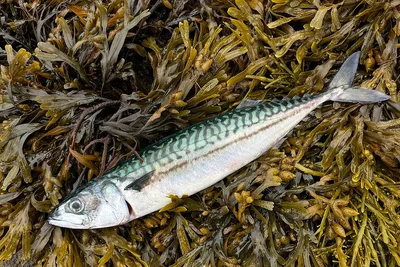
Fish
Atlantic mackerel
Scomber scombrus
Atlantic mackerel are streamlined schooling fishes of northern seas.
Living NT
Fish
Atlantic salmon
Salmo salar
The Atlantic salmon hatches in a river, grows up at sea, and returns to the same river to spawn.
Living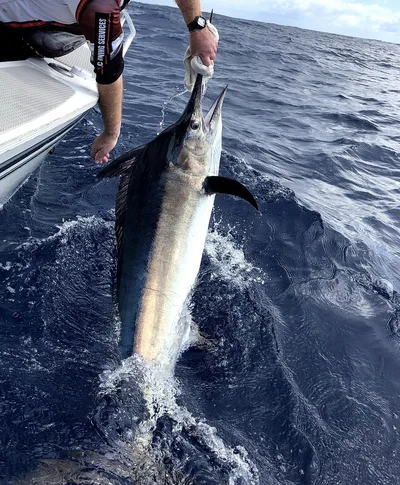
Fish
Black Marlin
Istiompax indica
The black marlin is a large predatory billfish of the Indo-Pacific.
Living