Hamster
Cricetidae
Living individuals or members of this group exist today. This does not mean they are safe from extinction.
Hamsters are burrowing rodents that often store food underground. This overview uses the European hamster as a representative.
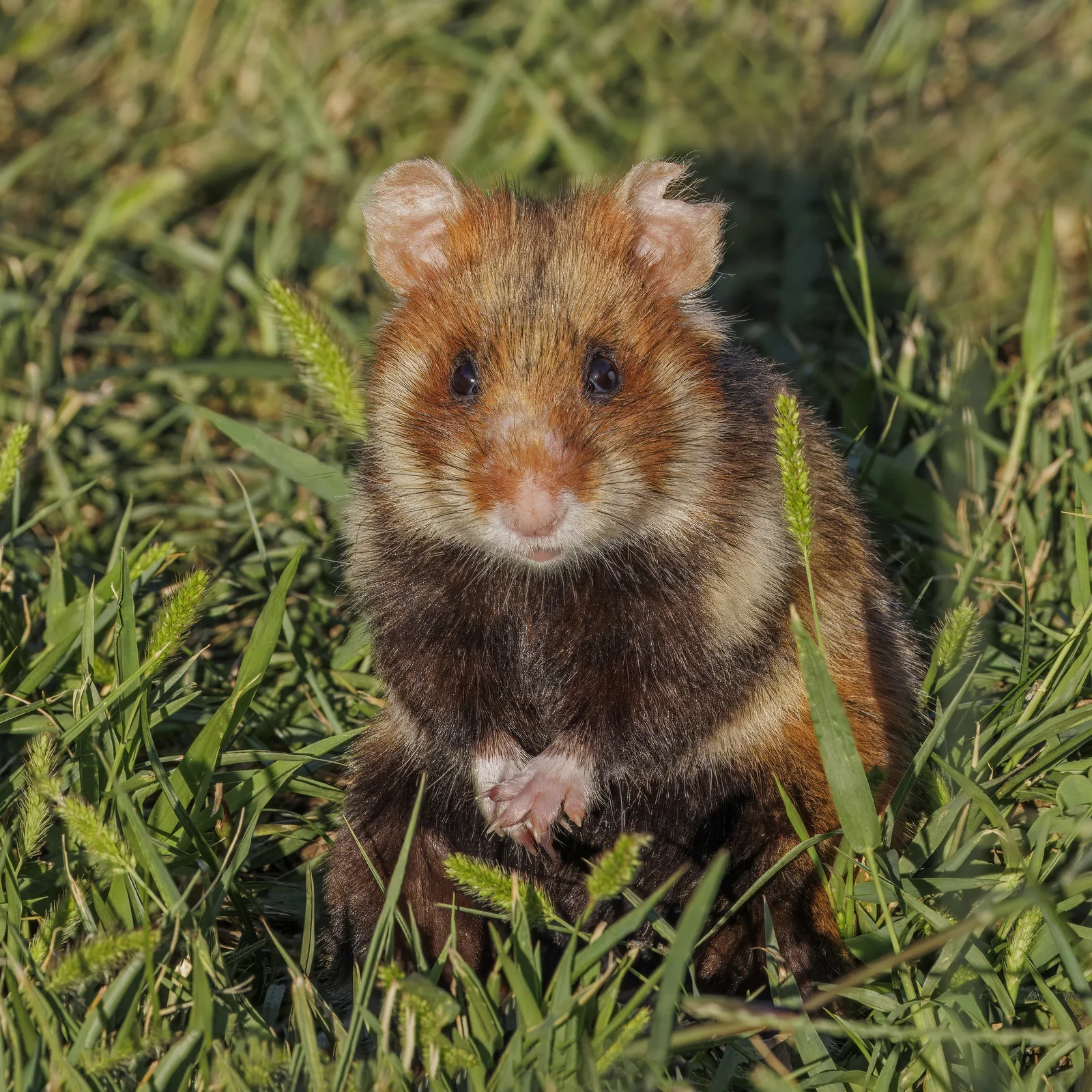
European hamster, one of the true hamsters within the family Cricetidae.
At a glance
- Location
- European hamster populations occupy parts of Europe and western Asia, including open agricultural landscapes.
- Habitat
- Grassland
- Diet
- Omnivore
- Food
- Seeds, grains, plant material and some insects.
Classification
- Common name
- Hamster
- Browse group
- Mammals
- Scientific name or taxon
- Cricetidae
- Taxon rank
- family
- Order
- Rodentia
- Family
- Cricetidae
- Source classification
- Mammalia
Taxonomy checked against GBIF. For breeds and hybrids, this describes the listed parent taxon.
Three things to know
- Food can be carried in cheek pouches.
- Burrows include food-storage chambers.
- European hamsters are generally solitary.
Habitat and range
European hamster populations occupy parts of Europe and western Asia, including open agricultural landscapes.
Appearance and adaptations
Cheek pouches carry food, and strong front limbs help with digging. Body colour and size differ between hamster species.
Diet and behaviour
European hamsters are mainly nocturnal and usually solitary. Their burrows contain separate chambers, including spaces where collected food is stored.
Sources
- Animal Diversity Web: Cricetus cricetus
- A–Z Animals: Hamster · Directory entry
Explore mammals
Browse all mammals LC
Mammals
Brown rat
Rattus norvegicus
The brown rat is a large, burrowing rodent that lives wherever people live.
Living LC
Mammals
Common raccoon dog
Nyctereutes procyonoides
The common raccoon dog is a stocky, fox-like canid of East Asia with a black face mask like a raccoon's.
LivingMammals
Dog
Canis lupus familiaris
The domestic dog is a social canid whose breeds vary greatly in size and appearance.
Living LC
Mammals
European badger
Meles meles
The European badger is a stocky, striped-faced mustelid that lives in family clans across Europe and western Asia.
Living
