Haddock
Melanogrammus aeglefinus
Living individuals or members of this group exist today. This does not mean they are safe from extinction.
Haddock are North Atlantic fishes that feed largely near the seabed. A dark line along the side and a prominent dark patch above the pectoral fin help identify the species.
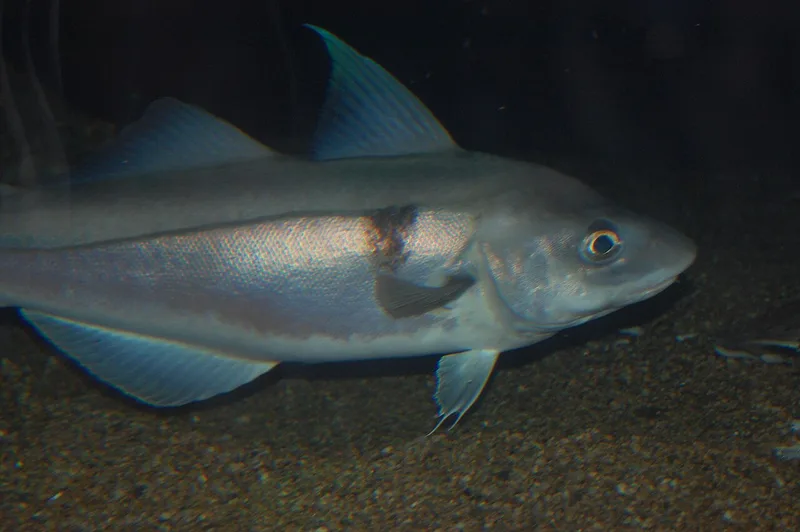
Haddock (Melanogrammus aeglefinus) photographed at the New England Aquarium.
At a glance
- Location
- Melanogrammus aeglefinus occupies cold and temperate North Atlantic waters and adjacent northern seas. Adults use bottoms made of rock, sand, gravel or shells and can move considerable distances.
- Habitat
- Coast
- Diet
- Carnivore
- Food
- Haddock take worms, molluscs, crustaceans, echinoderms and small fishes.
Classification
- Common name
- Haddock
- Browse group
- Fish
- Scientific name or taxon
- Melanogrammus aeglefinus
- Taxon rank
- species
- Order
- Gadiformes
- Family
- Gadidae
- Genus
- Melanogrammus
- Source classification
- Actinopterygii
Taxonomy checked against GBIF. For breeds and hybrids, this describes the listed parent taxon.
Three things to know
- It has a dark shoulder blotch.
- A small barbel lies under the chin.
- It eats many bottom-living animals.
Habitat and range
Melanogrammus aeglefinus occupies cold and temperate North Atlantic waters and adjacent northern seas. Adults use bottoms made of rock, sand, gravel or shells and can move considerable distances.
Appearance and adaptations
The lower jaw is shorter than the upper, and a small barbel lies beneath the chin. The dark lateral line and large dark shoulder blotch are especially useful identification features.
Diet and behaviour
Haddock take worms, molluscs, crustaceans, echinoderms and small fishes. Feeding is closely associated with bottom habitats. The species releases eggs in batches rather than producing one single spawning event.
Sources
- FishBase: Melanogrammus aeglefinus
- A–Z Animals: Haddock · Directory entry
Explore fish
Browse all fish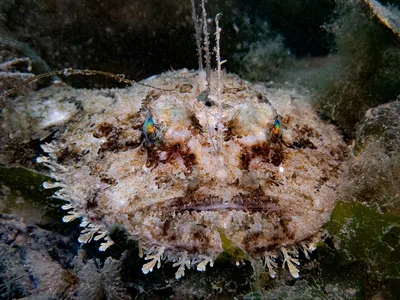
Fish
Anglerfish
Lophiiformes
Anglerfishes include many different marine hunters.
Living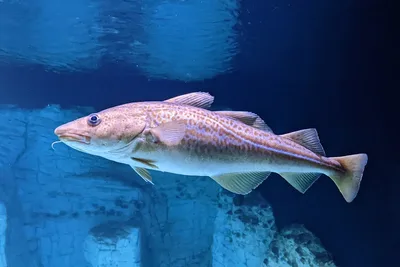
Fish
Atlantic Cod
Gadus morhua
The Atlantic cod is a cold-water fish of the North Atlantic.
Living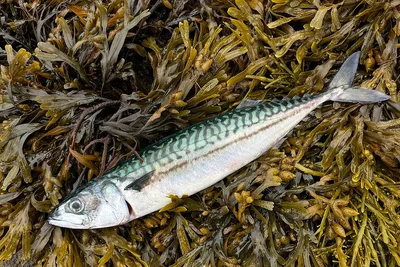
Fish
Atlantic mackerel
Scomber scombrus
Atlantic mackerel are streamlined schooling fishes of northern seas.
Living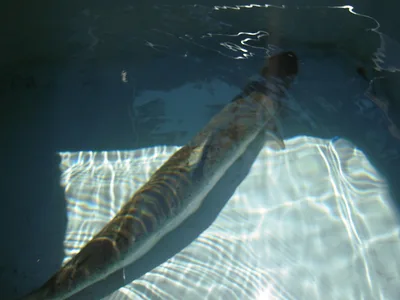 NT
Fish
Atlantic salmon
Salmo salar
The Atlantic salmon hatches in a river, grows up at sea, and returns to the same river to spawn.
Living