Damselfly
Zygoptera
Living individuals or members of this group exist today. This does not mean they are safe from extinction.
Damselflies link freshwater development with an aerial adult stage. This account describes the ebony jewelwing (Calopteryx maculata), a dark-winged species of eastern North America.
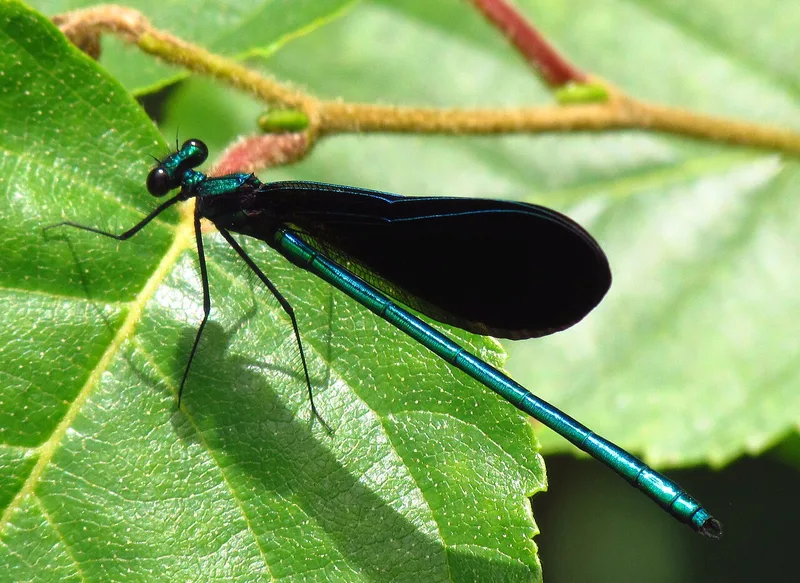
Calopteryx maculata, the representative described in this account.
At a glance
- Location
- Ebony jewelwings occur around shaded streams and rivers, often where dense streamside vegetation provides resting and breeding sites.
- Habitat
- Temperate forest, Rivers and lakes
- Diet
- Carnivore
- Food
- Adults and aquatic juveniles are predators.
Classification
- Common name
- Damselfly
- Browse group
- Insects
- Scientific name or taxon
- Zygoptera
Three things to know
- Juveniles develop underwater.
- Both life stages hunt animals.
- Males have dark wings.
Habitat and range
Ebony jewelwings occur around shaded streams and rivers, often where dense streamside vegetation provides resting and breeding sites. Juveniles develop in freshwater.
Appearance and adaptations
Males have an iridescent green body and dark wings. Females are less brilliant and have a conspicuous pale spot near each forewing tip.
Diet and behaviour
Adults and aquatic juveniles are predators. Juveniles extend a specialised lower lip to seize small prey, then eventually leave the water for the final molt into a winged adult.
Sources
- University of Florida: Ebony jewelwing
- GBIF: Damselfly · Directory entry
Explore insects
Browse all insects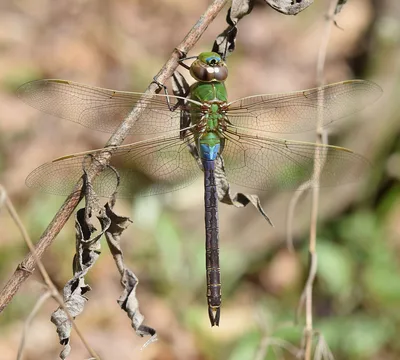
Insects
Dragonfly
Odonata
Dragonflies hunt both underwater and in the air.
Living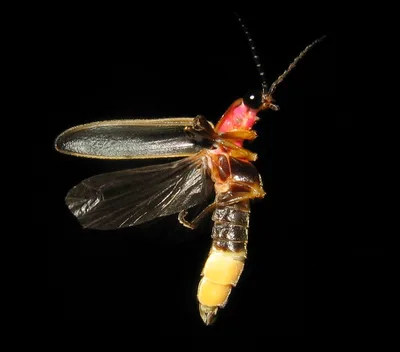
Insects
Firefly
Lampyridae
Fireflies are light-producing beetles.
Living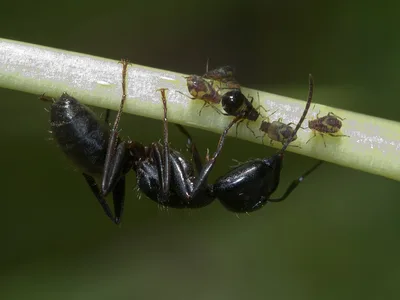
Insects
Ant
Formicidae
Ants have many different colony structures and diets.
Living
Insects
Bumblebee
Bombus
Bumblebees are social bees that gather nectar and pollen.
Living