Coelacanth
Coelacanthiformes
Living individuals or members of this group exist today. This does not mean they are safe from extinction.
Living coelacanths are lobe-finned fishes, rather than unchanged survivors of a single fossil species. This account follows the West Indian Ocean coelacanth, which shelters in deep underwater caves.
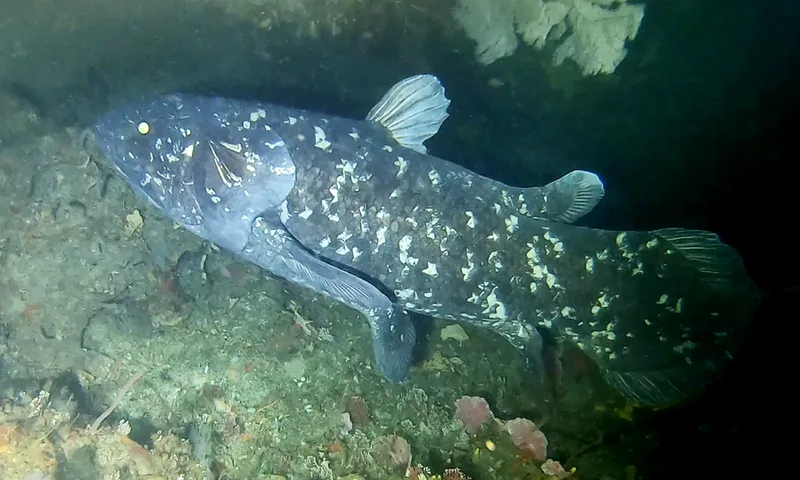
West Indian Ocean coelacanth (Latimeria chalumnae), the representative described here.
At a glance
- Location
- Latimeria chalumnae is the representative used here. It occurs around the Comoros and parts of eastern and southern Africa. Deep rocky coastlines provide caves used as daytime shelters.
- Habitat
- Coast
- Diet
- Carnivore
- Food
- Coelacanths leave daytime shelters to hunt at night.
Classification
- Common name
- Coelacanth
- Browse group
- Fish
- Scientific name or taxon
- Coelacanthiformes
- Taxon rank
- order
- Order
- Coelacanthiformes
- Source classification
- Sarcopterygii
Taxonomy checked against GBIF. For breeds and hybrids, this describes the listed parent taxon.
Three things to know
- Its fins have fleshy bases.
- Individuals have distinctive pale spots.
- It hunts mainly at night.
Habitat and range
Latimeria chalumnae is the representative used here. It occurs around the Comoros and parts of eastern and southern Africa. Deep rocky coastlines provide caves used as daytime shelters.
Appearance and adaptations
Blue-grey scales carry pale spots that differ among individuals. Several fins have fleshy bases, giving the group its lobe-finned name. The tail has a distinctive extra central lobe.
Diet and behaviour
Coelacanths leave daytime shelters to hunt at night. They take fishes and other animal prey, often drifting rather than making long pursuits. Animals can share caves without forming strongly interactive social groups.
Sources
- Animal Diversity Web: Latimeria chalumnae
- A–Z Animals: Coelacanth · Directory entry
Explore fish
Browse all fish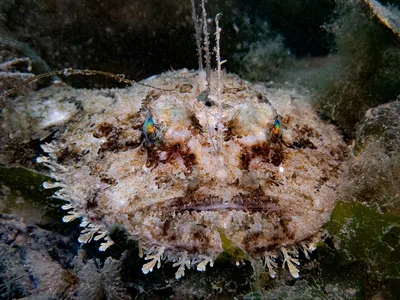
Fish
Anglerfish
Lophiiformes
Anglerfishes include many different marine hunters.
Living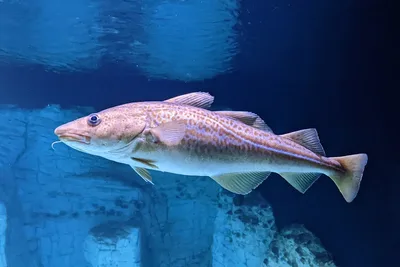
Fish
Atlantic Cod
Gadus morhua
The Atlantic cod is a cold-water fish of the North Atlantic.
Living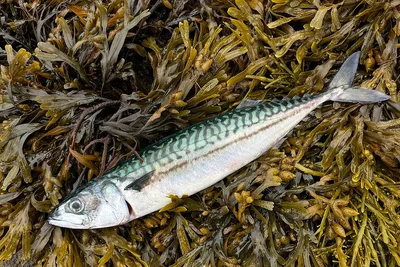
Fish
Atlantic mackerel
Scomber scombrus
Atlantic mackerel are streamlined schooling fishes of northern seas.
Living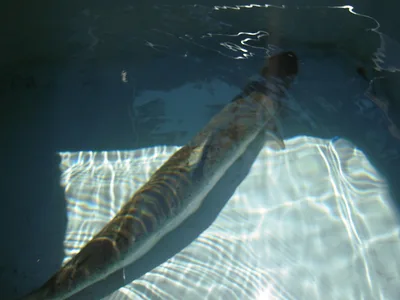 NT
Fish
Atlantic salmon
Salmo salar
The Atlantic salmon hatches in a river, grows up at sea, and returns to the same river to spawn.
Living