Centipede
Chilopoda
Living individuals or members of this group exist today. This does not mean they are safe from extinction.
Centipedes are many-legged predators. This account focuses on the giant centipede (Scolopendra gigantea), a large species from tropical northern South America.
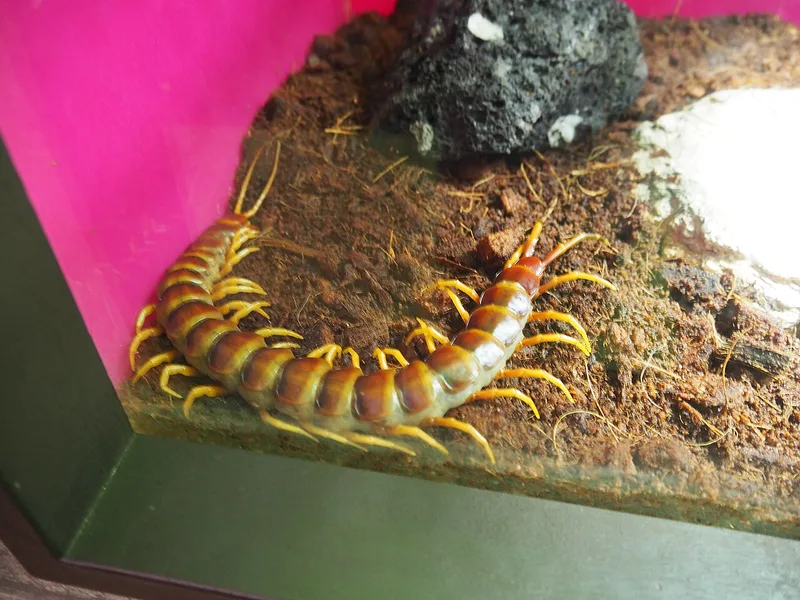
Giant centipede (Scolopendra gigantea) at Sunshine Aquarium, Tokyo, Japan.
At a glance
- Location
- Giant centipedes shelter in humid forest environments.
- Habitat
- Rainforest
- Diet
- Carnivore
- Food
- Invertebrates such as insects, worms and snails supply food, and larger individuals can also take small vertebrates.
Classification
- Common name
- Centipede
- Browse group
- Centipedes
- Scientific name or taxon
- Chilopoda
- Taxon rank
- class
- Source classification
- Chilopoda
Taxonomy checked against GBIF. For breeds and hybrids, this describes the listed parent taxon.
Three things to know
- It requires humid shelter.
- Venom claws help subdue prey.
- Females brood their eggs.
Habitat and range
Giant centipedes shelter in humid forest environments. Soil, leaf litter and decaying wood help them retain moisture and provide concealed places from which to hunt.
Appearance and adaptations
The flattened body has one pair of walking legs on each leg-bearing trunk segment. A modified pair of appendages near the head forms venom claws used to subdue prey.
Diet and behaviour
Invertebrates such as insects, worms and snails supply food, and larger individuals can also take small vertebrates. Females remain with their eggs and brood the young until they can feed independently.
Sources
- Animal Diversity Web: Scolopendra gigantea
- A–Z Animals: Centipede · Directory entry
Explore centipedes
Browse all centipedesCentipedes
Giant Desert Centipede
Scolopendra heros
Classification and source reference
Living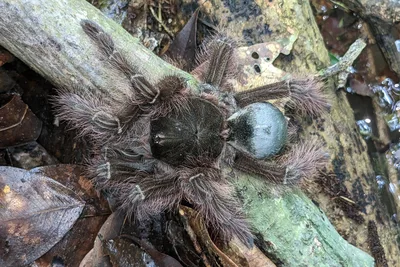 NE
Arachnids
Goliath birdeater
Theraphosa blondi
The Goliath birdeater is the heaviest spider in the world.
Living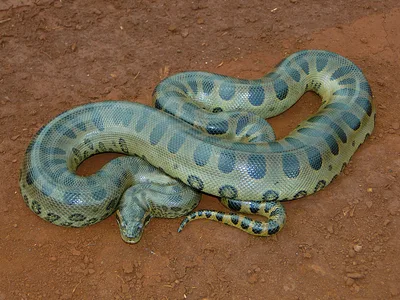
Reptiles
Green Anaconda
Eunectes murinus
The green anaconda is a heavy-bodied South American boa associated with slow-moving water.
Living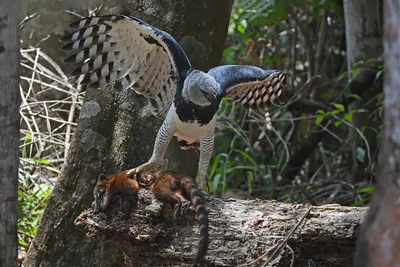 VU
Birds
Harpy eagle
Harpia harpyja
The harpy eagle is the most powerful bird of prey in the American rainforest, with rear talons the length of a grizzly bear's claws.
Living