Green Anaconda
Eunectes murinus
Living individuals or members of this group exist today. This does not mean they are safe from extinction.
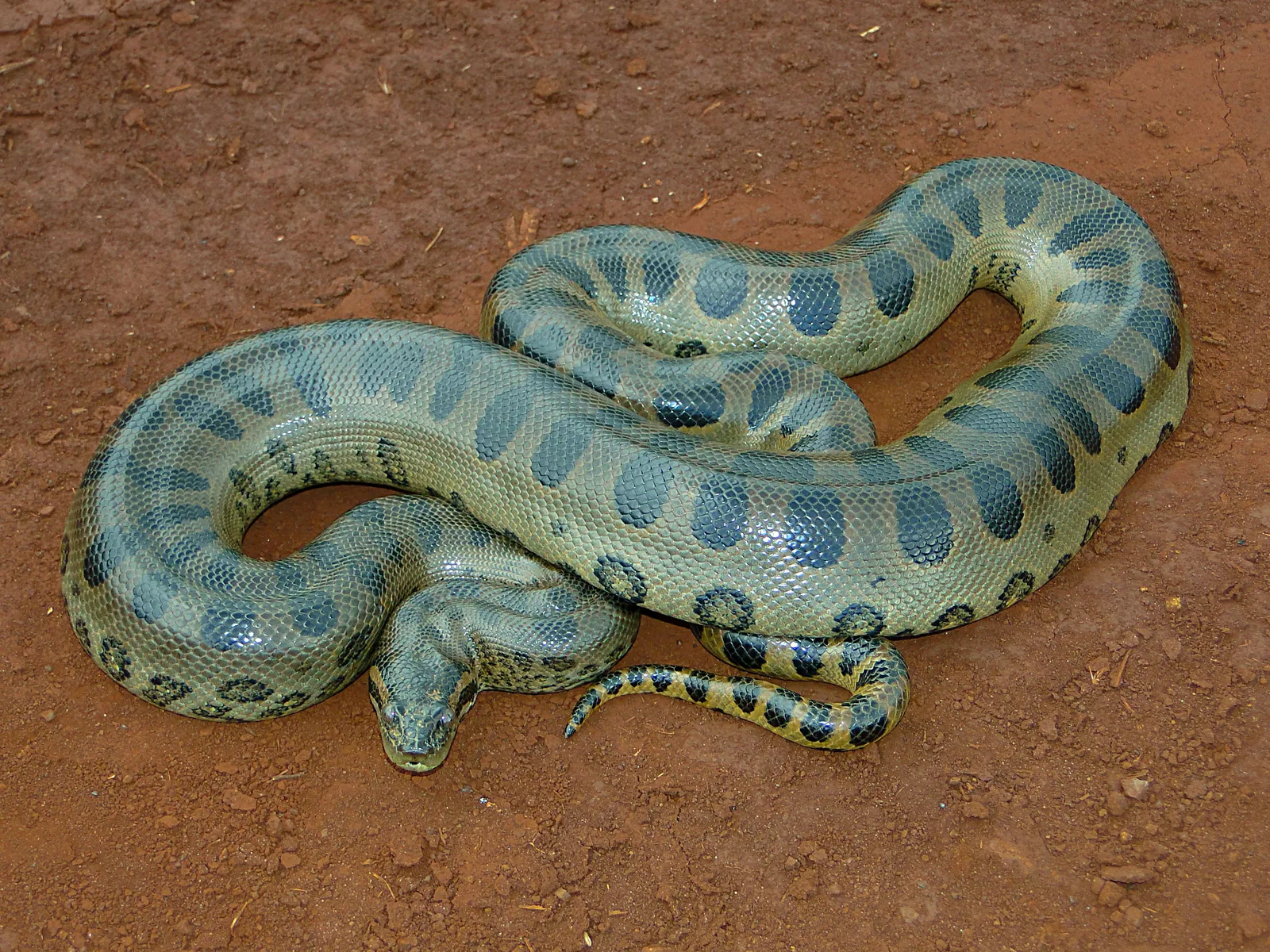
The green anaconda is a heavy-bodied South American boa associated with slow-moving water. It hunts animal prey and gives birth to live young.
At a glance
- Location
- Green anacondas inhabit tropical South American lowlands, using shallow rivers, flooded grasslands and swamps. This account follows the source's treatment of Eunectes murinus.
- Habitat
- Wetlands, Rivers and lakes, Rainforest
- Diet
- Carnivore
- Food
- Fish, reptiles, birds and mammals are taken as prey.
Classification
- Common name
- Green Anaconda
- Browse group
- Reptiles
- Scientific name or taxon
- Eunectes murinus
- Taxon rank
- species
- Family
- Boidae
- Genus
- Eunectes
- Source classification
- Reptilia
Taxonomy checked against GBIF. For breeds and hybrids, this describes the listed parent taxon.
Three things to know
- Females are larger than males.
- Its olive body bears dark blotches.
- Water is central to its habitat.
Habitat and range
Green anacondas inhabit tropical South American lowlands, using shallow rivers, flooded grasslands and swamps. This account follows the source's treatment of Eunectes murinus.
Appearance and adaptations
An olive-green background and rounded dark markings help distinguish the snake. Its large body is supported by water while swimming.
Diet and behaviour
Fish, reptiles, birds and mammals are taken as prey. It catches prey and constricts it before swallowing. During dry periods, individuals may seek remaining water or shelter in mud.
Sources
- Animal Diversity Web: Eunectes murinus
- A–Z Animals: Green Anaconda · Directory entry
Explore reptiles
Browse all reptiles
Reptiles
Burmese Python
Python bivittatus
The Burmese python is a large Asian constrictor with dark blotches.
Living
Reptiles
Caiman
Alligatoridae (caimans: subfamily Caimaninae)
Caimans are crocodilians of the Americas.
Living
Reptiles
American Alligator
Alligator mississippiensis
The American alligator is a freshwater crocodilian of the southeastern United States.
Living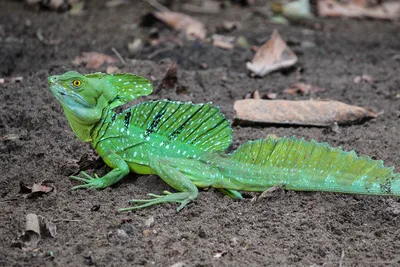
Reptiles
Basilisk Lizard
Basiliscus
Basilisks are tropical American lizards.
Living