American Alligator
Alligator mississippiensis
Living individuals or members of this group exist today. This does not mean they are safe from extinction.
The American alligator is a freshwater crocodilian of the southeastern United States. Its broad snout and dark armoured body suit a life around wetlands.
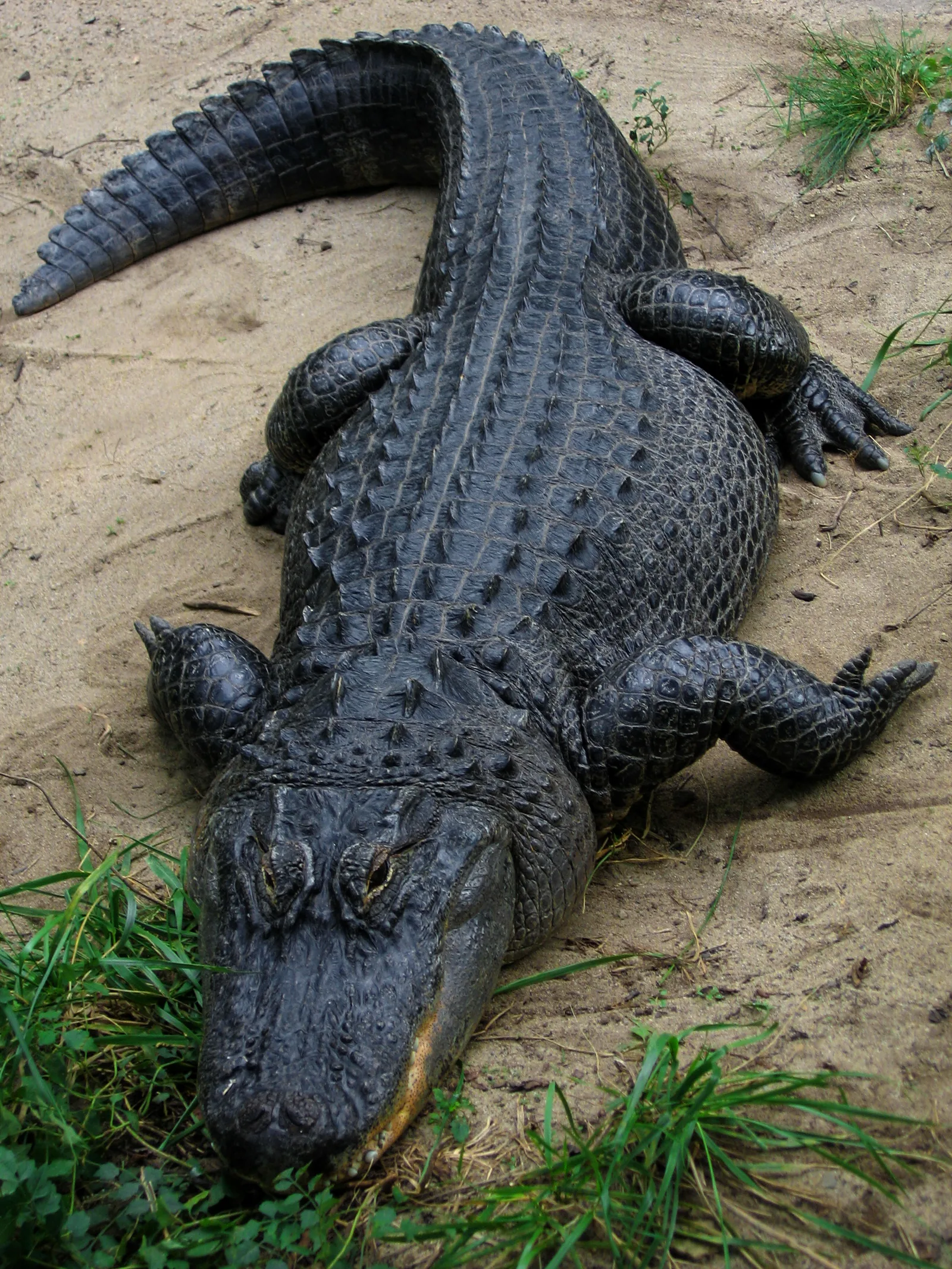
At a glance
- Location
- The southeastern United States, in swamps, marshes, rivers and other freshwater habitats.
- Habitat
- Wetlands, Rivers and lakes
- Diet
- Carnivore
- Food
- Fish, invertebrates and other vertebrates, depending on size.
Classification
- Common name
- American Alligator
- Browse group
- Reptiles
- Scientific name or taxon
- Alligator mississippiensis
- Taxon rank
- species
- Family
- Alligatoridae
- Genus
- Alligator
- Source classification
- Reptilia
Taxonomy checked against GBIF. For breeds and hybrids, this describes the listed parent taxon.
Three things to know
- The snout is broader than a typical crocodile snout.
- Males grow larger than females.
- Hatchlings often stay in groups.
Habitat and range
The southeastern United States, in swamps, marshes, rivers and other freshwater habitats.
Appearance and adaptations
Adults have a broad, rounded snout. Males grow larger than females, and the upper jaw conceals the lower teeth when the mouth closes.
Diet and behaviour
Food changes as the animal grows and becomes able to take larger prey. Basking helps it warm up, while hatchlings often remain together.
Sources
Explore reptiles
Browse all reptiles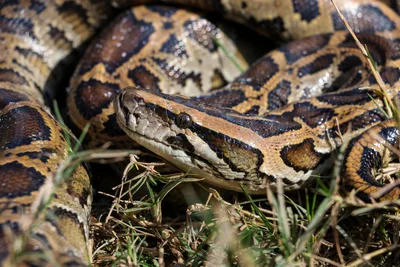
Reptiles
Burmese Python
Python bivittatus
The Burmese python is a large Asian constrictor with dark blotches.
Living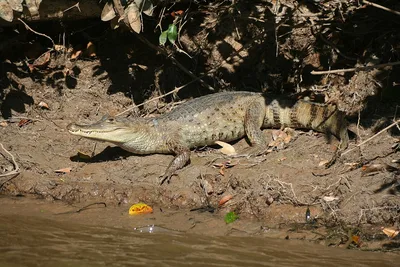
Reptiles
Caiman
Alligatoridae (caimans: subfamily Caimaninae)
Caimans are crocodilians of the Americas.
Living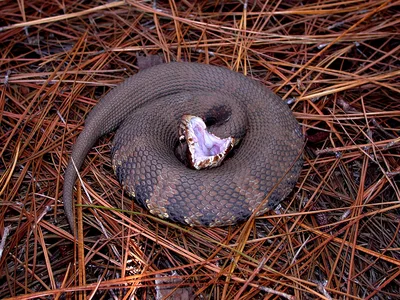
Reptiles
Cottonmouth
Agkistrodon piscivorus
The cottonmouth is a venomous, semiaquatic pit viper of the southeastern United States.
Living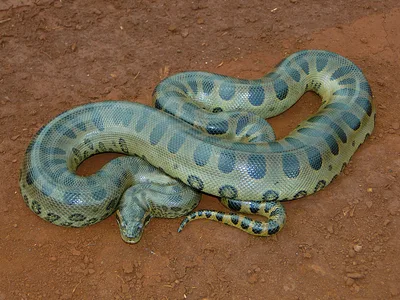
Reptiles
Green Anaconda
Eunectes murinus
The green anaconda is a heavy-bodied South American boa associated with slow-moving water.
Living