Cottonmouth
Agkistrodon piscivorus
Living individuals or members of this group exist today. This does not mean they are safe from extinction.
The cottonmouth is a venomous, semiaquatic pit viper of the southeastern United States. Its common name refers to the pale lining inside its mouth.
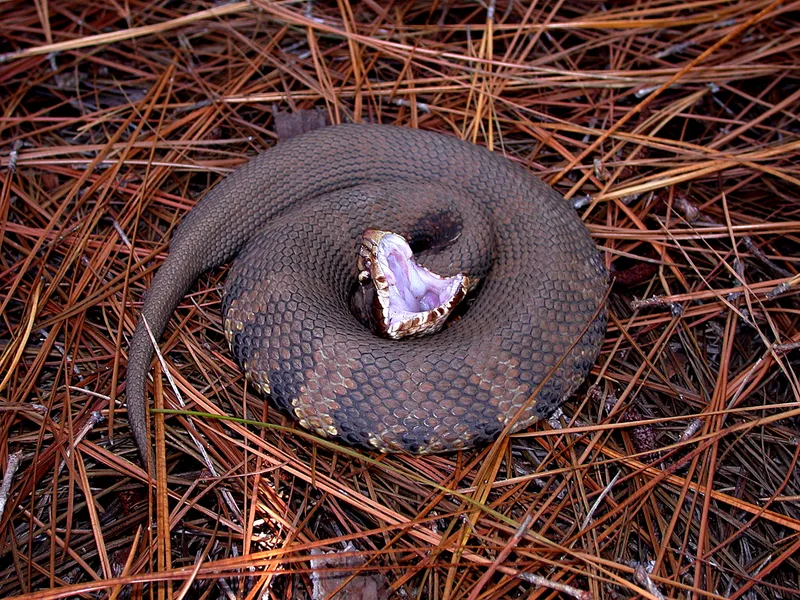
Eastern cottonmouth showing its pale mouth lining in a defensive display; US Centers for Disease Control and Prevention photograph.
At a glance
- Location
- Cottonmouths use swamps, marshes, streams and lakes in the southeastern United States. They also move over nearby land and rest beneath vegetation or fallen wood. Older sources include Florida populations under the same species name.
- Habitat
- Wetlands, Rivers and lakes
- Diet
- Carnivore
- Food
- Fish and small mammals are important foods, but the diet also includes amphibians, reptiles and other prey. Venom helps subdue food. Cottonmouths commonly forage at night and remain close to water, although they are capable of moving on land.
Classification
- Common name
- Cottonmouth
- Browse group
- Reptiles
- Scientific name or taxon
- Agkistrodon piscivorus
- Taxon rank
- species
- Family
- Viperidae
- Genus
- Agkistrodon
- Source classification
- Reptilia
Taxonomy checked against GBIF. For breeds and hybrids, this describes the listed parent taxon.
Three things to know
- The inside of its mouth is pale.
- It hunts in and around water.
- Young animals have yellowish tail tips.
Habitat and range
Cottonmouths use swamps, marshes, streams and lakes in the southeastern United States. They also move over nearby land and rest beneath vegetation or fallen wood. Older sources include Florida populations under the same species name.
Appearance and adaptations
A stout body carries dark crossbands that may become less obvious with age. Young snakes are more strongly patterned and have a yellowish tail tip. When threatened, a cottonmouth may gape to display its white mouth lining.
Diet and behaviour
Fish and small mammals are important foods, but the diet also includes amphibians, reptiles and other prey. Venom helps subdue food. Cottonmouths commonly forage at night and remain close to water, although they are capable of moving on land.
Sources
- Animal Diversity Web: Agkistrodon piscivorus
- A–Z Animals: Cottonmouth · Directory entry
Explore reptiles
Browse all reptiles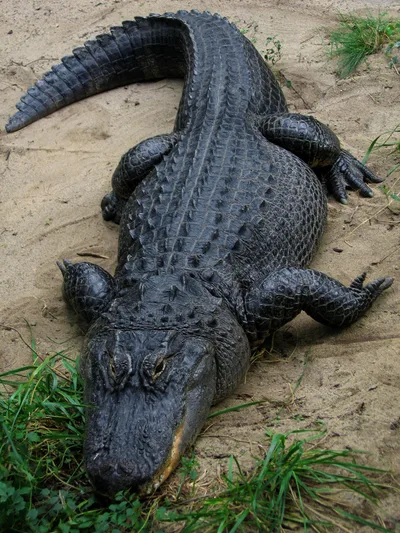
Reptiles
American Alligator
Alligator mississippiensis
The American alligator is a freshwater crocodilian of the southeastern United States.
Living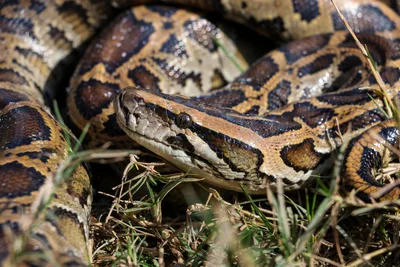
Reptiles
Burmese Python
Python bivittatus
The Burmese python is a large Asian constrictor with dark blotches.
Living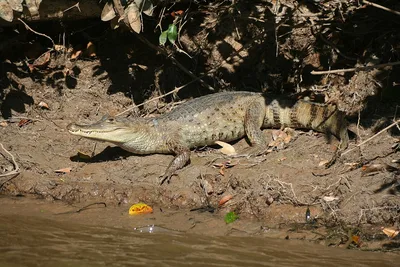
Reptiles
Caiman
Alligatoridae (caimans: subfamily Caimaninae)
Caimans are crocodilians of the Americas.
Living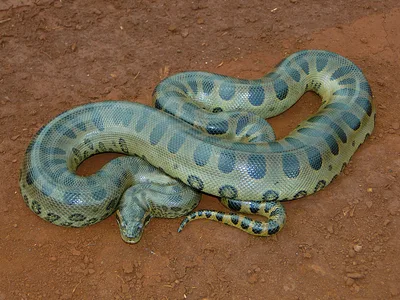
Reptiles
Green Anaconda
Eunectes murinus
The green anaconda is a heavy-bodied South American boa associated with slow-moving water.
Living