Bonobo
Pan paniscus
Living individuals or members of this group exist today. This does not mean they are safe from extinction.
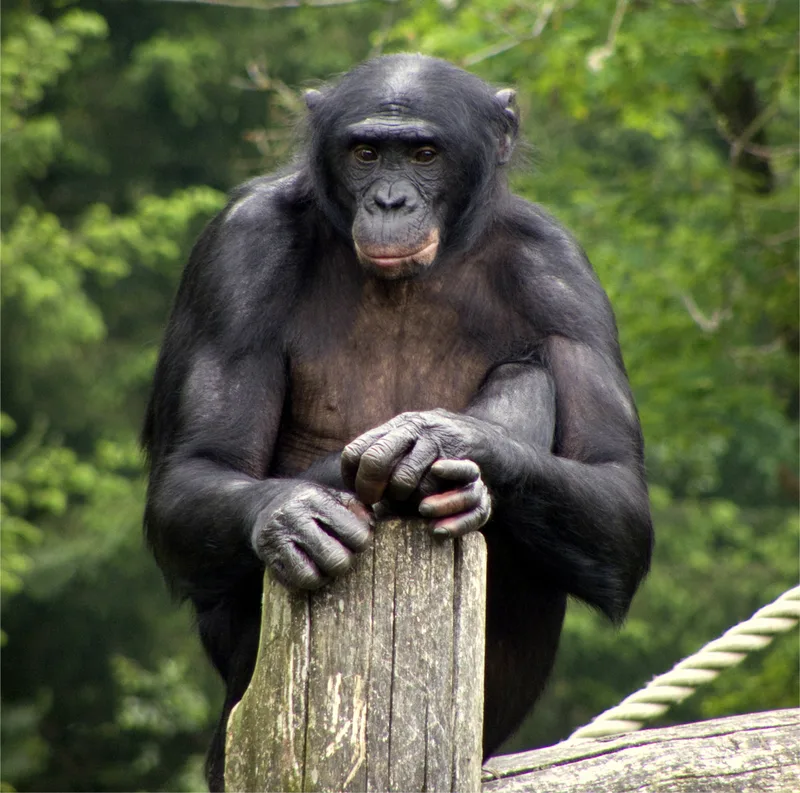
The bonobo is a great ape of the Congo Basin. It eats mostly fruit and other plant foods, and lives in a changing network of social groups.
At a glance
- Location
- Bonobos inhabit forests in the Democratic Republic of the Congo, south of the Congo River. Rainforest, secondary woodland and swamp forest provide feeding and sleeping areas.
- Habitat
- Rainforest, Wetlands
- Diet
- Omnivore
- Food
- Fruit dominates the diet, supplemented by leaves, shoots, insects and occasional animal prey.
Classification
- Common name
- Bonobo
- Browse group
- Mammals
- Scientific name or taxon
- Pan paniscus
- Taxon rank
- species
- Order
- Primates
- Family
- Hominidae
- Genus
- Pan
- Source classification
- Mammalia
Taxonomy checked against GBIF. For breeds and hybrids, this describes the listed parent taxon.
Measurements
Size and speed
- Weight
- 27 to 61 kg combined adult female and male range
Typical adult ranges. Source: Animal Diversity Web.
Three things to know
- It is a great ape.
- Groups can divide and reunite while foraging.
- It builds sleeping nests in trees.
Habitat and range
Bonobos inhabit forests in the Democratic Republic of the Congo, south of the Congo River. Rainforest, secondary woodland and swamp forest provide feeding and sleeping areas.
Appearance and adaptations
Dark skin and hair, long limbs and a relatively slender build distinguish the bonobo from its close chimpanzee relatives.
Diet and behaviour
Fruit dominates the diet, supplemented by leaves, shoots, insects and occasional animal prey. Individuals travel in smaller feeding parties within a wider community. Food availability influences group size, while forest trees provide resting places.
Sources
- Animal Diversity Web: Pan paniscus
- A–Z Animals: Bonobo · Directory entry
Explore mammals
Browse all mammals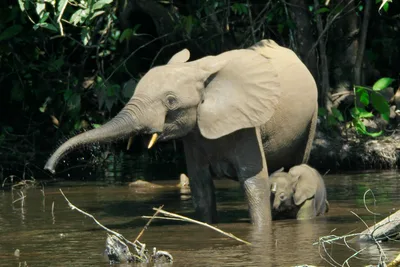
Mammals
African Forest Elephant
Loxodonta cyclotis
The African forest elephant moves through the rainforests of western and central Africa.
Living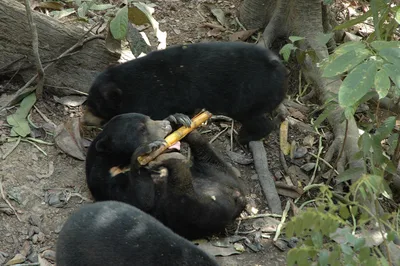 VU
Mammals
Sun bear
Helarctos malayanus
The sun bear is the smallest and most arboreal bear, a black bear of the Southeast Asian rainforest with an orange crescent on its chest.
Living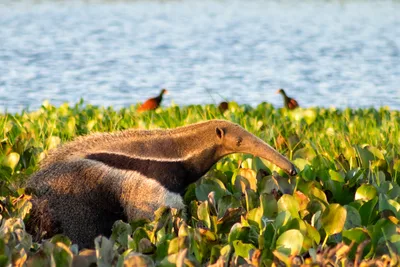
Mammals
Anteater
Myrmecophagidae
Anteaters are insect-eating mammals with elongated snouts.
Living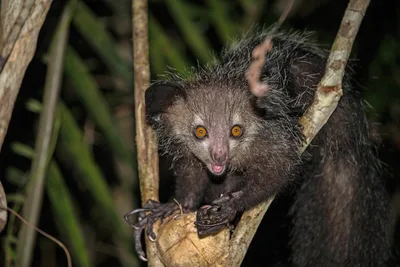
Mammals
Aye-aye
Daubentonia madagascariensis
The aye-aye is a nocturnal Madagascan primate with large ears and an unusually slender middle finger.
Living