Baboon
Papio
Living individuals or members of this group exist today. This does not mean they are safe from extinction.
Baboons are social African monkeys. This account focuses on the olive baboon (Papio anubis), an adaptable omnivore that spends much of its time on the ground.
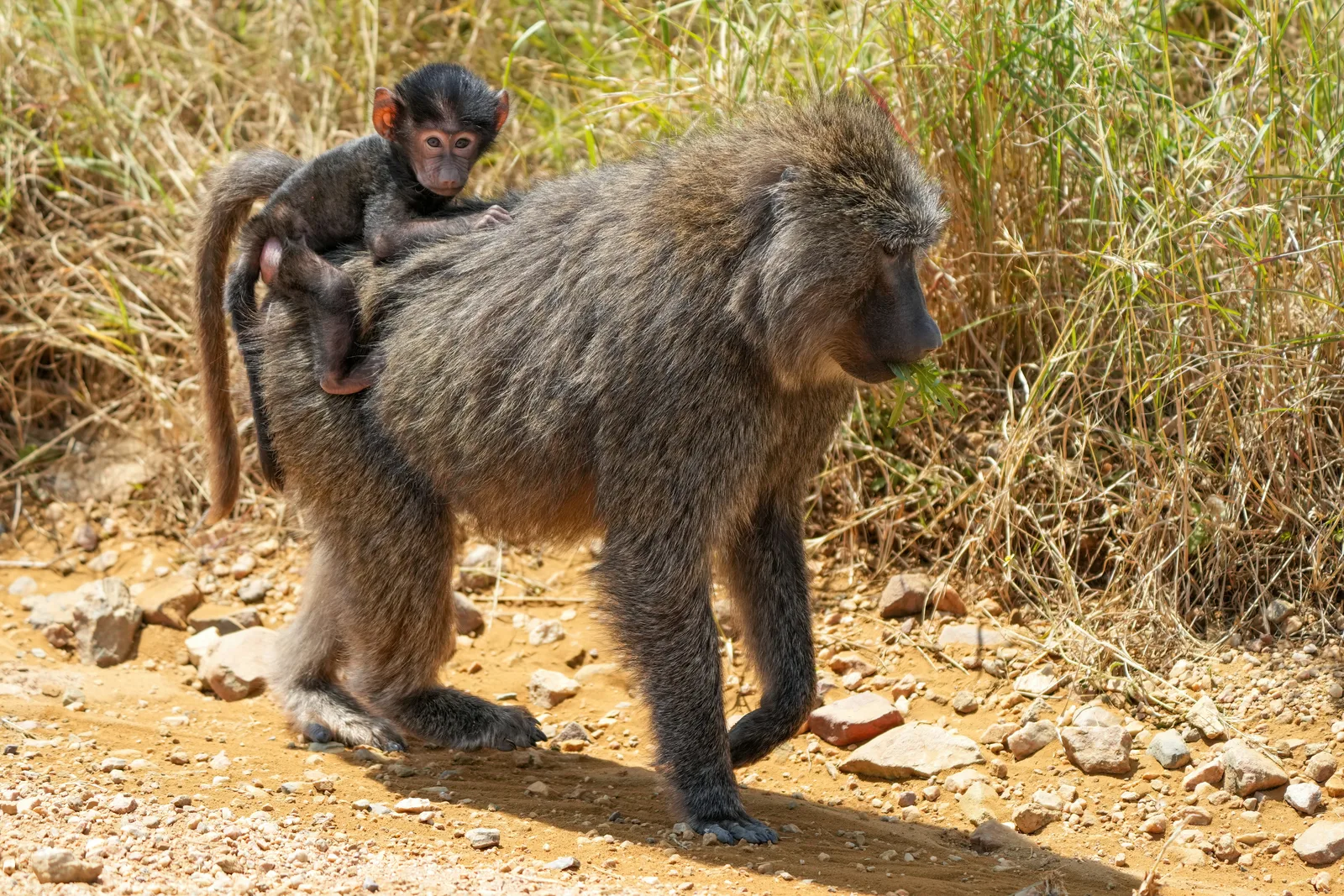
Representative species: Papio anubis.
At a glance
- Location
- Olive baboons occupy a broad belt of sub-Saharan Africa. They use savanna, grasslands and wooded habitats; other baboon species have different distributions.
- Habitat
- Savanna, Grassland, Rainforest
- Diet
- Omnivore
- Food
- Fruit, seeds, roots, grass, insects and small vertebrates are eaten.
Classification
- Common name
- Baboon
- Browse group
- Mammals
- Scientific name or taxon
- Papio
- Source classification
- Mammalia
Three things to know
- Males are larger than females.
- Adult males develop a mane.
- Troops travel and forage together.
Habitat and range
Olive baboons occupy a broad belt of sub-Saharan Africa. They use savanna, grasslands and wooded habitats; other baboon species have different distributions.
Appearance and adaptations
Olive-grey fur and a long muzzle characterize this species. Males have conspicuous canine teeth and longer hair around the front of the body.
Diet and behaviour
Fruit, seeds, roots, grass, insects and small vertebrates are eaten. Troops contain males, females and young. Daily movements connect feeding areas with sleeping sites in trees or on rocks, while social relationships structure group life.
Sources
- Animal Diversity Web: Papio anubis
- A–Z Animals: Baboon · Directory entry
Explore mammals
Browse all mammals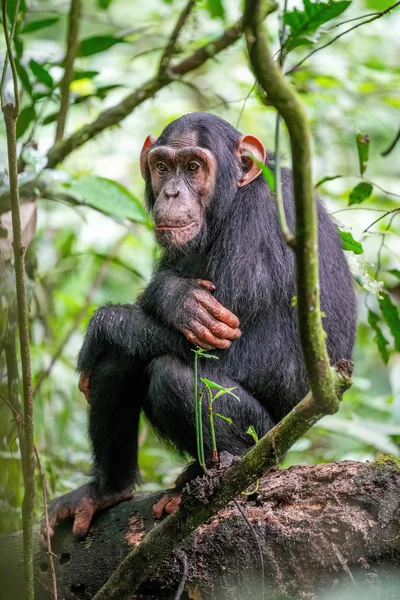
Mammals
Chimpanzee
Pan troglodytes
The chimpanzee is an African great ape that feeds mainly on fruit and other plant foods.
Living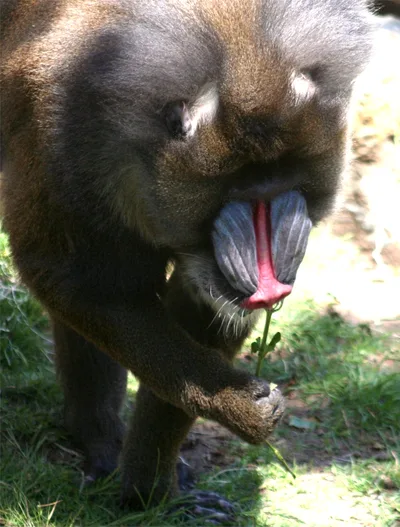 VU
Mammals
Mandrill
Mandrillus sphinx
The mandrill is the largest monkey and one of the most colourful mammals, with a red and blue face and a rump to match.
Living NT
Mammals
Striped hyena
Hyaena hyaena
The striped hyena is a small, shaggy scavenger of dry country from North Africa to India.
Living LC
Mammals
Aardvark
Orycteropus afer
The aardvark is a pig-sized burrowing mammal of sub-Saharan Africa.
Living