Wrasse
Labridae
Living individuals or members of this group exist today. This does not mean they are safe from extinction.
Wrasses include many reef-associated fishes with changing colours and feeding roles. This account describes the bluehead wrasse, whose largest male colour phase has a bright blue head and contrasting body bars.
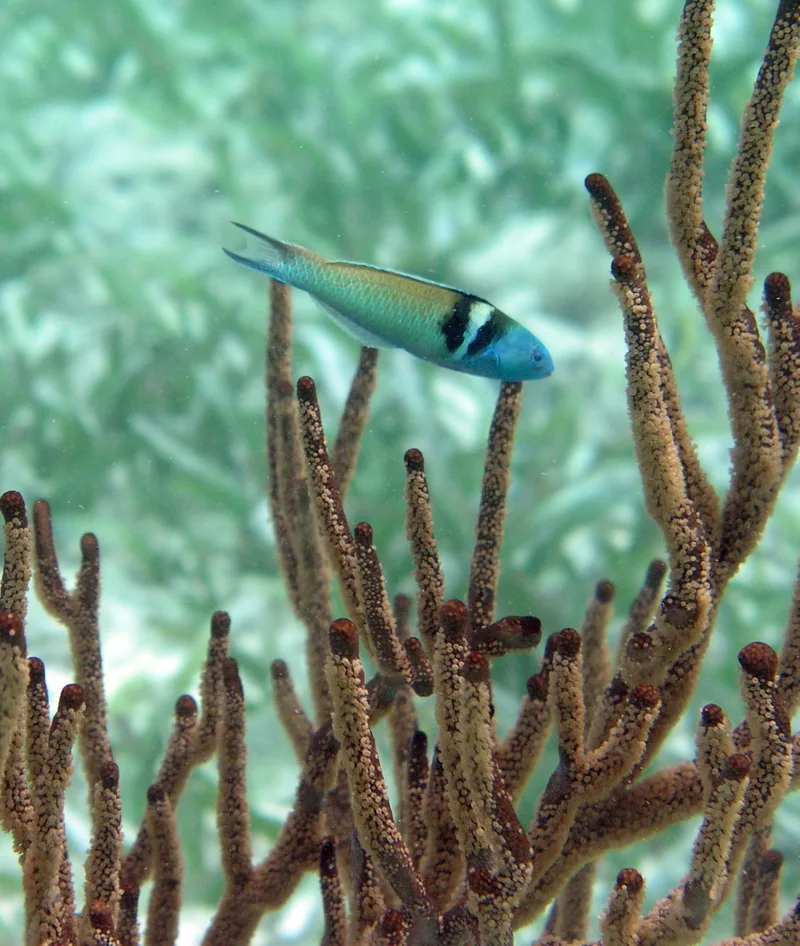
Bluehead wrasse (Thalassoma bifasciatum), the representative described here.
At a glance
- Location
- Thalassoma bifasciatum is the representative used here. It occupies western Atlantic and Caribbean reefs, bays and seagrass beds. Its different habitats support more than one colour pattern.
- Habitat
- Coral reef, Coast
- Diet
- Carnivore
- Food
- Zooplankton and small bottom animals supply food, and some individuals clean parasites from other fishes.
Classification
- Common name
- Wrasse
- Browse group
- Fish
- Scientific name or taxon
- Labridae
- Taxon rank
- family
- Order
- Perciformes
- Family
- Labridae
- Source classification
- Actinopterygii
Taxonomy checked against GBIF. For breeds and hybrids, this describes the listed parent taxon.
Three things to know
- Large males have blue heads.
- It can change from female to male.
- Some individuals clean other fishes.
Habitat and range
Thalassoma bifasciatum is the representative used here. It occupies western Atlantic and Caribbean reefs, bays and seagrass beds. Its different habitats support more than one colour pattern.
Appearance and adaptations
Small fish can be yellow above with a dark side stripe. Large males develop a blue head and two dark bars towards the front of a greenish body. Colour phase does not identify every small fish's sex.
Diet and behaviour
Zooplankton and small bottom animals supply food, and some individuals clean parasites from other fishes. The species can change from female to male, so life history cannot be reduced to a single fixed colour-sex rule.
Sources
- FishBase: Thalassoma bifasciatum
- A–Z Animals: Wrasse · Directory entry
Explore fish
Browse all fish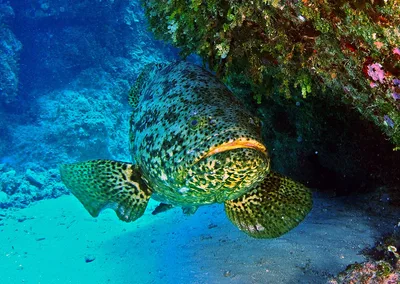
Fish
Grouper Fish
Epinephelinae
Groupers are stout predatory fishes with large mouths.
Living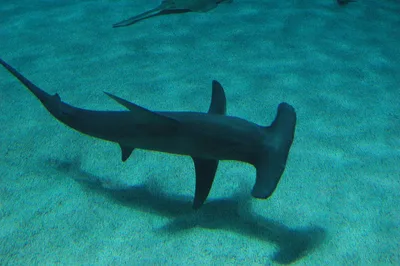
Fish
Hammerhead Shark
Sphyrnidae
Hammerhead sharks have unusually wide heads.
Living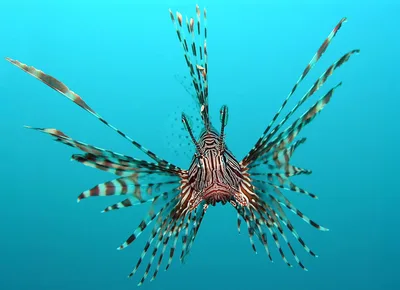
Fish
Lionfish
Pterois
Lionfishes are striking marine predators with long fin rays and venomous spines.
Living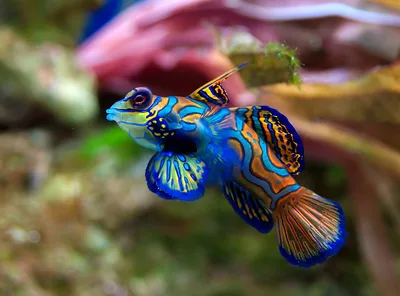
Fish
Mandarin fish
Synchiropus splendidus
The mandarinfish is a small, vividly patterned marine dragonet.
Living