Grouper Fish
Epinephelinae
Living individuals or members of this group exist today. This does not mean they are safe from extinction.
Groupers are stout predatory fishes with large mouths. This account follows the Atlantic goliath grouper, which uses reefs and other coastal shelters while juveniles rely heavily on mangroves.
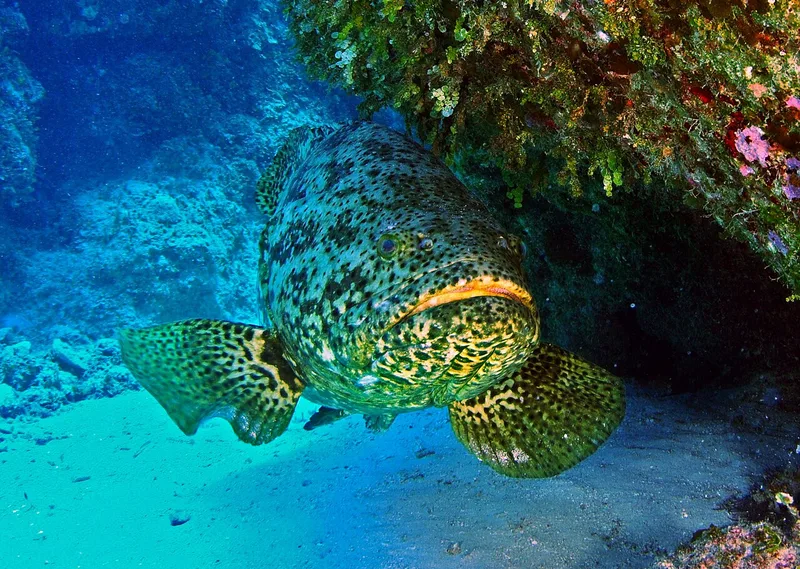
Atlantic goliath grouper (Epinephelus itajara), the representative described here.
At a glance
- Location
- Epinephelus itajara is the representative described here. It occurs in Atlantic coastal waters. The eastern Pacific goliath grouper is a separate species and is not included in this account.
- Habitat
- Coral reef, Coast
- Diet
- Carnivore
- Food
- Crustaceans and fishes form important foods.
Classification
- Common name
- Grouper Fish
- Browse group
- Fish
- Scientific name or taxon
- Epinephelinae
- Source classification
- Actinopterygii
Three things to know
- Juveniles use mangrove habitats.
- Adults have very broad heads.
- It often stays near a shelter.
Habitat and range
Epinephelus itajara is the representative described here. It occurs in Atlantic coastal waters. The eastern Pacific goliath grouper is a separate species and is not included in this account.
Appearance and adaptations
A very broad head and large mouth give this fish a bulky outline. Adults can be brownish, grey or greenish, with darker spotting. Young fish have more conspicuous bars.
Diet and behaviour
Crustaceans and fishes form important foods. Adults often stay near a refuge such as a cave or wreck and can defend that shelter. Mangrove and estuarine habitats provide cover for juveniles.
Sources
- FishBase: Epinephelus itajara
- A–Z Animals: Grouper Fish · Directory entry
Explore fish
Browse all fish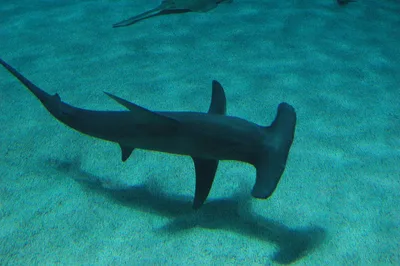
Fish
Hammerhead Shark
Sphyrnidae
Hammerhead sharks have unusually wide heads.
Living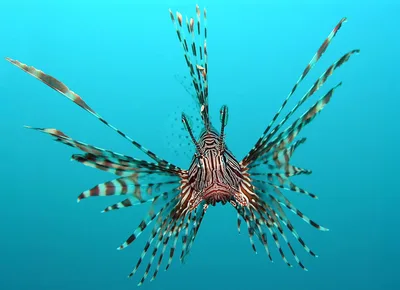
Fish
Lionfish
Pterois
Lionfishes are striking marine predators with long fin rays and venomous spines.
Living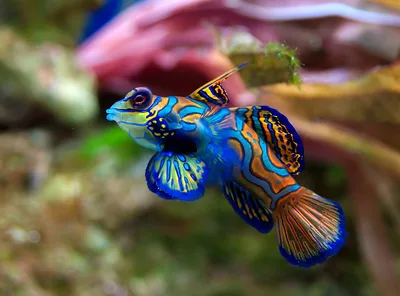
Fish
Mandarin fish
Synchiropus splendidus
The mandarinfish is a small, vividly patterned marine dragonet.
Living
Fish
Moray Eel
Muraenidae
Moray eels are elongated marine predators that often shelter in holes.
Living