Moray Eel
Muraenidae
Living individuals or members of this group exist today. This does not mean they are safe from extinction.
Moray eels are elongated marine predators that often shelter in holes. This account follows the green moray, a western Atlantic species whose yellowish mucus contributes to its familiar green appearance.
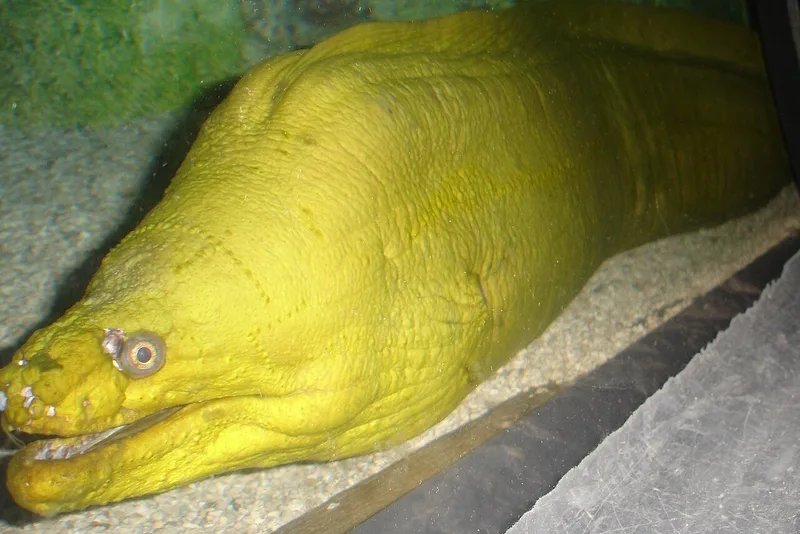
Green moray (Gymnothorax funebris), the representative described here.
At a glance
- Location
- Gymnothorax funebris is the representative described here. It occurs in the western Atlantic, including the Caribbean and Gulf of Mexico. Rock crevices, reefs and sheltered coastal habitats provide hiding places.
- Habitat
- Coral reef, Coast
- Diet
- Carnivore
- Food
- Green morays hunt mainly at night and take fishes, crustaceans and cephalopods.
Classification
- Common name
- Moray Eel
- Browse group
- Fish
- Scientific name or taxon
- Muraenidae
- Taxon rank
- family
- Order
- Anguilliformes
- Family
- Muraenidae
- Source classification
- Actinopterygii
Taxonomy checked against GBIF. For breeds and hybrids, this describes the listed parent taxon.
Three things to know
- Yellow mucus contributes to its colour.
- It lacks pectoral fins.
- It hunts mainly at night.
Habitat and range
Gymnothorax funebris is the representative described here. It occurs in the western Atlantic, including the Caribbean and Gulf of Mexico. Rock crevices, reefs and sheltered coastal habitats provide hiding places.
Appearance and adaptations
A long scaleless body carries a continuous fin along much of the back and tail. Yellow mucus over darker skin produces the green colour. Pectoral fins are absent.
Diet and behaviour
Green morays hunt mainly at night and take fishes, crustaceans and cephalopods. They search caves and crevices for prey, usually living alone. Larger food may be torn into pieces rather than swallowed whole.
Sources
- Animal Diversity Web: Gymnothorax funebris
- A–Z Animals: Moray Eel · Directory entry
Explore fish
Browse all fish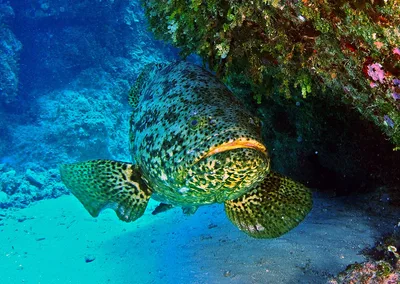
Fish
Grouper Fish
Epinephelinae
Groupers are stout predatory fishes with large mouths.
Living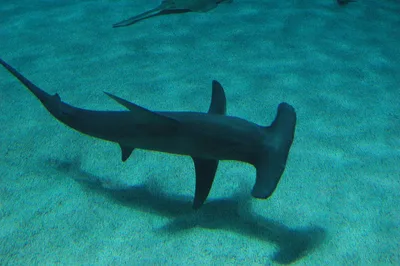
Fish
Hammerhead Shark
Sphyrnidae
Hammerhead sharks have unusually wide heads.
Living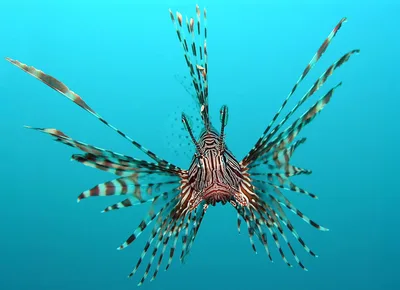
Fish
Lionfish
Pterois
Lionfishes are striking marine predators with long fin rays and venomous spines.
Living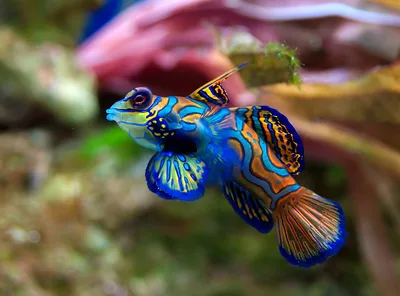
Fish
Mandarin fish
Synchiropus splendidus
The mandarinfish is a small, vividly patterned marine dragonet.
Living