Stingray
Myliobatiformes
Living individuals or members of this group exist today. This does not mean they are safe from extinction.
Stingrays are flattened cartilaginous fishes with broad pectoral fins. This account follows the southern stingray, which searches shallow Atlantic seabeds for animals hidden in sediment.
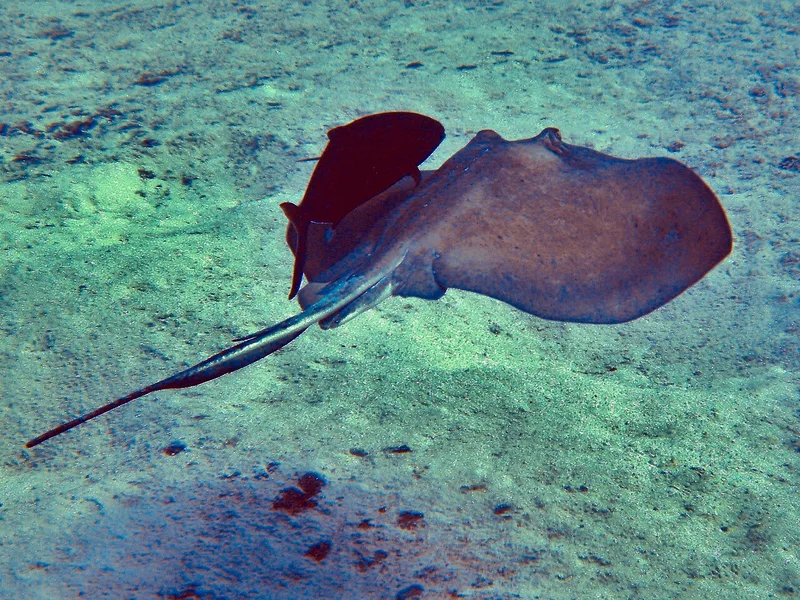
Southern stingray (Hypanus americanus) with another fish in coastal water.
At a glance
- Location
- Hypanus americanus, called Dasyatis americana in the cited source, is the representative here. It inhabits western Atlantic coastal waters, especially Caribbean and Gulf of Mexico shallows with seagrass, algae or soft bottoms.
- Habitat
- Coast, Coral reef
- Diet
- Carnivore
- Food
- Crustaceans, worms and small fishes are important prey.
Classification
- Common name
- Stingray
- Browse group
- Fish
- Scientific name or taxon
- Myliobatiformes
- Taxon rank
- order
- Order
- Myliobatiformes
- Source classification
- Chondrichthyes
Taxonomy checked against GBIF. For breeds and hybrids, this describes the listed parent taxon.
Three things to know
- Its disc is diamond-shaped.
- It uncovers buried prey.
- Females generally grow larger.
Habitat and range
Hypanus americanus, called Dasyatis americana in the cited source, is the representative here. It inhabits western Atlantic coastal waters, especially Caribbean and Gulf of Mexico shallows with seagrass, algae or soft bottoms.
Appearance and adaptations
The body and pectoral fins form a diamond-shaped disc. A long slender tail extends behind it. Females generally reach larger sizes than males.
Diet and behaviour
Crustaceans, worms and small fishes are important prey. The ray disturbs sediment with fin movements and water jets to uncover buried food. Feeding occurs through the day but is often more active at night.
Sources
Explore fish
Browse all fish
Fish
Grouper Fish
Epinephelinae
Groupers are stout predatory fishes with large mouths.
Living
Fish
Hammerhead Shark
Sphyrnidae
Hammerhead sharks have unusually wide heads.
Living
Fish
Lionfish
Pterois
Lionfishes are striking marine predators with long fin rays and venomous spines.
Living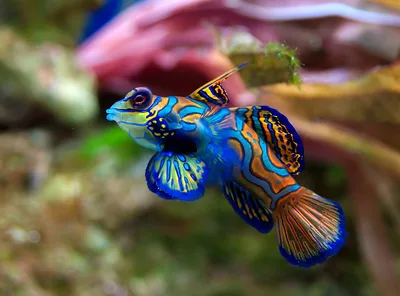
Fish
Mandarin fish
Synchiropus splendidus
The mandarinfish is a small, vividly patterned marine dragonet.
Living