Silkworm
Bombyx mori
Living individuals or members of this group exist today. This does not mean they are safe from extinction.
The domestic silkworm is the caterpillar of Bombyx mori. Centuries of rearing for silk have made this moth strongly dependent on human care.
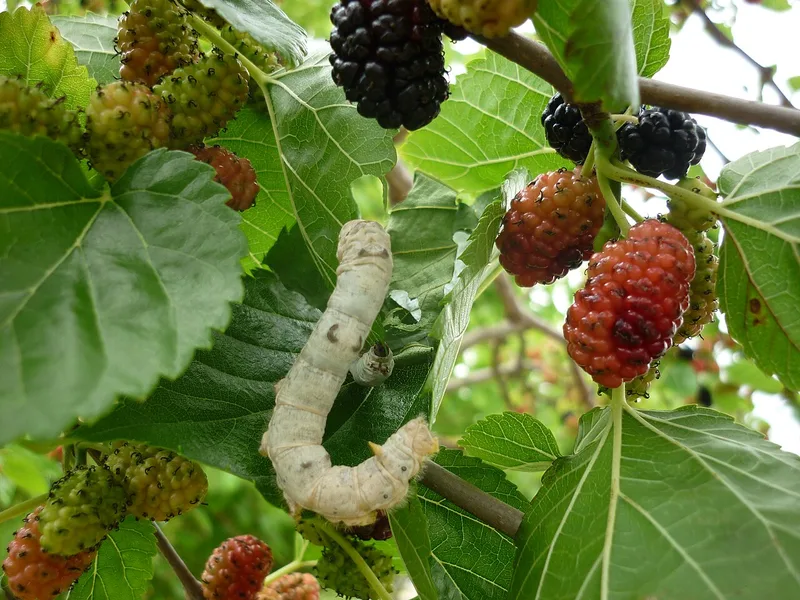
Domestic silkworm caterpillars (Bombyx mori) on mulberry foliage.
At a glance
- Location
- Domestic silkworms are raised in managed conditions rather than assigned an invented wild habitat.
- Diet
- Herbivore
- Food
- Mulberry leaves are the principal food of reared caterpillars.
Classification
- Common name
- Silkworm
- Browse group
- Insects
- Scientific name or taxon
- Bombyx mori
- Taxon rank
- species
- Order
- Lepidoptera
- Family
- Bombycidae
- Genus
- Bombyx
- Source classification
- Insecta
Taxonomy checked against GBIF. For breeds and hybrids, this describes the listed parent taxon.
Three things to know
- The silkworm is a caterpillar.
- It spins a silk cocoon.
- Reared larvae eat mulberry leaves.
Habitat and range
Domestic silkworms are raised in managed conditions rather than assigned an invented wild habitat. Sericulture has a long association with China and is practised in several countries.
Appearance and adaptations
Pale caterpillars grow through successive molts before spinning a cocoon. A pale winged moth emerges after the pupal stage, completing a marked change in body form.
Diet and behaviour
Mulberry leaves are the principal food of reared caterpillars. Silk spun before pupation forms the cocoon, and the adult moth later emerges to reproduce.
Sources
- Animal Diversity Web: Bombyx mori
- GBIF: Silkworm · Directory entry
Explore insects
Browse all insects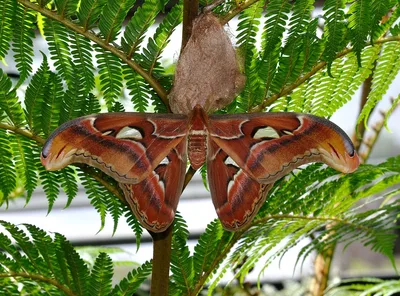
Insects
Atlas Moth
Attacus atlas
The atlas moth is a large silk moth of Asian tropical and subtropical forests.
Living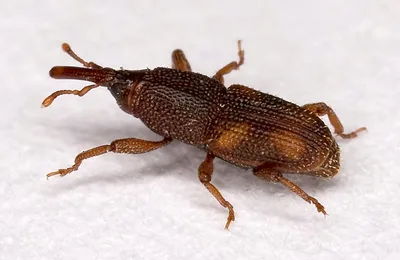
Insects
Weevil
Curculionoidea
Weevils are beetles with distinctive snouts.
Living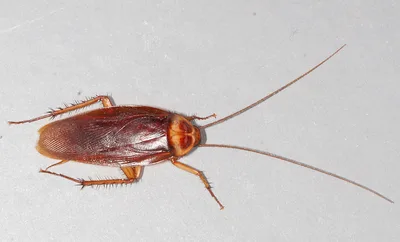
Insects
Cockroach
Blattodea
Cockroaches occupy many environments.
Living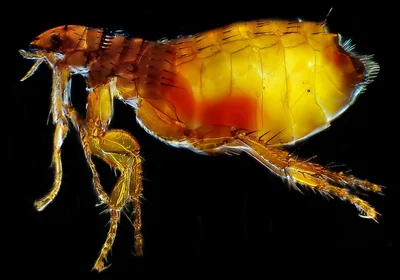
Insects
Flea
Siphonaptera
Fleas are wingless parasitic insects.
Living