Seahorse
Hippocampus
Living individuals or members of this group exist today. This does not mean they are safe from extinction.
Seahorses have an upright posture and a tail that grips supports. This account follows the lined seahorse, a western Atlantic fish whose males carry developing young in a brood pouch.
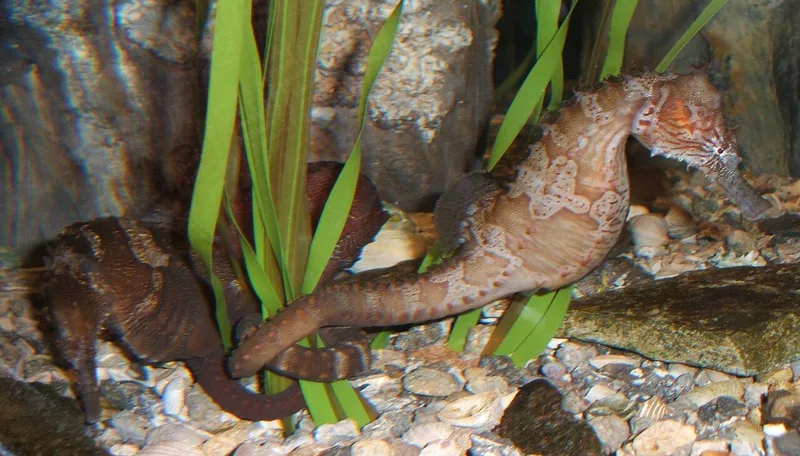
Lined seahorse (Hippocampus erectus) photographed in an aquarium.
No machine-readable author provided. Stevenj assumed (based on copyright claims). · CC BY-SA
At a glance
- Location
- Hippocampus erectus is the representative described here. It uses western Atlantic coastal habitats with seaweed, reef structure and other places to hold on. The older source's broad southern range is not treated as a precise modern map.
- Habitat
- Coral reef, Coast
- Diet
- Carnivore
- Food
- The tubular snout draws in tiny crustaceans.
Classification
- Common name
- Seahorse
- Browse group
- Fish
- Scientific name or taxon
- Hippocampus
- Source classification
- Actinopterygii
Three things to know
- Its tail grips supports.
- Bony plates cover its body.
- Males carry developing young.
Habitat and range
Hippocampus erectus is the representative described here. It uses western Atlantic coastal habitats with seaweed, reef structure and other places to hold on. The older source's broad southern range is not treated as a precise modern map.
Appearance and adaptations
Bony plates surround the body, and the head bends at an angle to the trunk. A grasping tail anchors the fish. Small fins move rapidly, but overall swimming is slow.
Diet and behaviour
The tubular snout draws in tiny crustaceans. The female transfers eggs to the male's pouch, where development continues until he releases the young. This reproductive role is a defining seahorse feature.
Sources
- Animal Diversity Web: Hippocampus erectus
- A–Z Animals: Seahorse · Directory entry
Explore fish
Browse all fish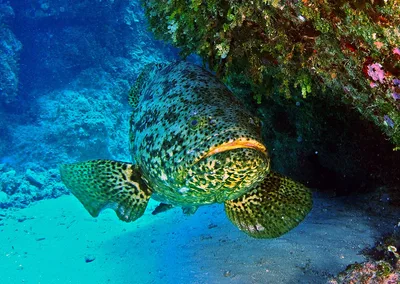
Fish
Grouper Fish
Epinephelinae
Groupers are stout predatory fishes with large mouths.
Living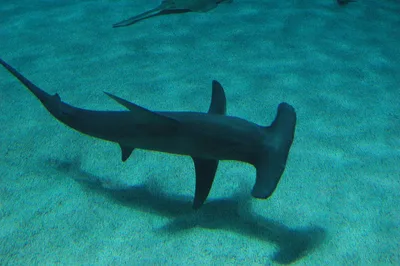
Fish
Hammerhead Shark
Sphyrnidae
Hammerhead sharks have unusually wide heads.
Living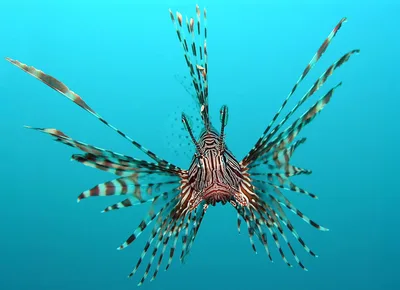
Fish
Lionfish
Pterois
Lionfishes are striking marine predators with long fin rays and venomous spines.
Living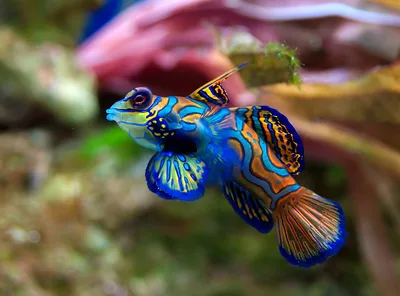
Fish
Mandarin fish
Synchiropus splendidus
The mandarinfish is a small, vividly patterned marine dragonet.
Living