Sea Urchin
Echinoidea
Living individuals or members of this group exist today. This does not mean they are safe from extinction.
Sea urchins are spiny echinoderms. This account follows the purple sea urchin (Strongylocentrotus purpuratus), a grazer of northeastern Pacific rocky coasts.
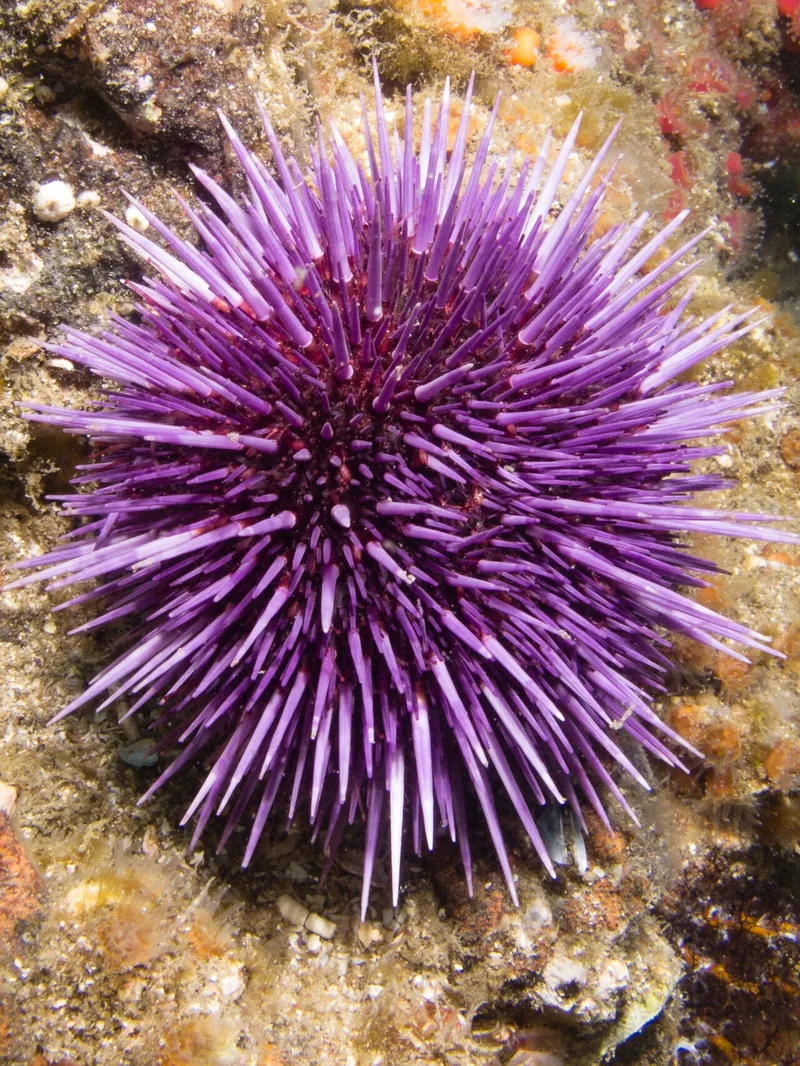
Strongylocentrotus purpuratus, the representative described in this account.
At a glance
- Location
- Purple sea urchins occupy low intertidal and shallow coastal habitats along western North America.
- Habitat
- Coast
- Diet
- Herbivore
- Food
- Algae provide most food, including fragments caught as they drift past.
Classification
- Common name
- Sea Urchin
- Browse group
- Sea urchins
- Scientific name or taxon
- Echinoidea
- Source classification
- Echinoidea
Three things to know
- Its skeleton is called a test.
- Movable spines cover the body.
- Algae provide most food.
Habitat and range
Purple sea urchins occupy low intertidal and shallow coastal habitats along western North America. Rocky seabeds and kelp-growing areas offer both shelter and food.
Appearance and adaptations
A rounded skeleton called a test carries movable spines and tube feet. Adults commonly have purple spines, while young animals can be paler.
Diet and behaviour
Algae provide most food, including fragments caught as they drift past. Tube feet and other surface structures help pass food to the mouth, where hard mouthparts scrape or chew it.
Sources
Explore sea urchins
Browse all sea urchins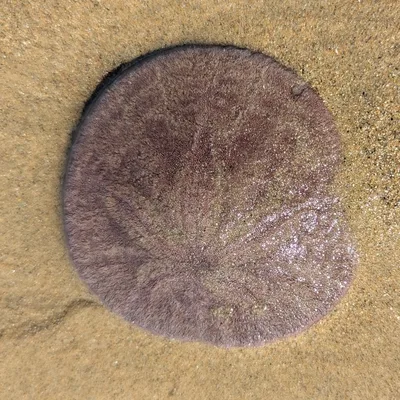
Sea urchins
Sand Dollar
Clypeasteroida
Sand dollars are flattened relatives of sea urchins.
Living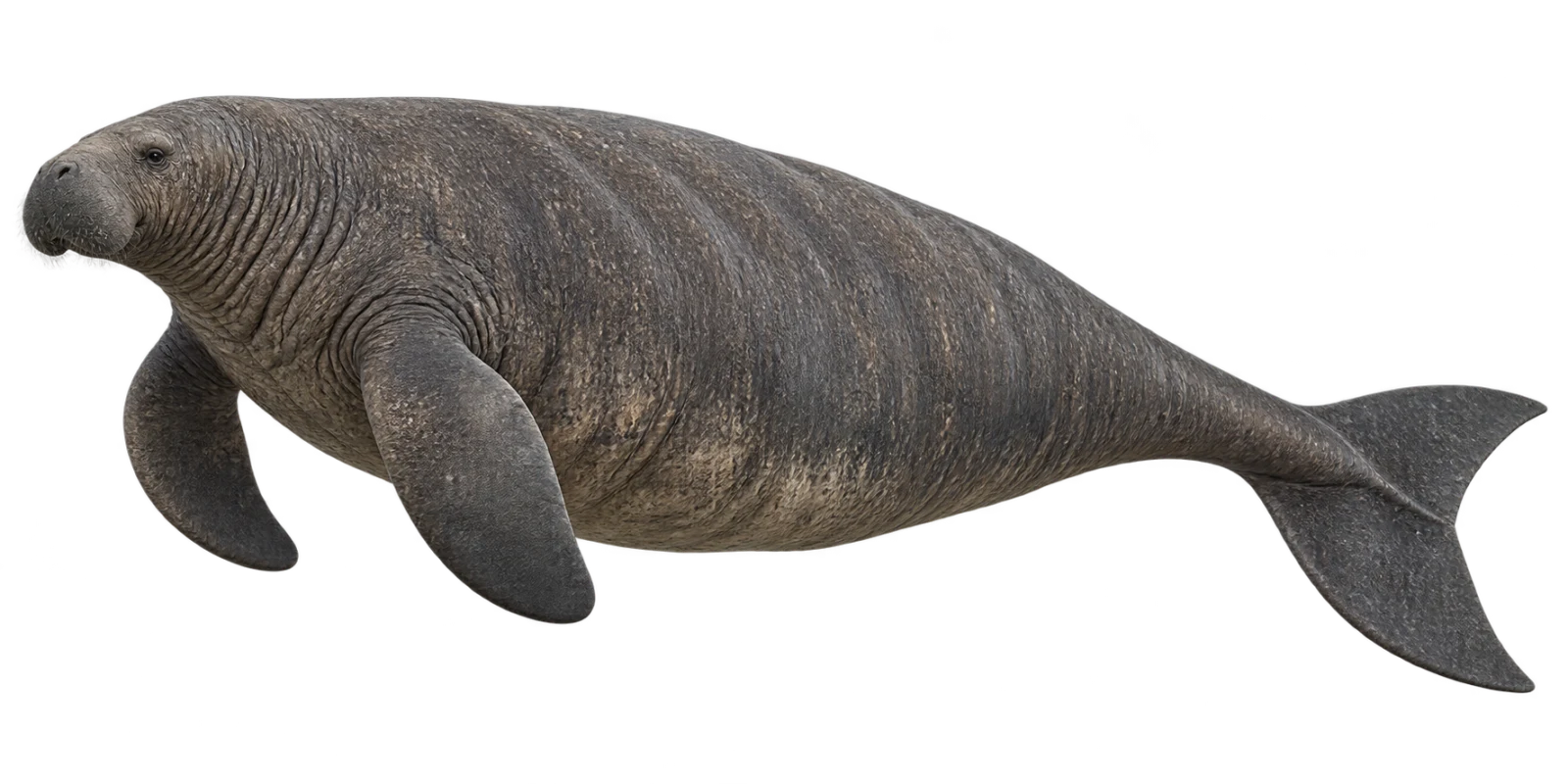 EX
Mammals
Steller's sea cow
Hydrodamalis gigas
Steller's sea cow was a giant sirenian of the Bering Sea that floated in shallow kelp beds and ate seaweed.
ExtinctAI reconstruction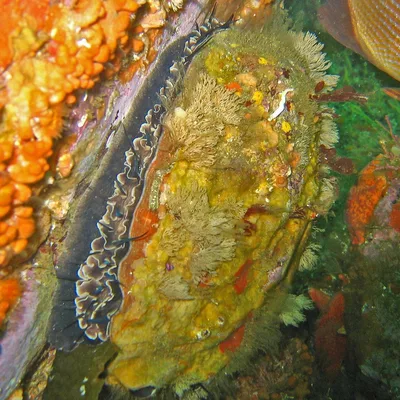
Molluscs
Abalone
Haliotis
Abalones are marine snails with broad muscular feet and flattened shells.
Living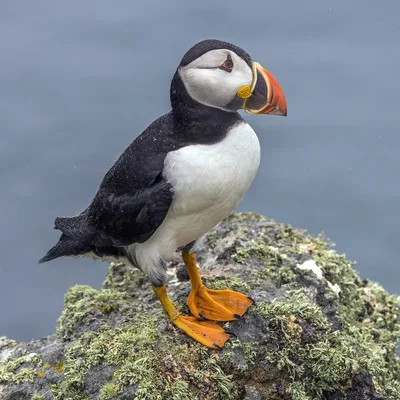 VU
Birds
Atlantic puffin
Fratercula arctica
The Atlantic puffin is a small black and white seabird with a bright triangular bill.
Living