Salmon
Salmonidae
Living individuals or members of this group exist today. This does not mean they are safe from extinction.
Salmon include several fishes with different life histories. This account describes Atlantic salmon, which typically grows in the sea after a freshwater youth and returns to rivers for reproduction.
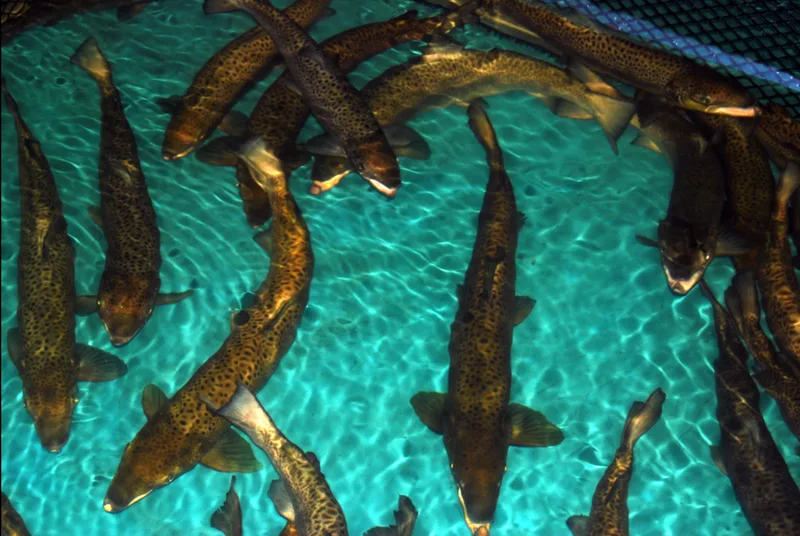
Atlantic salmon (Salmo salar) at the Craig Brook National Fish Hatchery.
At a glance
- Location
- Salmo salar is the representative used here. North Atlantic marine waters connect with river habitats in Europe and North America. Some populations remain in fresh water rather than completing the usual sea migration.
- Habitat
- Rivers and lakes, Coast, Open ocean
- Diet
- Carnivore
- Food
- Young fish eat aquatic insects, while marine adults take crustaceans and fishes.
Classification
- Common name
- Salmon
- Browse group
- Fish
- Scientific name or taxon
- Salmonidae
- Taxon rank
- family
- Order
- Salmoniformes
- Family
- Salmonidae
- Source classification
- Actinopterygii
Taxonomy checked against GBIF. For breeds and hybrids, this describes the listed parent taxon.
Three things to know
- Young fish grow in fresh water.
- Females prepare gravel nests.
- Some adults can spawn more than once.
Habitat and range
Salmo salar is the representative used here. North Atlantic marine waters connect with river habitats in Europe and North America. Some populations remain in fresh water rather than completing the usual sea migration.
Appearance and adaptations
Young river fish carry darker markings that differ from the silvery marine phase. Breeding males can develop a hooked lower jaw. Appearance therefore changes substantially through the life cycle.
Diet and behaviour
Young fish eat aquatic insects, while marine adults take crustaceans and fishes. Females prepare gravel nests for eggs. Unlike a universal rule sometimes applied to salmon, some Atlantic salmon survive to reproduce again.
Sources
- Animal Diversity Web: Salmo salar
- A–Z Animals: Salmon · Directory entry
Explore fish
Browse all fish NT
Fish
Atlantic salmon
Salmo salar
The Atlantic salmon hatches in a river, grows up at sea, and returns to the same river to spawn.
Living
Fish
Trout
Trout is a familiar name for several related fishes.
Living
Fish
Sturgeon
Acipenseridae
Sturgeons are elongated fishes with rows of bony plates.
Living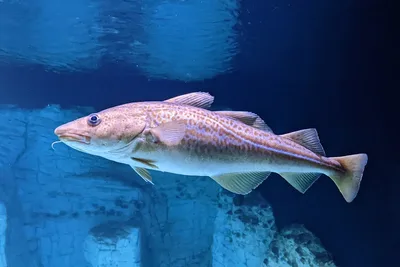
Fish
Atlantic Cod
Gadus morhua
The Atlantic cod is a cold-water fish of the North Atlantic.
Living