Rhinoceros beetle
Dynastinae
Living individuals or members of this group exist today. This does not mean they are safe from extinction.
Rhinoceros beetles include many horned species. This account follows Hercules beetles as treated broadly under Dynastes hercules in the cited source.
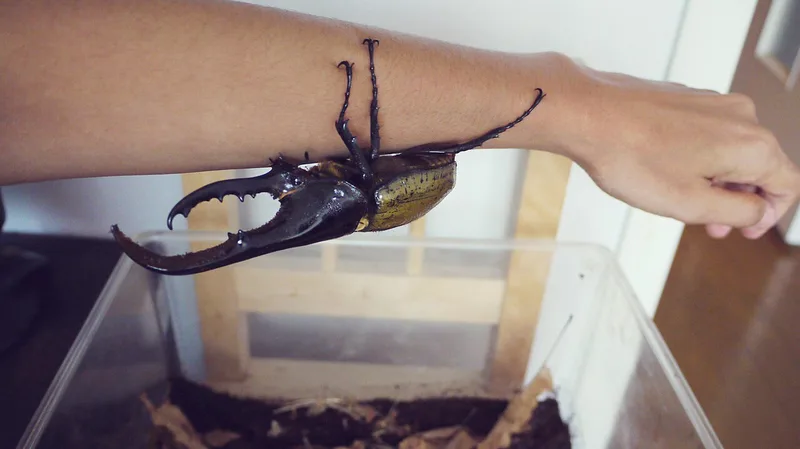
A reared Hercules beetle (Dynastes hercules), illustrating the rhinoceros beetle group.
At a glance
- Location
- Hercules beetles inhabit tropical American forests.
- Habitat
- Rainforest
- Diet
- Herbivore
- Food
- Larvae consume decaying wood, whereas adults feed on fallen or soft fruit.
Classification
- Common name
- Rhinoceros beetle
- Browse group
- Insects
- Scientific name or taxon
- Dynastinae
Three things to know
- Males carry large horns.
- Larvae develop in rotting wood.
- Adults eat soft fruit.
Habitat and range
Hercules beetles inhabit tropical American forests. Decaying logs provide food and shelter for the large larvae, linking their development to fallen wood.
Appearance and adaptations
Adult males carry prominent opposing horns, while females lack these exaggerated structures. The bulky larvae have a pale, curved body quite unlike the winged adult.
Diet and behaviour
Larvae consume decaying wood, whereas adults feed on fallen or soft fruit. The source uses a broad historical species treatment, so its geographical account should not be read as a modern map for every recently separated taxon.
Sources
- Animal Diversity Web: Dynastes hercules
- GBIF: Rhinoceros beetle · Directory entry
Explore insects
Browse all insects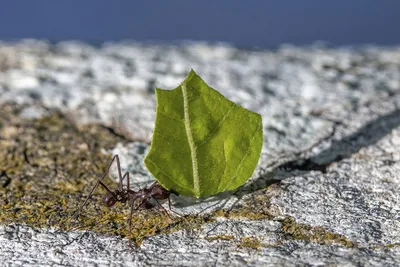 NE
Insects
Leafcutter ant
Atta cephalotes
Leafcutter ants carry pieces of leaf back to the nest, but they do not eat them.
Living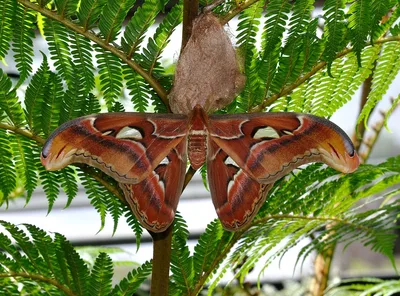
Insects
Atlas Moth
Attacus atlas
The atlas moth is a large silk moth of Asian tropical and subtropical forests.
Living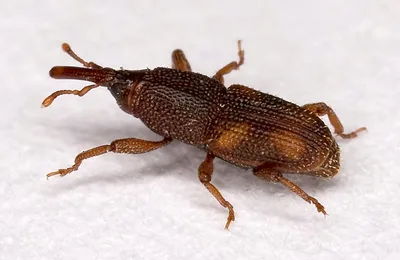
Insects
Weevil
Curculionoidea
Weevils are beetles with distinctive snouts.
Living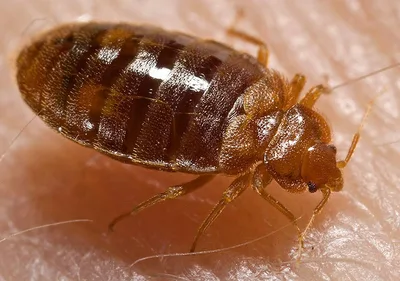
Insects
Bed Bugs
Cimex lectularius
The common bed bug is a small wingless insect that hides in sheltered cracks near sleeping hosts.
Living