Pufferfish
Tetraodontidae
Living individuals or members of this group exist today. This does not mean they are safe from extinction.
Pufferfishes include many marine and freshwater species. This account follows the white-spotted puffer, a reef-associated fish with a rounded body and a varied diet of algae and small animals.
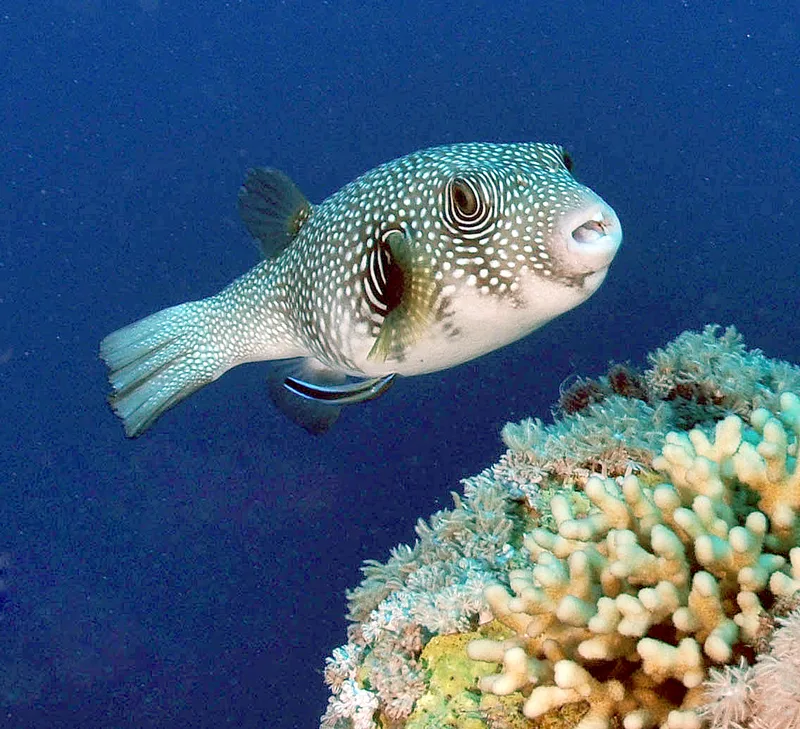
White-spotted puffer (Arothron hispidus), the representative described here.
At a glance
- Location
- Arothron hispidus is the representative described here. It occupies Indo-Pacific and eastern Pacific coastal habitats, including reef slopes, lagoons and estuaries. Young fish can use weedy sheltered areas.
- Habitat
- Coral reef, Coast
- Diet
- Omnivore
- Food
- Algae, detritus and numerous invertebrates enter the diet.
Classification
- Common name
- Pufferfish
- Browse group
- Fish
- Scientific name or taxon
- Tetraodontidae
- Taxon rank
- family
- Order
- Tetraodontiformes
- Family
- Tetraodontidae
- Source classification
- Actinopterygii
Taxonomy checked against GBIF. For breeds and hybrids, this describes the listed parent taxon.
Three things to know
- Its body carries white spots.
- It eats algae and invertebrates.
- Adults commonly occur alone.
Habitat and range
Arothron hispidus is the representative described here. It occupies Indo-Pacific and eastern Pacific coastal habitats, including reef slopes, lagoons and estuaries. Young fish can use weedy sheltered areas.
Appearance and adaptations
White spots cover the darker upper body and tail, while pale bars mark the belly. The body has small spines rather than the conspicuously long spines of porcupinefishes.
Diet and behaviour
Algae, detritus and numerous invertebrates enter the diet. Fish are usually solitary and can defend areas of sandy or rubble habitat. This account does not imply that all puffers share the same diet.
Sources
- FishBase: Arothron hispidus
- A–Z Animals: Pufferfish · Directory entry
Explore fish
Browse all fish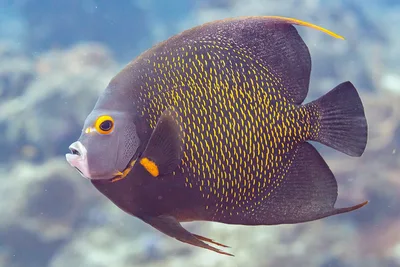
Fish
Angelfish
Pomacanthidae
Marine angelfishes differ from the freshwater aquarium fishes with the same common name.
Living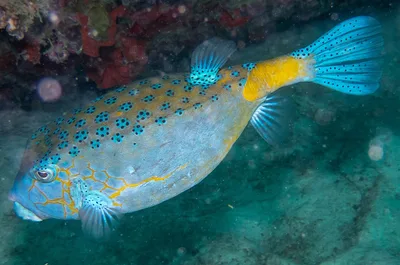
Fish
Boxfish
Ostraciidae
Boxfishes have unusually rigid bodies.
Living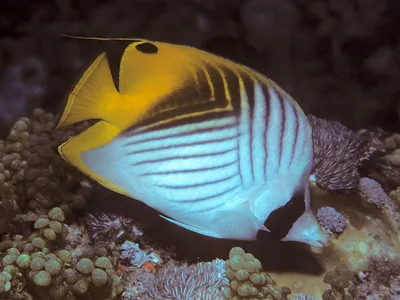
Fish
Butterfly Fish
Chaetodontidae
Butterflyfishes are conspicuous reef inhabitants with flattened bodies.
Living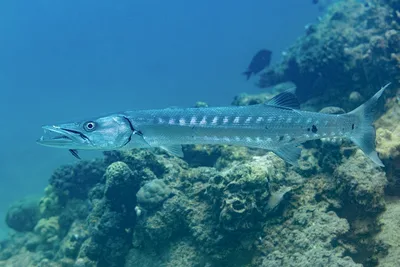
Fish
Barracuda
Sphyraenidae
Barracudas are streamlined predators with conspicuous teeth.
Living