Pterodactyl
Pterosauria
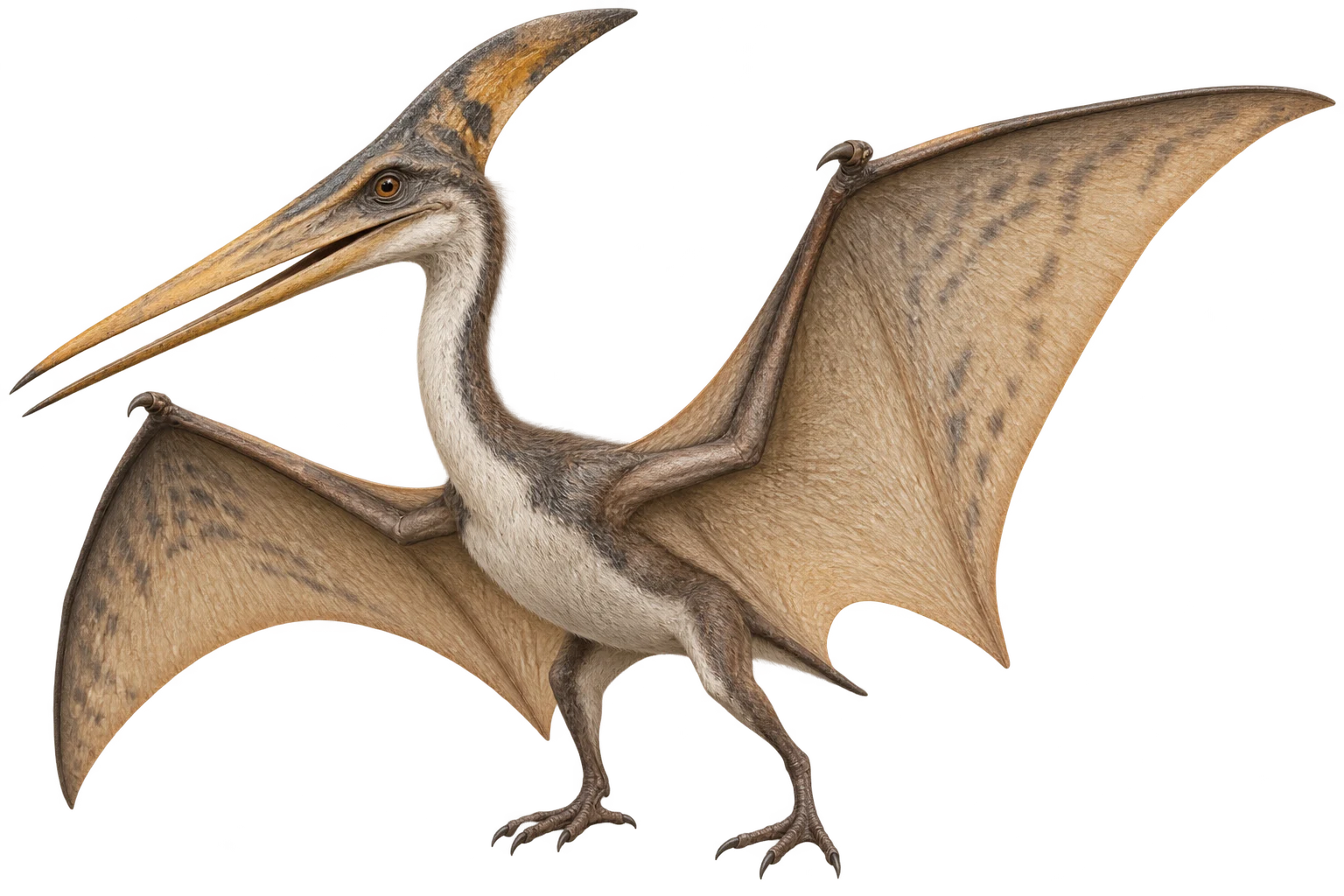
Pterodactyl is an everyday name often applied to pterosaurs. This account uses the fish-eating Pteranodon as a representative while explaining the wider group of extinct flying reptiles.
At a glance
- Habitat
- Coast
- Diet
- Piscivore
- Food
- Fish in the representative Pteranodon.
Classification
- Common name
- Pterodactyl
- Browse group
- Reptiles
- Scientific name or taxon
- Pterosauria
- Source classification
- Reptilia
Three things to know
- Pterosaurs were the first flying vertebrates.
- Their wings were membranes rather than feathers.
- Different pterosaurs had different diets.
Habitat and range
Pterosaurs lived in many regions and environments through the Mesozoic. The representative Pteranodon inhabited marine-associated landscapes in North America. Its feeding and range filters describe that example, not every pterosaur.
Appearance and adaptations
Membranous wings were supported by extremely elongated fingers, and light, hollow bones reduced weight. Pterosaur sizes and skull shapes varied enormously; they were a distinct lineage alongside dinosaurs.
Diet and behaviour
Pteranodon ate fish, but other pterosaurs pursued different foods, including small land animals and tiny aquatic prey. The group includes the first vertebrates known to achieve powered flight and disappeared at the end of the Cretaceous.
Sources
Explore reptiles
Browse all reptiles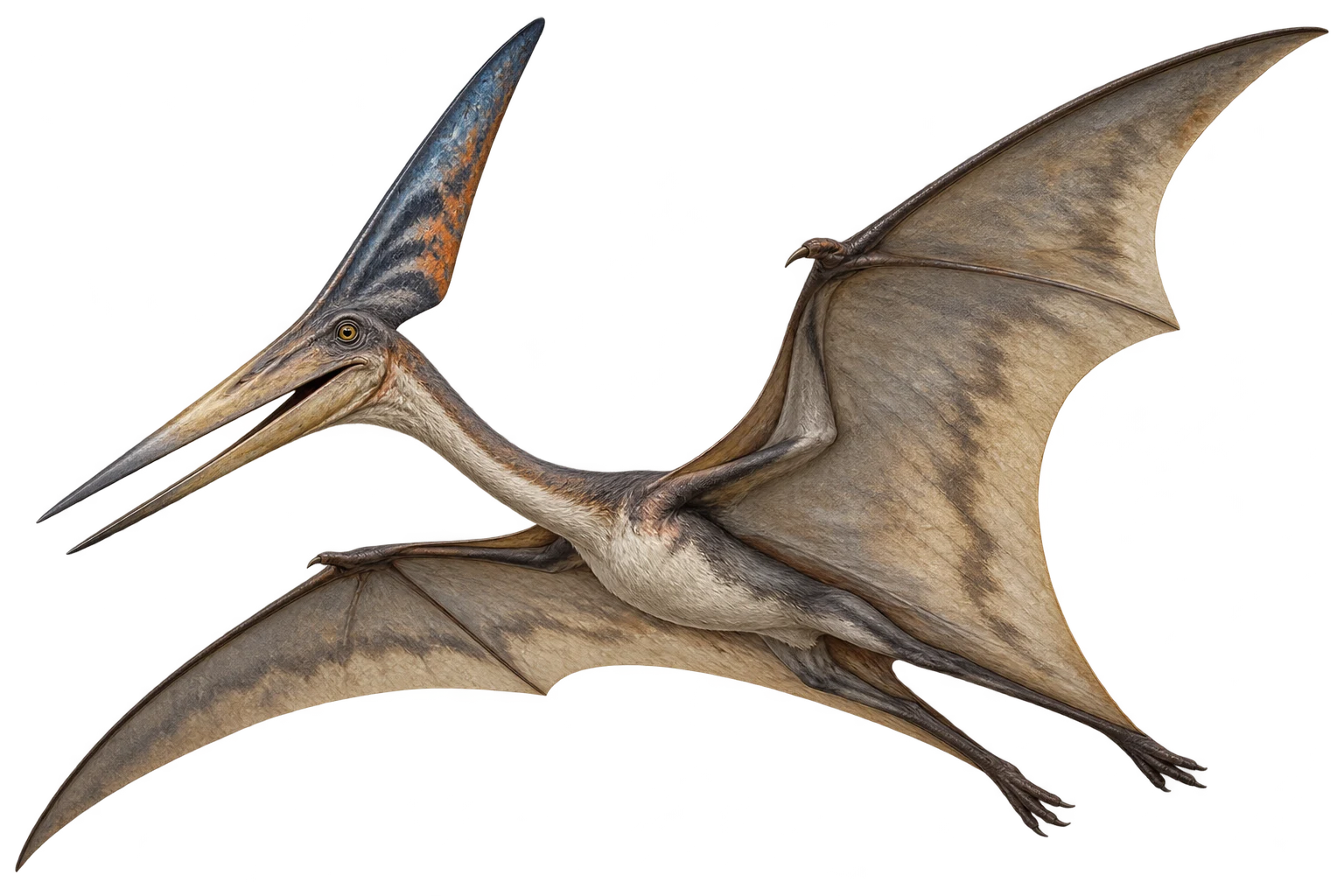
Reptiles
Pteranodon
Pteranodon
Pteranodon was a toothless flying reptile of the Late Cretaceous.
ExtinctAI reconstruction
Reptiles
Caiman
Alligatoridae (caimans: subfamily Caimaninae)
Caimans are crocodilians of the Americas.
Living
Reptiles
Aldabra Giant Tortoise
Aldabrachelys gigantea
The Aldabra giant tortoise is a large land reptile native to a Seychelles atoll.
Living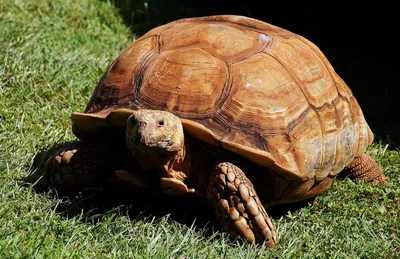 VU
Reptiles
Galápagos giant tortoise
Chelonoidis niger
The Galápagos giant tortoise is the largest living tortoise and one of the longest-lived animals.
Living