Pteranodon
Pteranodon
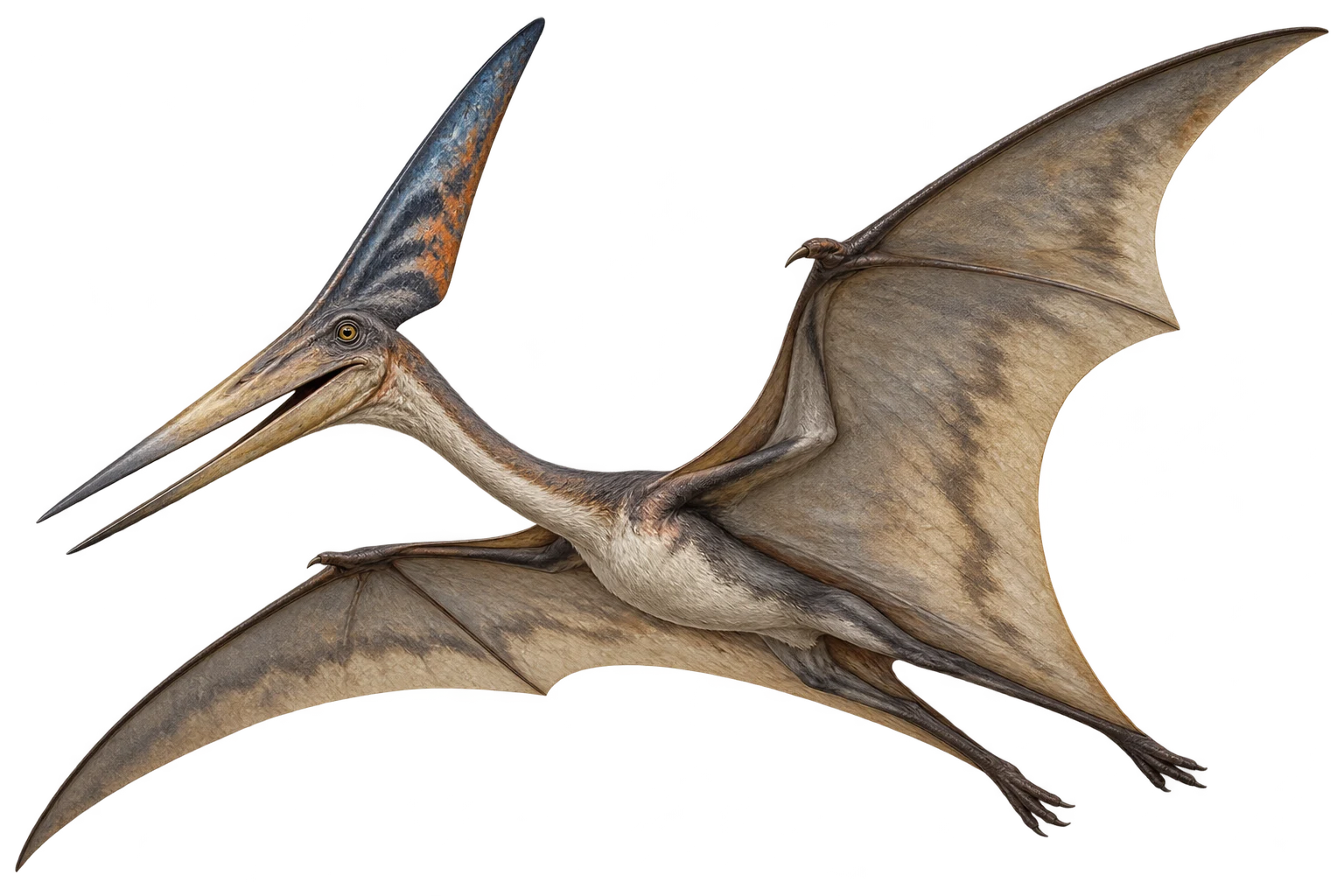
Pteranodon was a toothless flying reptile of the Late Cretaceous. Long wings and a prominent head crest distinguish its fossils, many of which come from rocks deposited beneath ancient North American seas.
At a glance
- Habitat
- Coast
- Diet
- Piscivore
- Food
- Fish.
Classification
- Common name
- Pteranodon
- Browse group
- Reptiles
- Scientific name or taxon
- Pteranodon
- Source classification
- Reptilia
Three things to know
- Its name refers to toothless wings.
- Fish remains provide evidence of its diet.
- Its wings were supported by an elongated finger.
Habitat and range
Pteranodon lived around the ancient seaway that covered central North America. Fossil discoveries in what is now Kansas helped reveal that these pterosaurs were part of a marine-associated ecosystem.
Appearance and adaptations
A long toothless beak, large wings and a backward-projecting crest create the familiar outline. Wing membranes were supported by an elongated finger, unlike the feathered wings of birds.
Diet and behaviour
Fish remains found with Pteranodon fossils provide direct feeding evidence. Its exact capture techniques are less certain. It belonged to the pterosaurs, a separate flying-reptile lineage rather than the birds or non-avian dinosaurs.
Sources
Explore reptiles
Browse all reptiles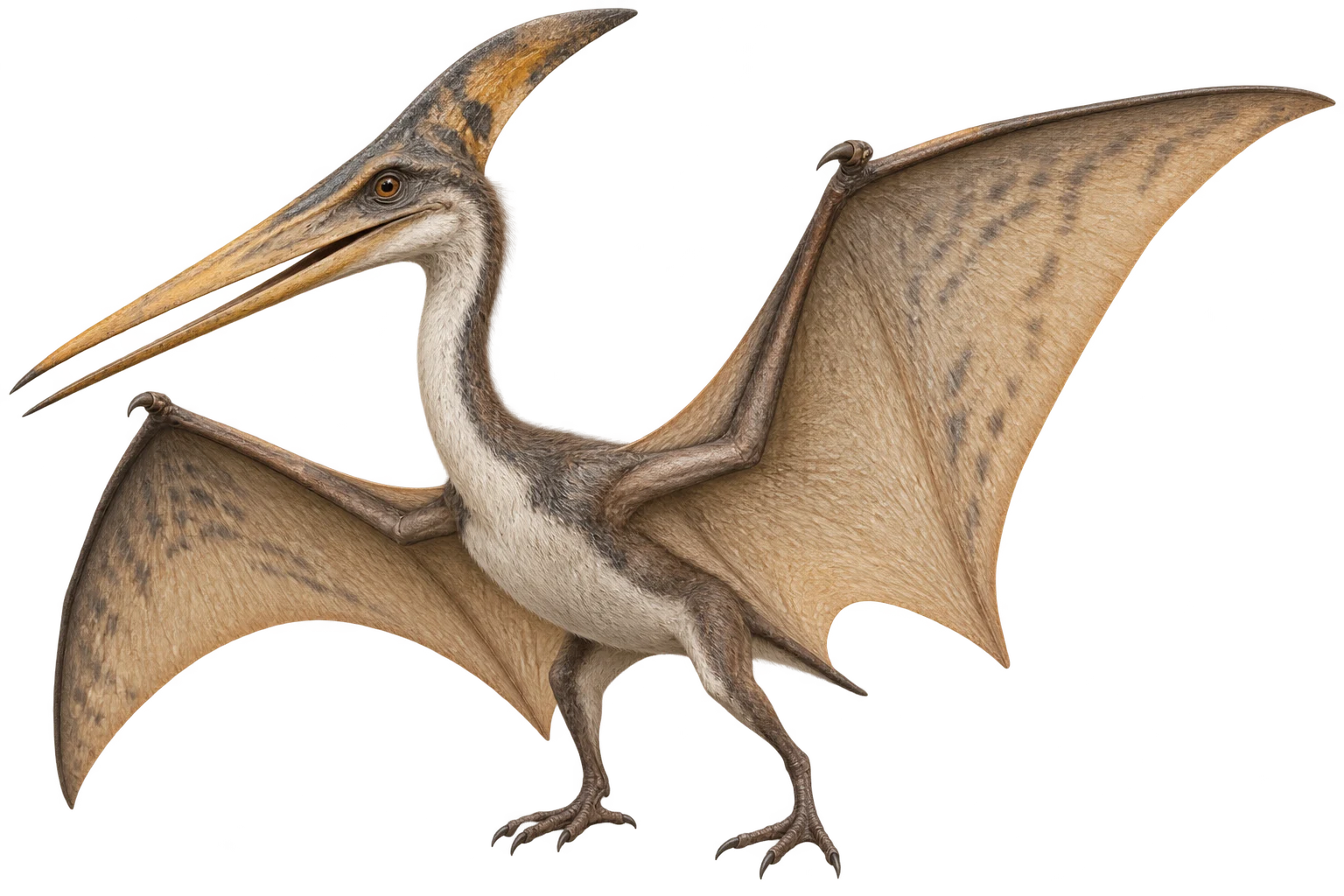
Reptiles
Pterodactyl
Pterosauria
Pterodactyl is an everyday name often applied to pterosaurs.
ExtinctAI reconstruction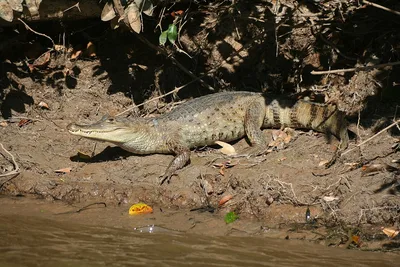
Reptiles
Caiman
Alligatoridae (caimans: subfamily Caimaninae)
Caimans are crocodilians of the Americas.
Living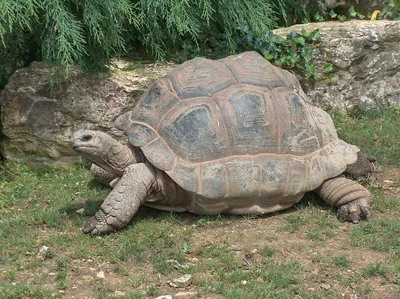
Reptiles
Aldabra Giant Tortoise
Aldabrachelys gigantea
The Aldabra giant tortoise is a large land reptile native to a Seychelles atoll.
Living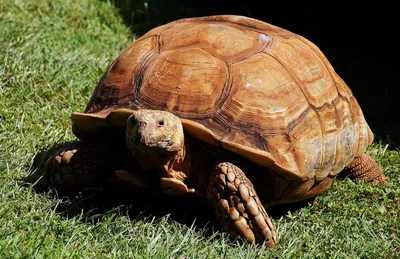 VU
Reptiles
Galápagos giant tortoise
Chelonoidis niger
The Galápagos giant tortoise is the largest living tortoise and one of the longest-lived animals.
Living