Newt
Salamandridae
Living individuals or members of this group exist today. This does not mean they are safe from extinction.
Newts are salamanders with varied aquatic and terrestrial stages. This account describes the eastern newt (Notophthalmus viridescens), whose orange juvenile stage is commonly called an eft.
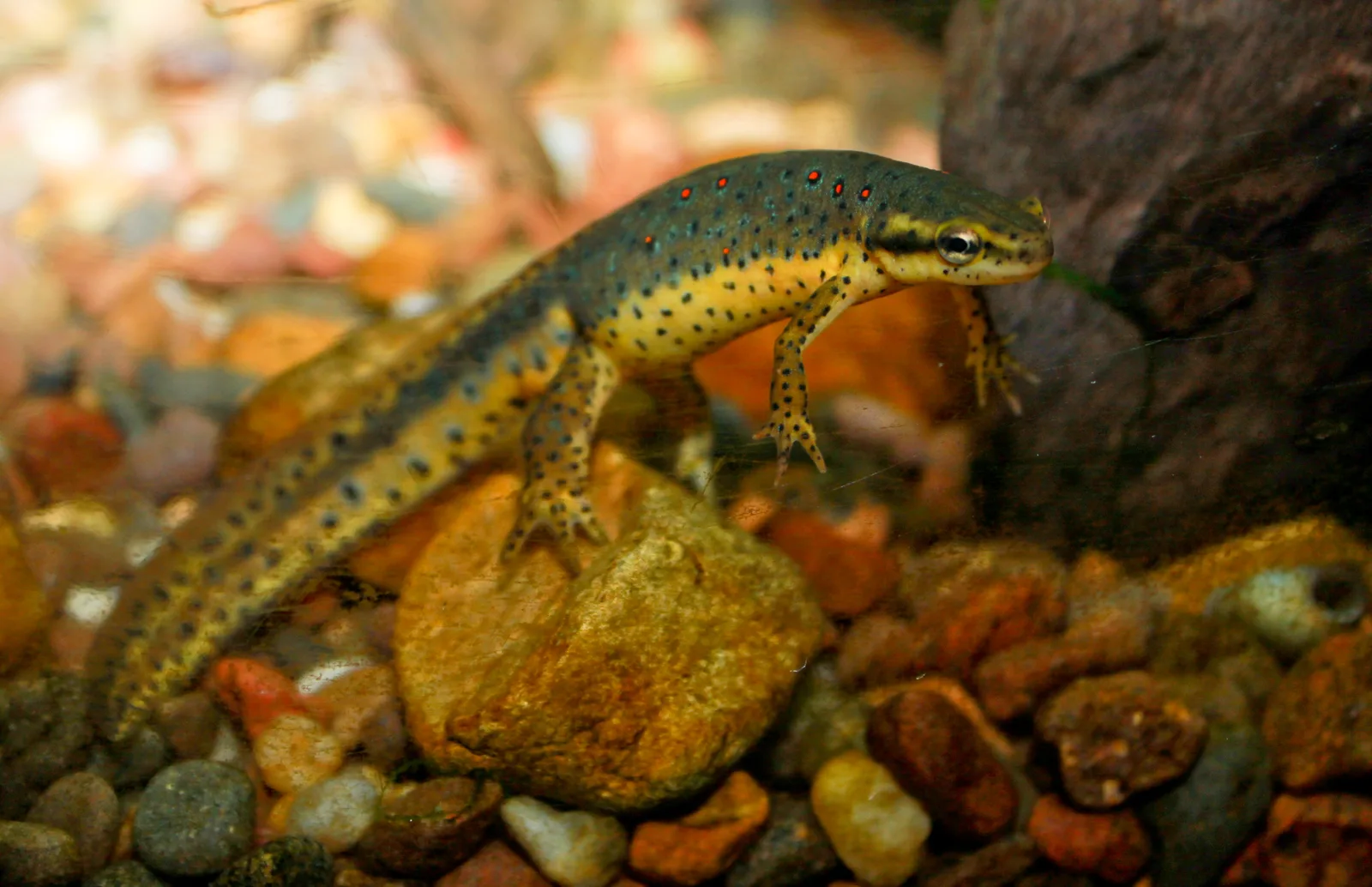
Representative species: Notophthalmus viridescens.
At a glance
- Habitat
- Temperate forest, Rivers and lakes, Wetlands
- Diet
- Carnivore
- Food
- Small invertebrates.
Classification
- Common name
- Newt
- Browse group
- Amphibians
- Scientific name or taxon
- Salamandridae
- Taxon rank
- family
- Order
- Caudata
- Family
- Salamandridae
- Source classification
- Amphibia
Taxonomy checked against GBIF. For breeds and hybrids, this describes the listed parent taxon.
Three things to know
- The orange eft is a juvenile stage.
- Aquatic adults use their tails for swimming.
- Different stages occupy different habitats.
Habitat and range
Eastern newts inhabit eastern North America. Larvae and adults use ponds, small lakes and marshes, while terrestrial efts occupy damp woodland and leaf litter.
Appearance and adaptations
Aquatic adults have olive-toned skin and a flattened swimming tail. The familiar eft is orange to reddish, with conspicuous spots and a rougher skin surface.
Diet and behaviour
Newts take small invertebrates, including insect larvae, snails and tiny crustaceans. Efts become active in damp conditions, whereas aquatic adults can forage by day or night. Some populations vary in their life-stage sequence.
Sources
- Animal Diversity Web: Notophthalmus viridescens
- A–Z Animals: Newt · Directory entry
Explore amphibians
Browse all amphibians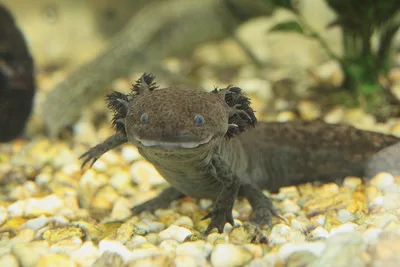 CR
Amphibians
Axolotl
Ambystoma mexicanum
The axolotl is a salamander that never grows up.
Living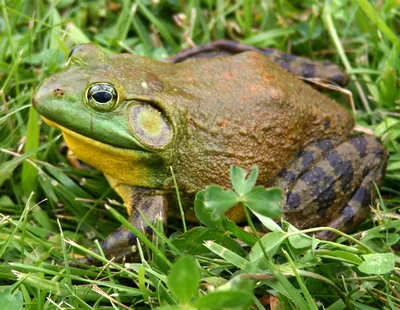
Amphibians
Bullfrog
Lithobates catesbeianus
The American bullfrog is a large frog that waits near water for passing prey.
Living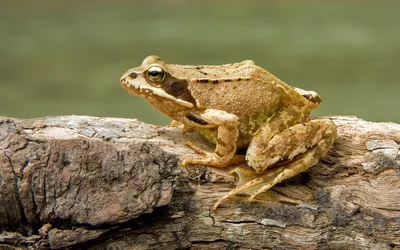
Amphibians
Common Frog
Rana temporaria
The common frog is a widespread European amphibian that also occurs in northwestern Asia.
Living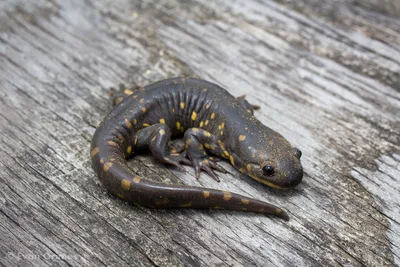
Amphibians
Tiger Salamander
Ambystoma tigrinum
The tiger salamander is a stout North American amphibian with pale markings on a dark body.
Living