Nematode
Living individuals or members of this group exist today. This does not mean they are safe from extinction.
Nematodes occupy an enormous variety of habitats. This account describes Caenorhabditis elegans, a tiny free-living roundworm that feeds on bacteria and is widely studied in laboratories.
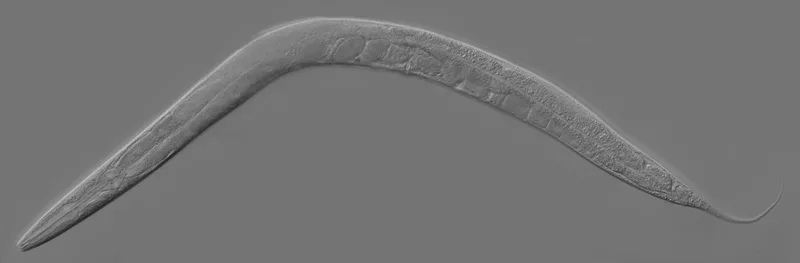
Magnified photograph of Caenorhabditis elegans, the representative described here.
The original uploader was Kbradnam at English Wikipedia . ( Original text: Zeynep F. Altun, Editor of www.wormatlas.org ) · CC BY-SA
At a glance
- Location
- Caenorhabditis elegans uses moist terrestrial microhabitats associated with soil and decomposing vegetation.
- Diet
- Bacterivore
- Food
- Bacteria provide food.
Classification
- Common name
- Nematode
- Browse group
- Worms
- Scientific name or taxon
- Not specified in the source index
Three things to know
- It is a free-living roundworm.
- Its food is bacteria.
- The body lacks segmentation.
Habitat and range
Caenorhabditis elegans uses moist terrestrial microhabitats associated with soil and decomposing vegetation. A thin water film allows movement; these conditions differ from the habitats of parasitic nematodes.
Appearance and adaptations
The transparent, unsegmented body is cylindrical and tapers at both ends. There are no legs or other external limbs, and microscopy reveals internal structures.
Diet and behaviour
Bacteria provide food. Chemical sensing helps the worm locate suitable conditions and feeding patches. This bacterivorous way of life does not represent every nematode, many of which have very different diets.
Sources
- Animal Diversity Web: Caenorhabditis elegans
- A–Z Animals: Nematode · Directory entry
Explore worms
Browse all wormsWorms
Antarctic Scale Worm
Eulagisca gigantea
Classification and source reference
LivingWorms
Bearded Fireworm
Hermodice carunculata
Classification and source reference
Living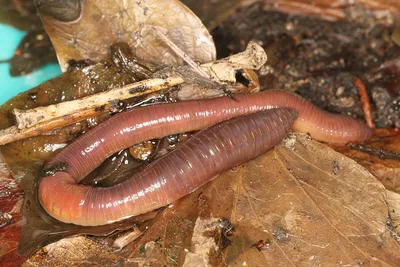
Worms
Earthworm
Haplotaxida
Earthworms have different burrowing habits.
Living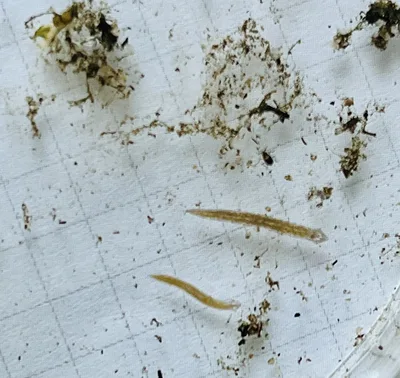
Worms
Flatworm
Platyhelminthes
Flatworms include many unrelated-looking forms.
Living