Mudskipper
Oxudercidae
Living individuals or members of this group exist today. This does not mean they are safe from extinction.
Mudskippers are fishes that can move and feed on exposed mud. This account describes the Atlantic mudskipper, an amphibious inhabitant of West African estuaries and mangrove margins.
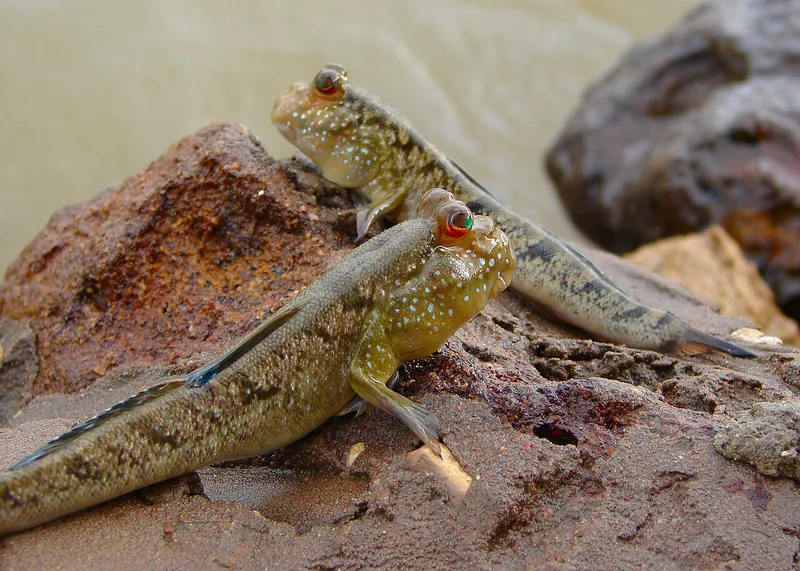
Atlantic mudskipper (Periophthalmus barbarus), the representative described here.
At a glance
- Location
- Periophthalmus barbarus is the representative used here. Its established range follows the West African coast. The source flags several distant records as uncertain, so they are not used to expand the continent filters.
- Habitat
- Coast, Wetlands
- Diet
- Omnivore
- Food
- Adults search exposed mud for crabs, insects and other small animals, with plant material also recorded.
Classification
- Common name
- Mudskipper
- Browse group
- Fish
- Scientific name or taxon
- Oxudercidae
- Taxon rank
- family
- Family
- Oxudercidae
- Source classification
- Actinopterygii
Taxonomy checked against GBIF. For breeds and hybrids, this describes the listed parent taxon.
Three things to know
- It can breathe air.
- It moves over exposed mud.
- It spawns in burrows.
Habitat and range
Periophthalmus barbarus is the representative used here. Its established range follows the West African coast. The source flags several distant records as uncertain, so they are not used to expand the continent filters.
Appearance and adaptations
Prominent eyes project above the head, and the pectoral fins help support movement on mud. Air breathing allows the fish to remain active outside the water while conditions stay suitable.
Diet and behaviour
Adults search exposed mud for crabs, insects and other small animals, with plant material also recorded. They make burrows used in reproduction. Coastal mudflats link their aquatic and exposed feeding areas.
Sources
- FishBase: Periophthalmus barbarus
- A–Z Animals: Mudskipper · Directory entry
Explore fish
Browse all fish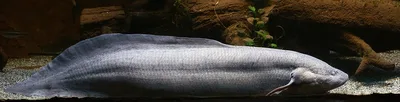
Fish
Lungfish
Dipnoi
Lungfishes combine life in water with air breathing.
Living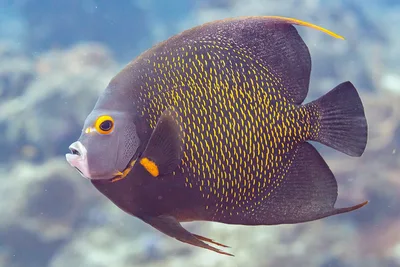
Fish
Angelfish
Pomacanthidae
Marine angelfishes differ from the freshwater aquarium fishes with the same common name.
Living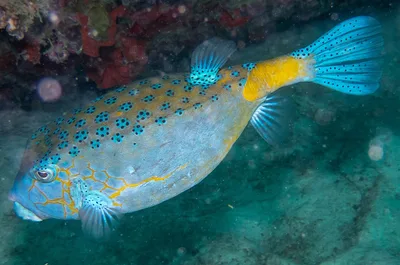
Fish
Boxfish
Ostraciidae
Boxfishes have unusually rigid bodies.
Living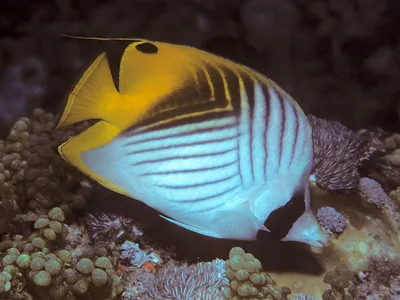
Fish
Butterfly Fish
Chaetodontidae
Butterflyfishes are conspicuous reef inhabitants with flattened bodies.
Living