Marine Iguana
Amblyrhynchus cristatus
Living individuals or members of this group exist today. This does not mean they are safe from extinction.
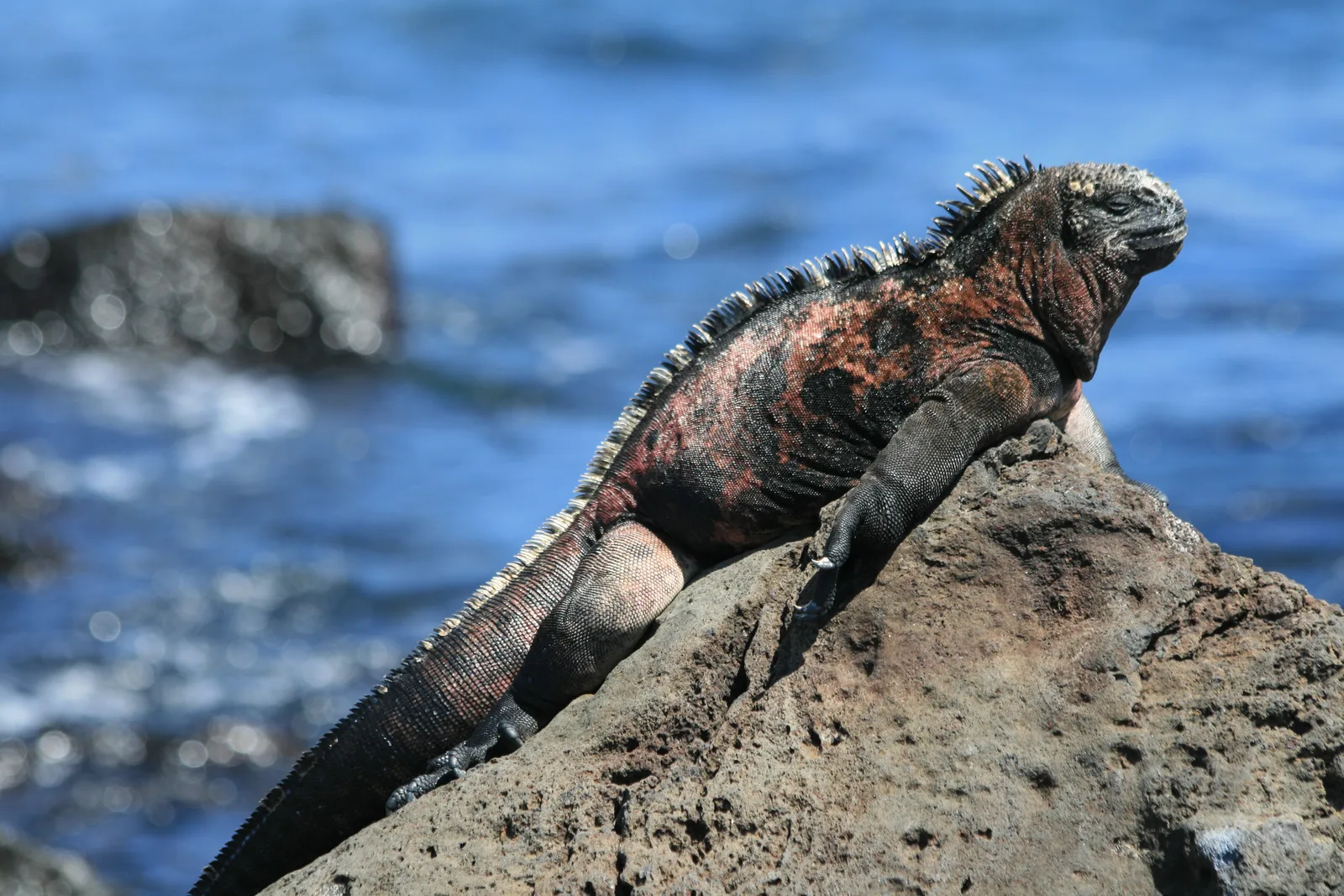
The marine iguana feeds on seaweed along the Galápagos shoreline. It returns to sun-warmed land after foraging in cold seawater.
At a glance
- Location
- The Galápagos Islands, on rocky shores beside marine feeding areas.
- Habitat
- Coast
- Diet
- Herbivore
- Food
- Marine algae.
Classification
- Common name
- Marine Iguana
- Browse group
- Reptiles
- Scientific name or taxon
- Amblyrhynchus cristatus
- Taxon rank
- species
- Family
- Iguanidae
- Genus
- Amblyrhynchus
- Source classification
- Reptilia
Taxonomy checked against GBIF. For breeds and hybrids, this describes the listed parent taxon.
Three things to know
- It feeds almost entirely on marine algae.
- Its natural range is the Galápagos Islands.
- It warms itself on shore after entering cold water.
Habitat and range
The Galápagos Islands, on rocky shores beside marine feeding areas.
Appearance and adaptations
Its blunt snout helps it crop algae. The tail is flattened sideways, and dark skin covers a body with a ridge of pointed scales.
Diet and behaviour
Larger individuals can dive for algae, while smaller ones often feed in the intertidal zone. Basking on land restores warmth after marine feeding.
Sources
- Animal Diversity Web: Amblyrhynchus cristatus
- A–Z Animals: Marine Iguana · Directory entry
Explore reptiles
Browse all reptiles VU
Reptiles
Galápagos giant tortoise
Chelonoidis niger
The Galápagos giant tortoise is the largest living tortoise and one of the longest-lived animals.
Living
Reptiles
Aldabra Giant Tortoise
Aldabrachelys gigantea
The Aldabra giant tortoise is a large land reptile native to a Seychelles atoll.
Living
Reptiles
Caiman
Alligatoridae (caimans: subfamily Caimaninae)
Caimans are crocodilians of the Americas.
Living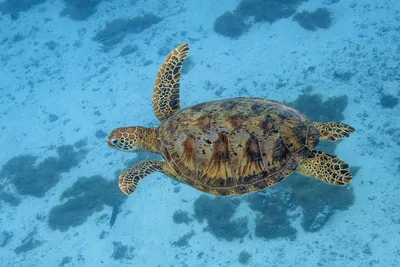 LC
Reptiles
Green sea turtle
Chelonia mydas
The green sea turtle grazes on seagrass in warm coastal waters.
Living