Manta Ray
Mobula
Living individuals or members of this group exist today. This does not mean they are safe from extinction.
Mantas are large rays that filter small animals from seawater. This account follows the giant manta ray, using the older Manta birostris source while retaining the modern genus Mobula.
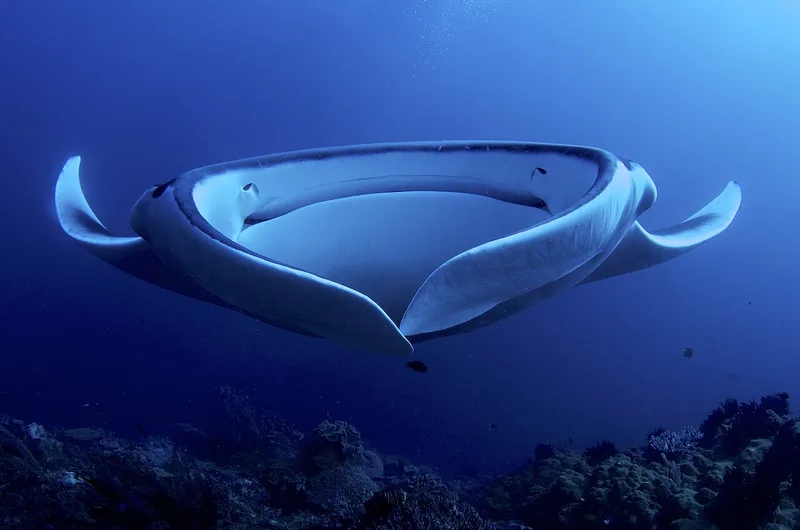
Giant manta ray (Mobula birostris), the representative described here.
At a glance
- Location
- Mobula birostris is the representative described here. The older source predates parts of the modern manta classification, so its broad worldwide range is not copied as an exact map for the modern species. Mantas use warm marine waters.
- Habitat
- Coast, Open ocean, Coral reef
- Diet
- Filter feeder
- Food
- Water passing through the mouth is strained to collect plankton.
Classification
- Common name
- Manta Ray
- Browse group
- Fish
- Scientific name or taxon
- Mobula
- Taxon rank
- genus
- Order
- Myliobatiformes
- Family
- Myliobatidae
- Genus
- Mobula
- Source classification
- Chondrichthyes
Taxonomy checked against GBIF. For breeds and hybrids, this describes the listed parent taxon.
Three things to know
- It is a filter feeder.
- Head lobes help direct food.
- It can visit cleaning stations.
Habitat and range
Mobula birostris is the representative described here. The older source predates parts of the modern manta classification, so its broad worldwide range is not copied as an exact map for the modern species. Mantas use warm marine waters.
Appearance and adaptations
Broad pectoral fins form wing-like surfaces. Two flexible lobes beside the mouth help direct food inward. Unlike many stingrays, mantas lack a sharp venomous tail barb.
Diet and behaviour
Water passing through the mouth is strained to collect plankton. Mantas may loop through food patches and visit reef cleaning stations where other fishes remove parasites. Their teeth do not perform the main filtering work.
Sources
- Animal Diversity Web: Manta birostris (older name)
- A–Z Animals: Manta Ray · Directory entry
Explore fish
Browse all fish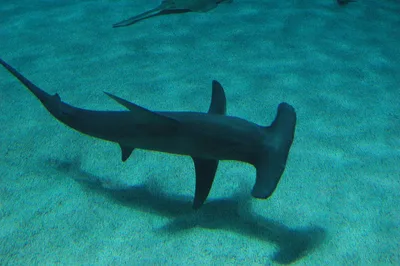
Fish
Hammerhead Shark
Sphyrnidae
Hammerhead sharks have unusually wide heads.
Living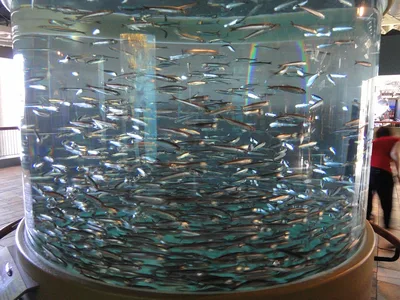
Fish
Anchovy
Engraulidae
Anchovies are small schooling fishes.
Living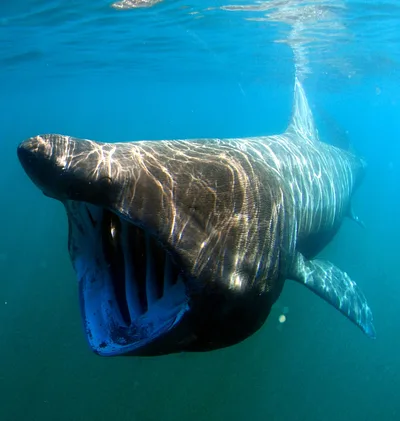
Fish
Basking Shark
Cetorhinus maximus
The basking shark is a very large fish that gathers small plankton rather than chasing large prey.
Living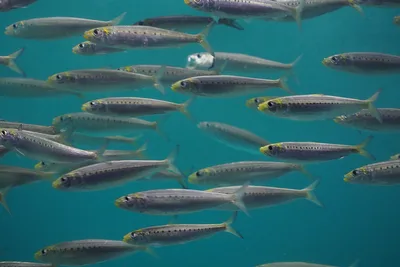
Fish
Sardines
Clupeidae
Sardine is a common name applied to several small schooling fishes.
Living