Locust
Acrididae
Living individuals or members of this group exist today. This does not mean they are safe from extinction.
Locusts are grasshoppers capable of forming dense migrating groups. This account describes the desert locust (Schistocerca gregaria), whose behaviour changes with population conditions.
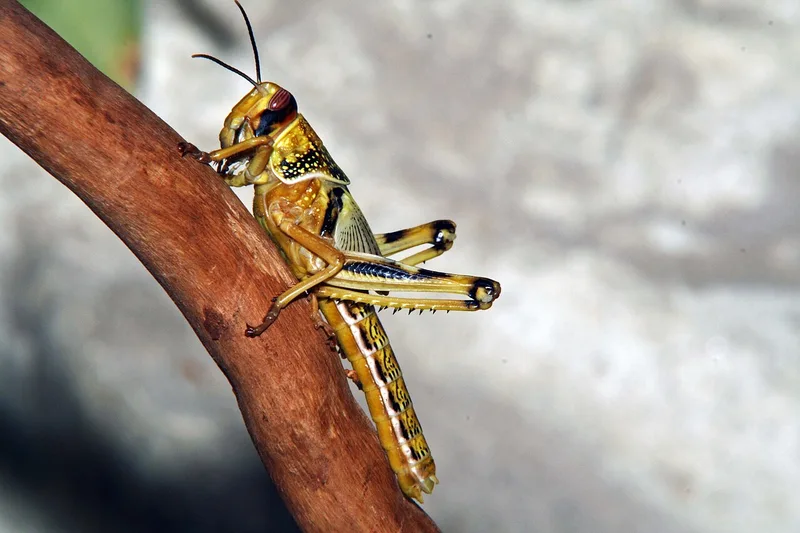
Schistocerca gregaria, the representative described in this account.
At a glance
- Location
- Desert locusts occupy dry regions of Africa and southwestern Asia between outbreaks.
- Habitat
- Desert, Grassland
- Diet
- Herbivore
- Food
- Vegetation provides food.
Classification
- Common name
- Locust
- Browse group
- Insects
- Scientific name or taxon
- Acrididae
- Taxon rank
- family
- Order
- Orthoptera
- Family
- Acrididae
- Source classification
- Insecta
Taxonomy checked against GBIF. For breeds and hybrids, this describes the listed parent taxon.
Three things to know
- It is a grasshopper.
- Crowded juveniles can form bands.
- Adults can gather into migrating swarms.
Habitat and range
Desert locusts occupy dry regions of Africa and southwestern Asia between outbreaks. Rainfall, fresh vegetation and suitable sandy soil influence where breeding succeeds.
Appearance and adaptations
Long hind legs support jumping, and adults have wings for sustained movement. Colour and behaviour differ between solitary and crowded phases.
Diet and behaviour
Vegetation provides food. Under suitable crowded conditions, juveniles form marching bands and adults gather into swarms. Their movements depend strongly on weather and the distribution of growing plants.
Sources
Explore insects
Browse all insects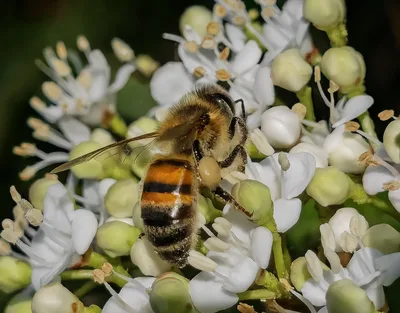 DD
Insects
Western honey bee
Apis mellifera
The western honey bee lives in colonies of tens of thousands and turns nectar into honey.
Living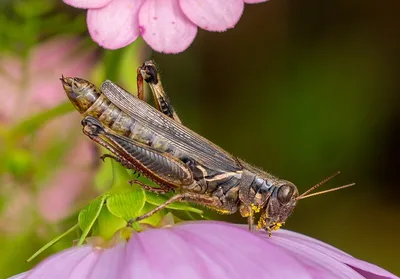
Insects
Grasshopper
Orthoptera
Grasshoppers include many plant-eating species.
Living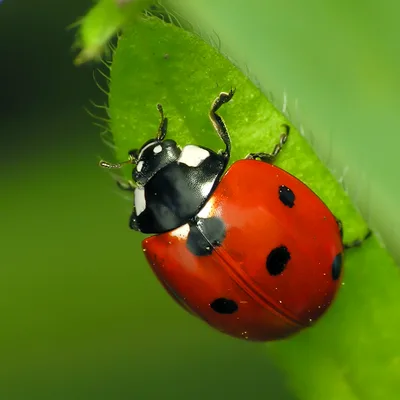
Insects
Ladybug
Coccinellidae
Ladybugs are beetles, many of which hunt plant-feeding insects.
Living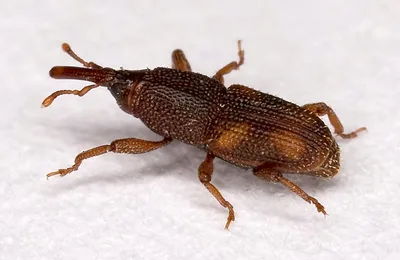
Insects
Weevil
Curculionoidea
Weevils are beetles with distinctive snouts.
Living