Katydid
Tettigoniidae
Living individuals or members of this group exist today. This does not mean they are safe from extinction.
Katydids have long antennae and diverse diets. This account follows the common true katydid (Pterophylla camellifolia), a leaf-eating insect of North American treetops.
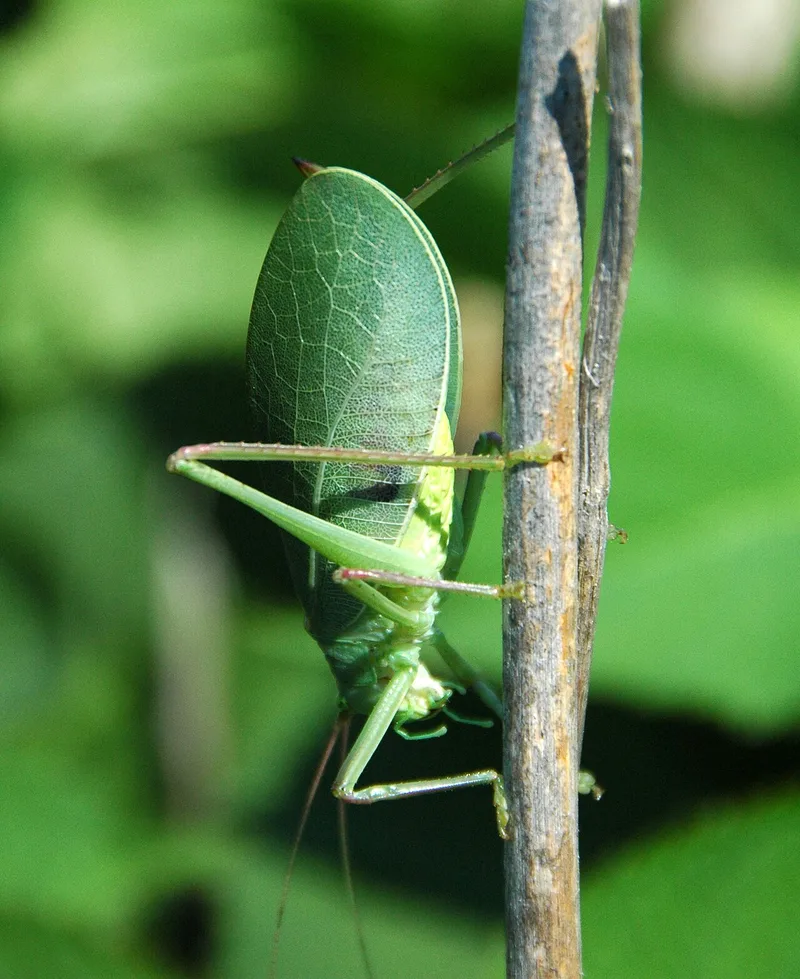
Pterophylla camellifolia, the representative described in this account.
At a glance
- Location
- Common true katydids live in deciduous tree canopies.
- Habitat
- Temperate forest
- Diet
- Herbivore
- Food
- Tree leaves provide food.
Classification
- Common name
- Katydid
- Browse group
- Insects
- Scientific name or taxon
- Tettigoniidae
- Taxon rank
- family
- Order
- Orthoptera
- Family
- Tettigoniidae
- Source classification
- Insecta
Taxonomy checked against GBIF. For breeds and hybrids, this describes the listed parent taxon.
Three things to know
- The wings resemble leaves.
- Its food is tree foliage.
- Eggs overwinter in bark crevices.
Habitat and range
Common true katydids live in deciduous tree canopies. The cited Missouri account describes animals that are heard much more often than they are seen high among the leaves.
Appearance and adaptations
Green wings have prominent leaflike veins and form a rounded cover over the body. Long antennae extend forward, and females have a blade-shaped egg-laying appendage.
Diet and behaviour
Tree leaves provide food. Nighttime calling helps individuals find mates, and eggs placed in bark crevices pass the winter before hatching into wingless nymphs.
Sources
Explore insects
Browse all insects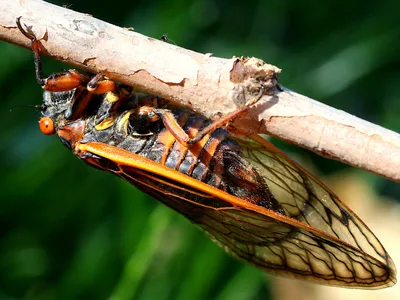
Insects
Cicada
Cicadidae
Cicadas include annual and periodical species.
Living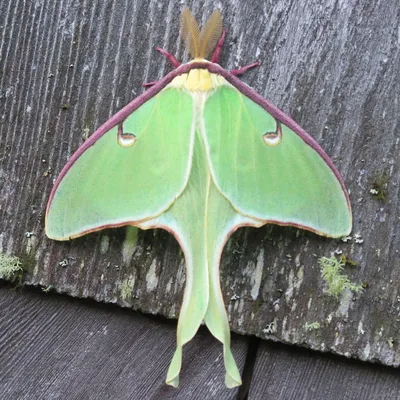
Insects
Moth
Lepidoptera
Moths have highly varied life histories.
Living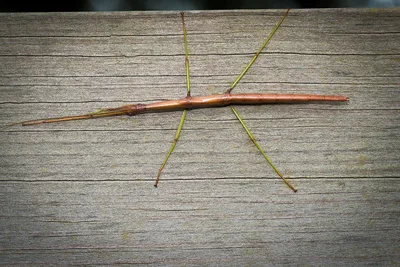
Insects
Stick Insect
Phasmatodea
Stick insects disguise themselves among vegetation.
Living
Insects
Termite
Isoptera
Termites are social insects with several specialised colony roles.
Living