Giant Clam
Tridacna gigas
Living individuals or members of this group exist today. This does not mean they are safe from extinction.
The giant clam is a large reef-dwelling bivalve of the tropical Indo-Pacific. Algae living in its exposed mantle supply much of its nutrition.
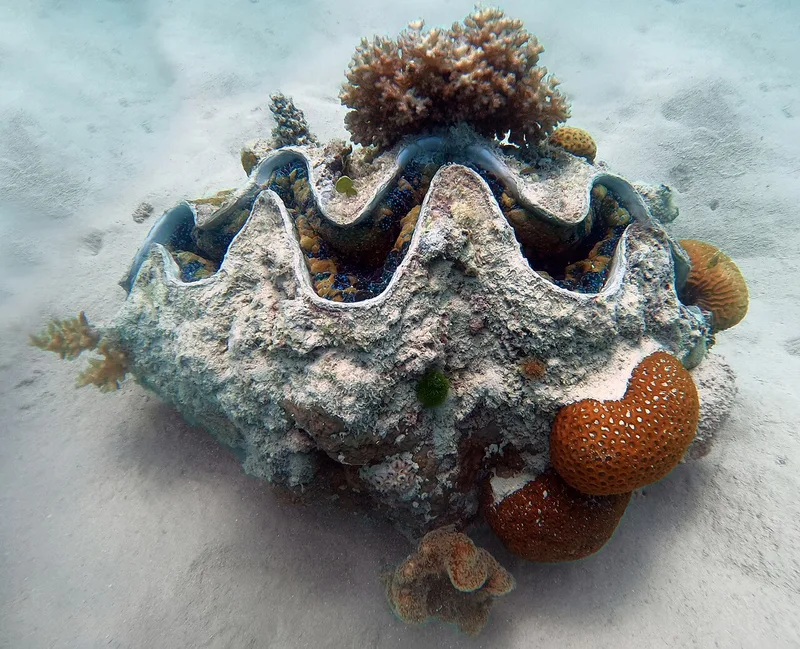
Tridacna gigas, the representative described in this account.
At a glance
- Location
- Giant clams occupy shallow coral-reef lagoons and reef flats.
- Habitat
- Coral reef, Coast
- Diet
- Filter feeder
- Food
- The gills filter suspended particles from seawater.
Classification
- Common name
- Giant Clam
- Browse group
- Molluscs
- Scientific name or taxon
- Tridacna gigas
- Taxon rank
- species
- Order
- Cardiida
- Family
- Cardiidae
- Genus
- Tridacna
- Source classification
- Bivalvia
Taxonomy checked against GBIF. For breeds and hybrids, this describes the listed parent taxon.
Three things to know
- It is a bivalve mollusc.
- The mantle houses symbiotic algae.
- Adults remain settled in one place.
Habitat and range
Giant clams occupy shallow coral-reef lagoons and reef flats. They settle among sand and coral rubble where sufficient light reaches the mantle tissues.
Appearance and adaptations
Two massive shell valves have deeply folded edges. The colourful mantle extends into the light and houses symbiotic algae; it retracts when the animal is disturbed.
Diet and behaviour
The gills filter suspended particles from seawater. Photosynthetic partners supply additional energy, making light important even though the clam itself is an animal rather than a plant.
Sources
- Animal Diversity Web: Tridacna gigas
- A–Z Animals: Giant Clam · Directory entry
Explore molluscs
Browse all molluscs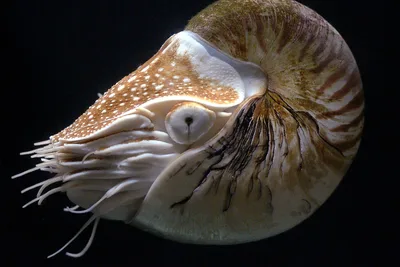
Molluscs
Nautilus
Nautilus
Nautiluses are shelled cephalopods.
Living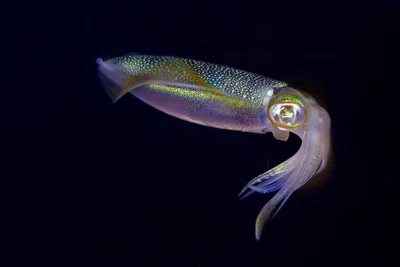
Molluscs
Bigfin Reef Squid
Sepioteuthis lessoniana
The bigfin reef squid lives in warm coastal waters around reefs and seagrass.
Living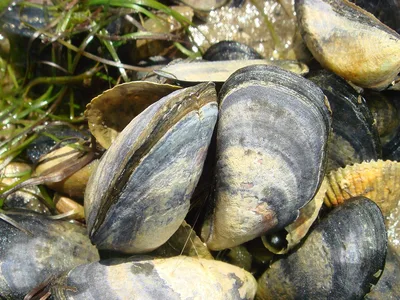
Molluscs
Blue mussel
Mytilus edulis
The blue mussel is a coastal bivalve that forms dense beds on suitable surfaces.
Living LC
Molluscs
Giant Pacific octopus
Enteroctopus dofleini
The giant Pacific octopus is the largest octopus.
Living