Flounder
Pleuronectiformes
Living individuals or members of this group exist today. This does not mean they are safe from extinction.
Flounders are flattened fishes adapted to life near the bottom. This account describes the European flounder, which moves between coastal waters, estuaries and, in some places, rivers.
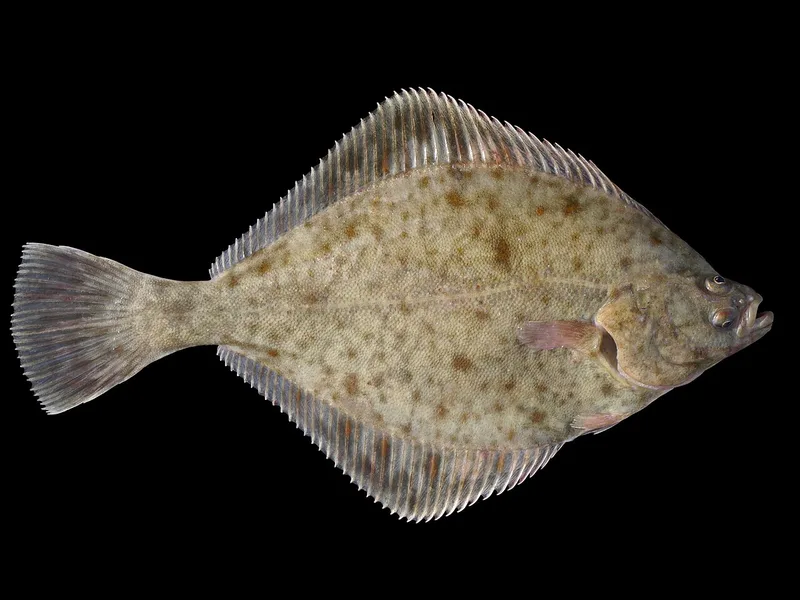
European flounder (Platichthys flesus) photographed against a dark background.
At a glance
- Location
- Platichthys flesus is the representative used here. It inhabits eastern Atlantic coastal and brackish waters around Europe and neighbouring seas. Mud and sand provide resting and feeding grounds.
- Habitat
- Coast, Rivers and lakes
- Diet
- Carnivore
- Food
- Adults eat bottom-living animals, including small fishes and invertebrates.
Classification
- Common name
- Flounder
- Browse group
- Fish
- Scientific name or taxon
- Pleuronectiformes
- Taxon rank
- order
- Order
- Pleuronectiformes
- Source classification
- Actinopterygii
Taxonomy checked against GBIF. For breeds and hybrids, this describes the listed parent taxon.
Three things to know
- Both eyes are usually on the right.
- Some individuals have reversed eye placement.
- Young fish use shallow nursery waters.
Habitat and range
Platichthys flesus is the representative used here. It inhabits eastern Atlantic coastal and brackish waters around Europe and neighbouring seas. Mud and sand provide resting and feeding grounds.
Appearance and adaptations
Both eyes usually lie on the right side of the flattened body, although reversed individuals occur. The upper surface is olive or greenish with variable reddish spots; the underside is pale.
Diet and behaviour
Adults eat bottom-living animals, including small fishes and invertebrates. They often feed at night and can bury themselves in sediment. Offshore spawning areas and shallow juvenile nurseries support different life stages.
Sources
- FishBase: Platichthys flesus
- A–Z Animals: Flounder · Directory entry
Explore fish
Browse all fish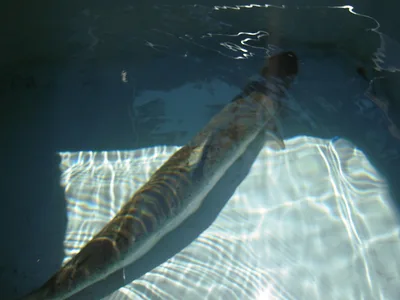 NT
Fish
Atlantic salmon
Salmo salar
The Atlantic salmon hatches in a river, grows up at sea, and returns to the same river to spawn.
Living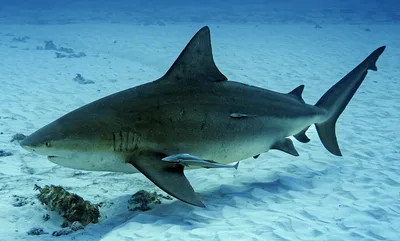
Fish
Bull Shark
Carcharhinus leucas
The bull shark is a robust coastal shark that can also spend time in fresh water.
Living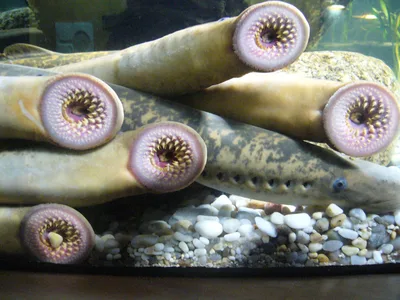
Fish
Lamprey
Petromyzontiformes
Lampreys are jawless fishes with a round sucking mouth.
Living
Fish
Salmon
Salmonidae
Salmon include several fishes with different life histories.
Living