Fire Salamander
Salamandra salamandra
Living individuals or members of this group exist today. This does not mean they are safe from extinction.
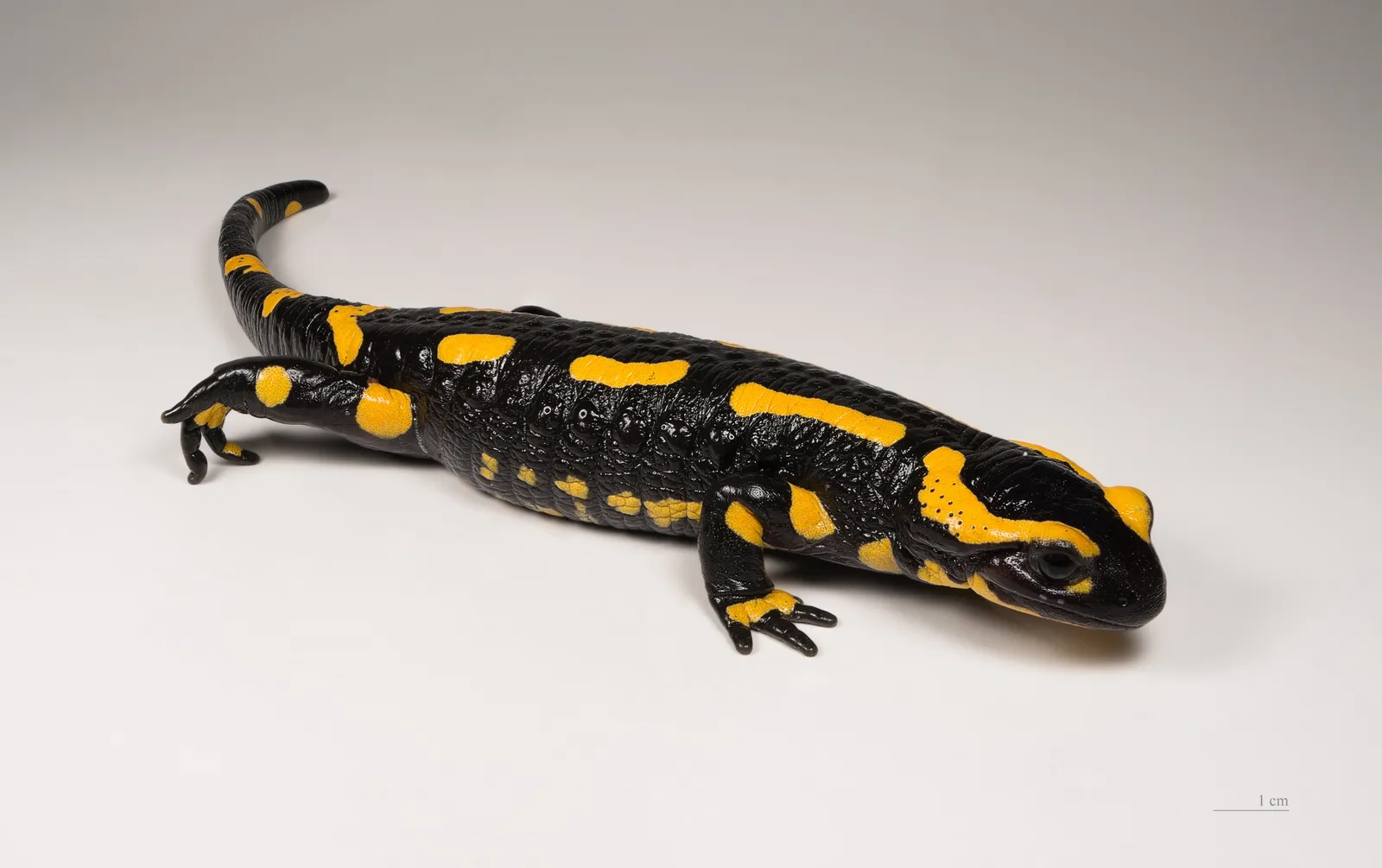
The fire salamander is a dark European amphibian marked with yellow or orange. It usually emerges from damp shelters on mild nights.
At a glance
- Location
- Damp wooded habitats in central and southern Europe, with sheltered ground-level retreats.
- Habitat
- Temperate forest, Rivers and lakes
- Diet
- Carnivore
- Food
- Worms, slugs, insects and other invertebrates.
Classification
- Common name
- Fire Salamander
- Browse group
- Amphibians
- Scientific name or taxon
- Salamandra salamandra
- Taxon rank
- species
- Order
- Caudata
- Family
- Salamandridae
- Genus
- Salamandra
- Source classification
- Amphibia
Taxonomy checked against GBIF. For breeds and hybrids, this describes the listed parent taxon.
Measurements
Size and speed
- Length
- 15 to 25 cm usual adult total length
Typical adult ranges. Source: Animal Diversity Web.
Three things to know
- Yellow or orange markings stand out against black skin.
- It hunts invertebrates on mild nights.
- Individuals may reuse the same seasonal shelters.
Habitat and range
Damp wooded habitats in central and southern Europe, with sheltered ground-level retreats.
Appearance and adaptations
Bright patches interrupt its black background colour. Its body is longer than its tail, and the legs are stout rather than elongated.
Diet and behaviour
It spends much of its time under logs or in moist crevices. After dark it searches for invertebrate prey and can revisit familiar shelters.
Sources
- Animal Diversity Web: Salamandra salamandra
- A–Z Animals: Fire Salamander · Directory entry
Explore amphibians
Browse all amphibians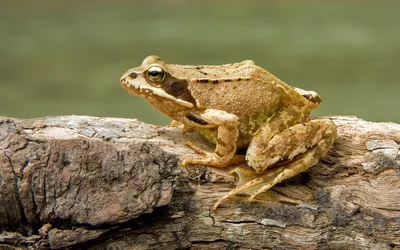
Amphibians
Common Frog
Rana temporaria
The common frog is a widespread European amphibian that also occurs in northwestern Asia.
Living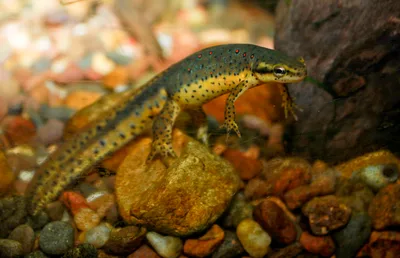
Amphibians
Newt
Salamandridae
Newts are salamanders with varied aquatic and terrestrial stages.
Living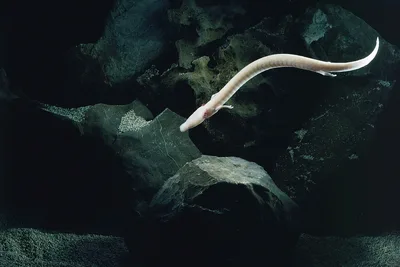
Amphibians
Olm
Proteus anguinus
The olm is a cave-dwelling salamander of southeastern Europe.
Living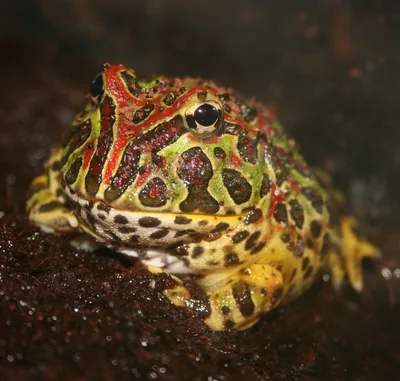
Amphibians
Argentine Horned Frog
Ceratophrys ornata
The Argentine horned frog is a broad-bodied ambush hunter with a very large mouth.
Living