Emperor scorpion
Pandinus imperator
Living individuals or members of this group exist today. This does not mean they are safe from extinction.
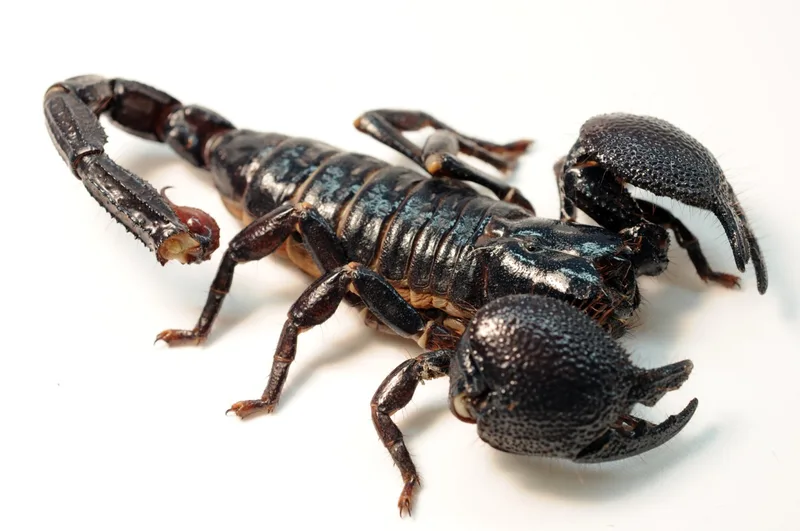
The emperor scorpion is a large, glossy black arachnid from western Africa. Strong pincers help adults capture and handle prey.
At a glance
- Location
- Hot, humid western African forests, in burrows, leaf litter and other sheltered places.
- Habitat
- Rainforest
- Diet
- Carnivore
- Food
- Termites, other insects and small arthropods.
Classification
- Common name
- Emperor scorpion
- Browse group
- Arachnids
- Scientific name or taxon
- Pandinus imperator
- Taxon rank
- species
- Order
- Scorpiones
- Family
- Scorpionidae
- Genus
- Pandinus
- Source classification
- Arachnida
Taxonomy checked against GBIF. For breeds and hybrids, this describes the listed parent taxon.
Three things to know
- Termites are an important food.
- Adults have powerful pincers.
- It shelters by day and is active at night.
Habitat and range
Hot, humid western African forests, in burrows, leaf litter and other sheltered places.
Appearance and adaptations
Large pincers dominate the front of the body. Sensory structures underneath help it detect features of the ground.
Diet and behaviour
It is mainly active after dark. Adults often use their pincers when feeding, while young scorpions depend more heavily on the sting.
Sources
- Animal Diversity Web: Pandinus imperator
- GBIF: Emperor scorpion · Directory entry
Explore arachnids
Browse all arachnids NE
Arachnids
Goliath birdeater
Theraphosa blondi
The Goliath birdeater is the heaviest spider in the world.
Living
Arachnids
Black Widow Spider
Latrodectus
Black widows include several related spiders.
Living
Arachnids
Camel Spider
Solifugae
Camel spiders are fast-running arachnids of the order Solifugae.
Living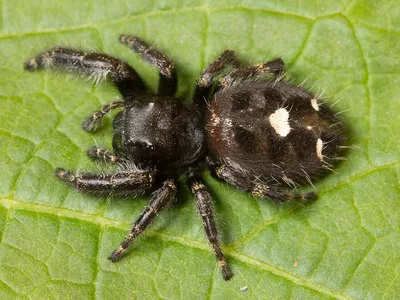
Arachnids
Jumping Spider
Salticidae
Jumping spiders hunt with unusually acute vision.
Living